


The nervous system is the body's primary communication and control network. Its fundamental purpose is to coordinate complex body activities through a three-step process: collecting sensory information, processing and evaluating that information, and finally initiating an appropriate response. To achieve this rapid-fire communication, the system relies on specialized nervous tissue composed of two distinct cell types: neurons and glial cells.
The Building Blocks: Neurons and Glial Cells
Nervous tissue is defined as a group of similar cells and extracellular products that work together to perform a common function. Within this tissue, we find a functional division of labor between the "communicators" and the "supporters."
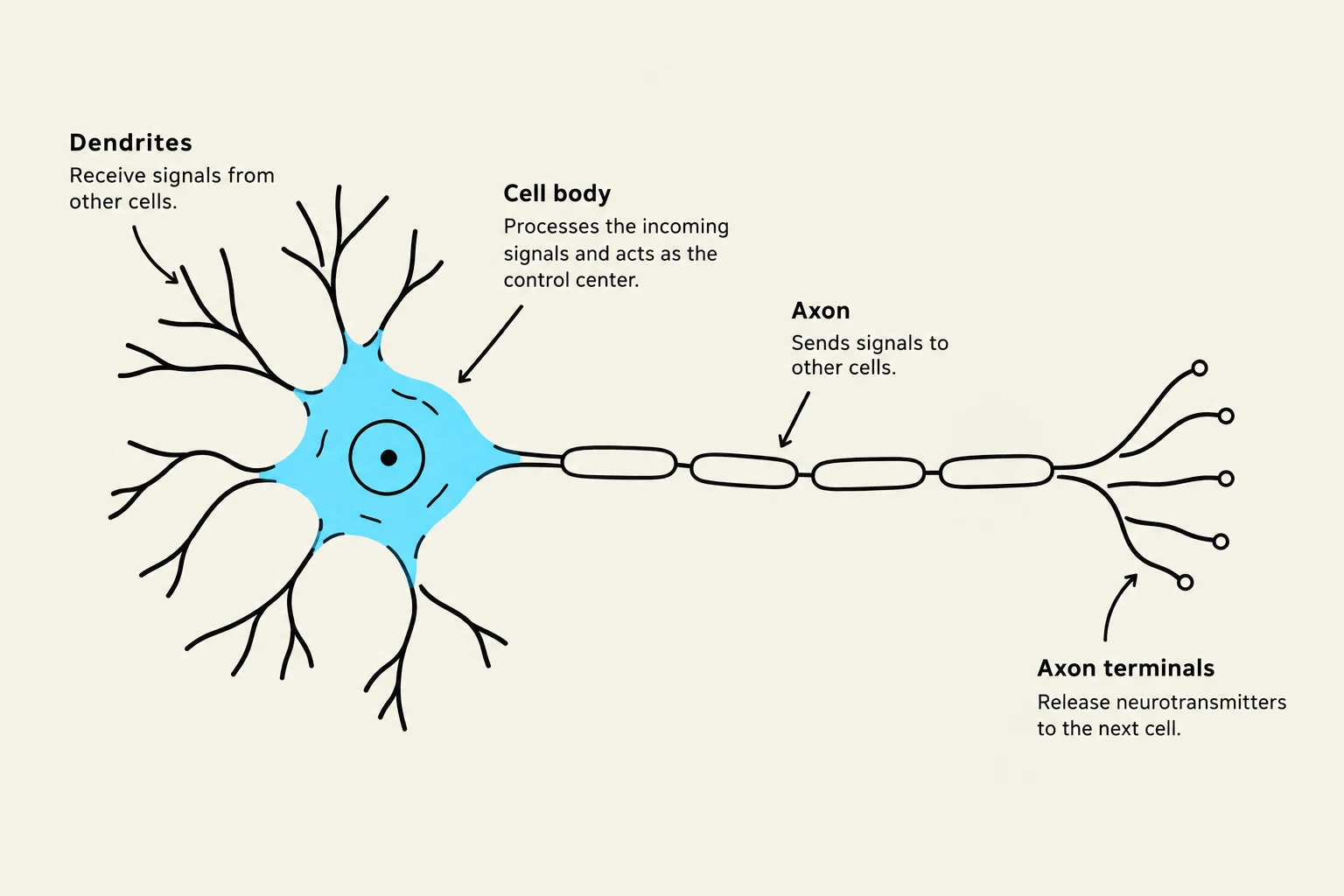
Neurons: The Communicators
Neurons, or nerve cells, are the electrically excitable units of the nervous system. They are specialized to initiate, transmit, and receive nerve impulses (electrical signals). This excitability allows them to act as the functional units of communication, carrying messages across long distances within the body.
Glial Cells: The Support System
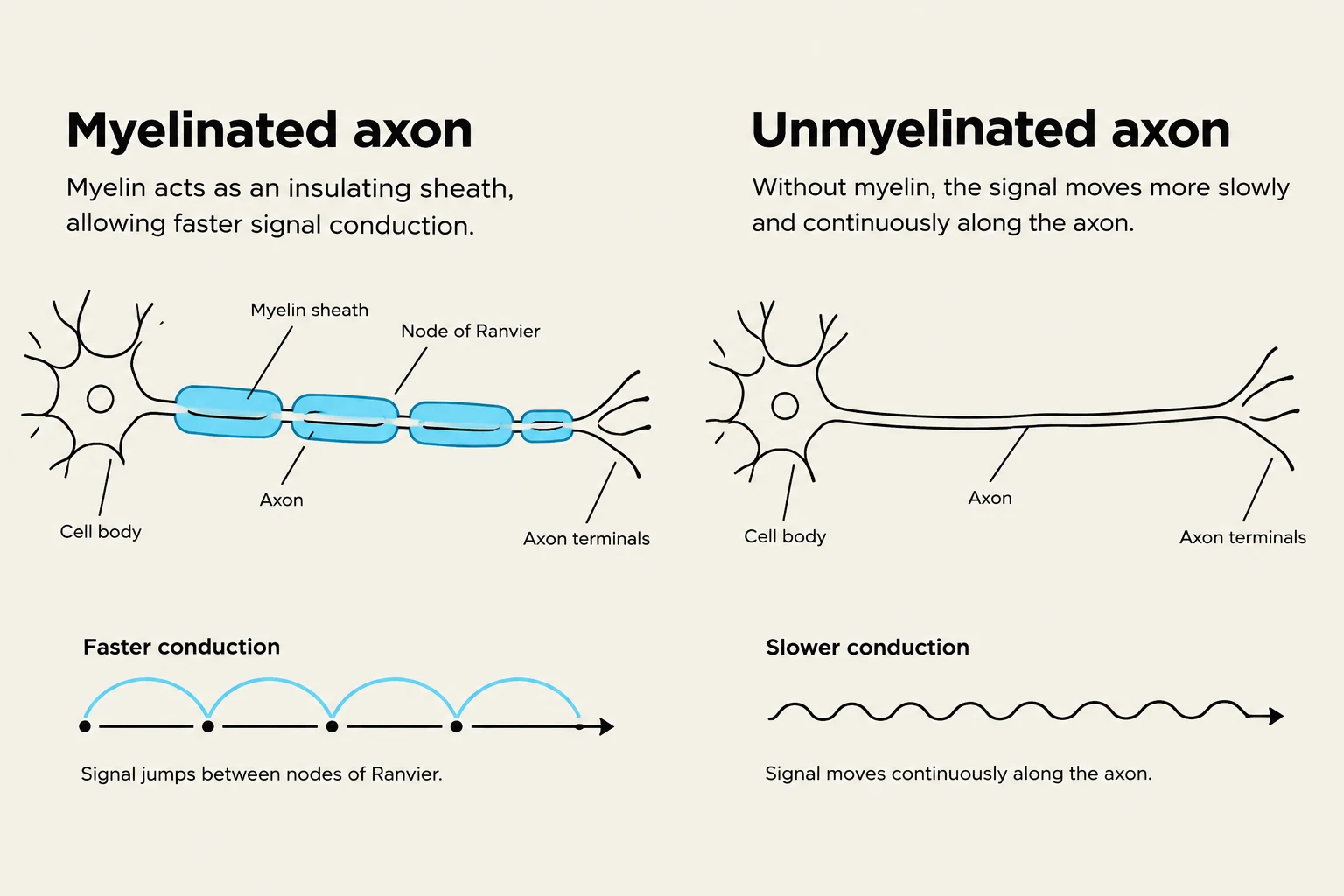
While neurons handle the signaling, they cannot function in isolation. Glial cells are non-excitable cells that provide essential support, protection, and maintenance for the neurons. Unlike neurons, glial cells do not transmit impulses, but they create the environment necessary for neurons to thrive.
Depending on whether they are in the Central Nervous System (CNS) or the Peripheral Nervous System (PNS), different types of glial cells are present:
Keep reading for free.
Create an account to finish this reading and make it part of your study routine.
Continue reading freeAlready have an account? Log in
Updated