


The management of uterine neoplasms is a complex field that requires a highly personalized approach based on the specific type of tumor, its biological characteristics, and the patient's clinical stage. The NCCN Guidelines for Endometrial Carcinoma provide a standardized framework for evaluating, staging, and treating these cancers, primarily utilizing the 2009 FIGO staging system. Because these tumors vary significantly in their aggressiveness—ranging from low-grade endometrioid carcinomas to highly aggressive uterine sarcomas—clinicians must integrate histology, molecular markers, and surgical findings to determine the optimal treatment pathway.
Classification and Initial Evaluation
When a patient presents with suspected uterine malignancy, the initial evaluation is critical for determining the trajectory of care. This process includes a thorough history and physical examination, laboratory tests (such as CBC, LFT, and renal function), and imaging.
A key clinical pearl: if malignancy is suspected, fragmentation or morcellation should be avoided to prevent potential tumor dissemination.
Histological Categories
Uterine neoplasms are broadly categorized into two main groups:
- Malignant Epithelial (Carcinoma): This includes the most common type, endometrioid carcinoma, as well as high-risk histologies such as serous carcinoma, clear cell carcinoma, and undifferentiated/dedifferentiated carcinoma.
- Malignant Mesenchymal (Sarcoma): This group includes uterine sarcomas such as leiomyosarcoma (LMS), high-grade endometrial stromal sarcoma (ESS), and carcinosarcoma (also known as malignant mixed mesodermal tumor).
Molecular and Pathological Indicators
Modern management relies heavily on molecular analysis. Key indicators include:
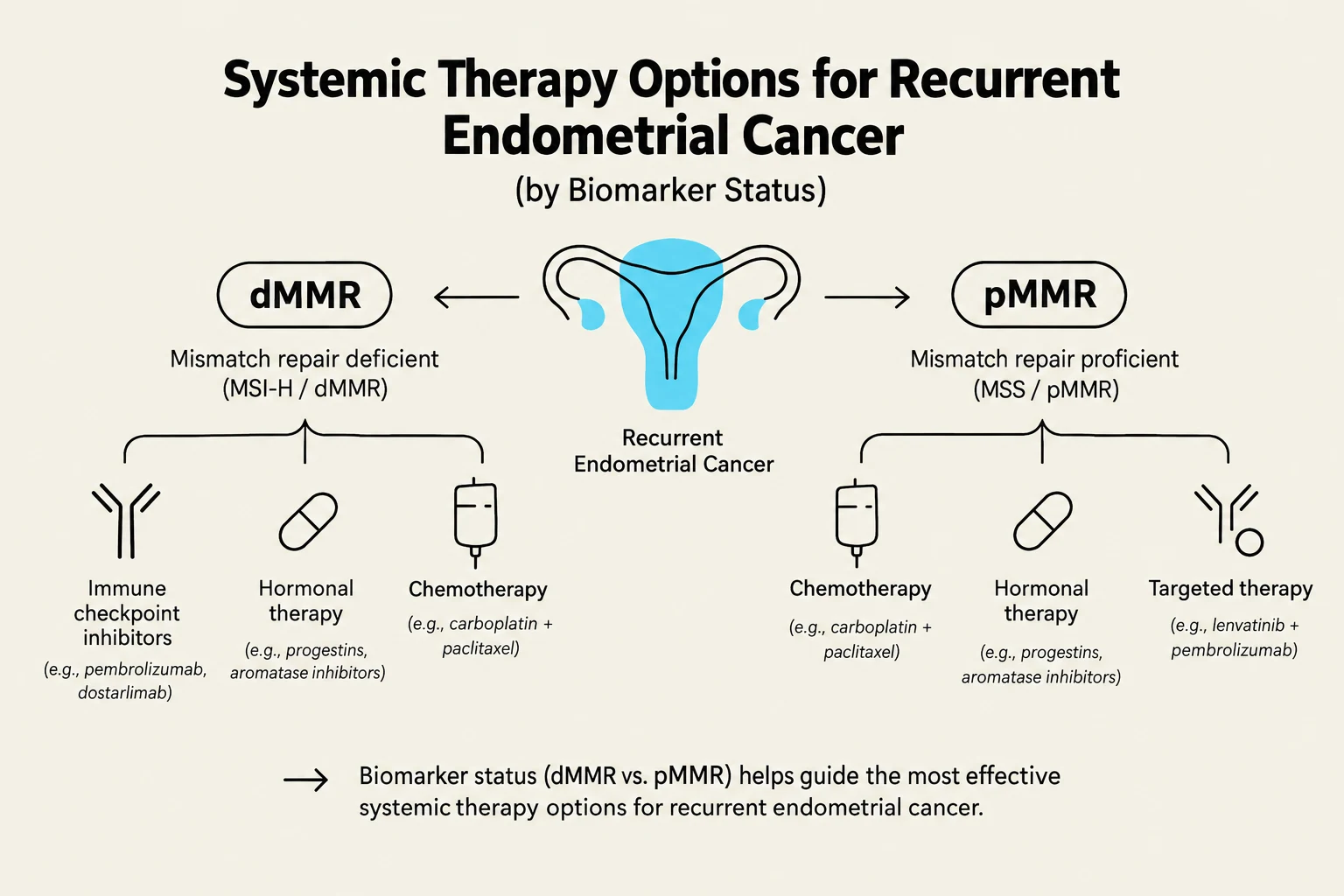
- Mismatch Repair (MMR) Deficiency: Identifying dMMR or MSI-H status is essential for determining eligibility for immunotherapy.
- p53 Abnormality: The presence of p53 aberrant carcinomas is a significant prognostic factor and influences the recommendation for HER2 testing.
- Lymphovascular Space Invasion (LVSI): The presence of LVSI is a critical risk factor that often dictates the need for adjuvant radiation.

Keep reading for free.
Create an account to finish this reading and make it part of your study routine.
Continue reading freeAlready have an account? Log in
Updated