


The nasal and paranasal structures are complex anatomical regions involving bone, cartilage, and mucosal linings that serve critical functions in respiration, olfaction, and speech. Because the nasal pyramid is the most frequently fractured bone in the human body, clinicians must be adept at distinguishing between simple trauma, life-threatening complications, and chronic inflammatory or neoplastic processes. This article explores the clinical presentation, diagnosis, and management of nasal trauma, benign masses, and malignant tumors.
Nasal Trauma and Fractures
Nasal fractures often present following blunt force trauma with symptoms including epistaxis (nosebleeds), pain, deformity, and palpable crepitus. While X-rays can be used, they are often unnecessary for uncomplicated cases. However, a "step-off" deformity at the orbital rim should raise suspicion for a zygomatic complex fracture, which requires a CT scan for evaluation.
The Critical Complication: Septal Hematoma
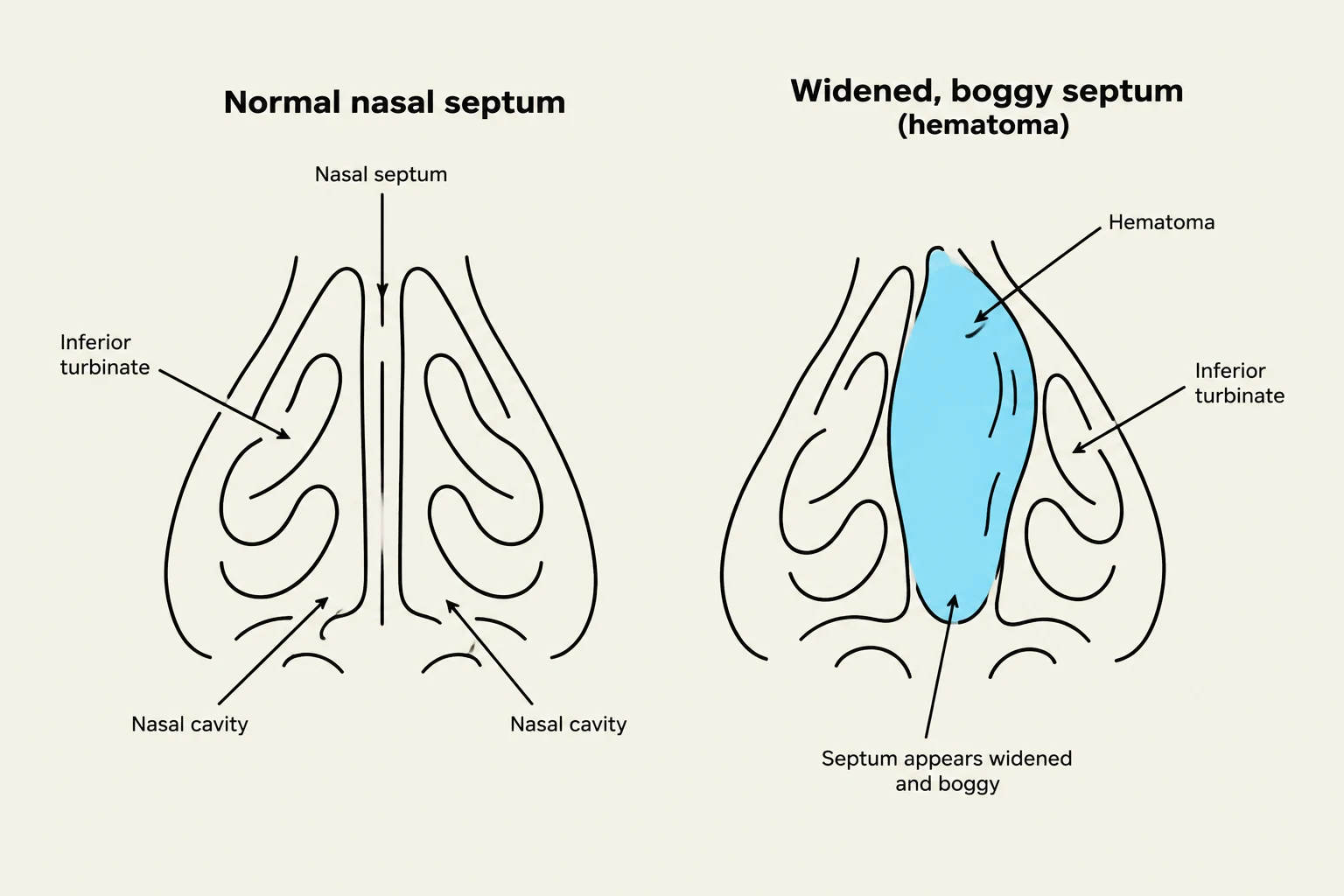
One of the most important aspects of the physical exam following nasal trauma is the visualization of the nasal septum. A septal hematoma occurs when blood collects between the septal cartilage and the overlying mucoperichondrium.
Clinical signs include:
- An abrupt onset of nasal obstruction.
- A "boggy," widened appearance of the nasal septum.
Clinical Pearl: A septal hematoma is a medical emergency. It disrupts the blood supply to the septal cartilage, which can lead to cartilage necrosis and the permanent "saddle nose" deformity. You must provide an emergent ENT referral for immediate drainage and packing.
Keep reading for free.
Create an account to finish this reading and make it part of your study routine.
Continue reading freeAlready have an account? Log in
Updated