


In the world of chemistry, compounds are the building blocks of everything we touch, see, and breathe. One of the most fundamental categories of these substances is the binary ionic compound. These compounds are formed through the interaction between a metal and a non-metal, creating a stable structure held together by electrical attraction. Learning how to name these compounds is a vital skill, as it allows scientists to communicate clearly about the substances they are studying.
What is a Binary Ionic Compound?
The term "binary" tells us that the compound is composed of exactly two different elements. In an ionic compound, these two elements play very different roles based on their position on the periodic table.
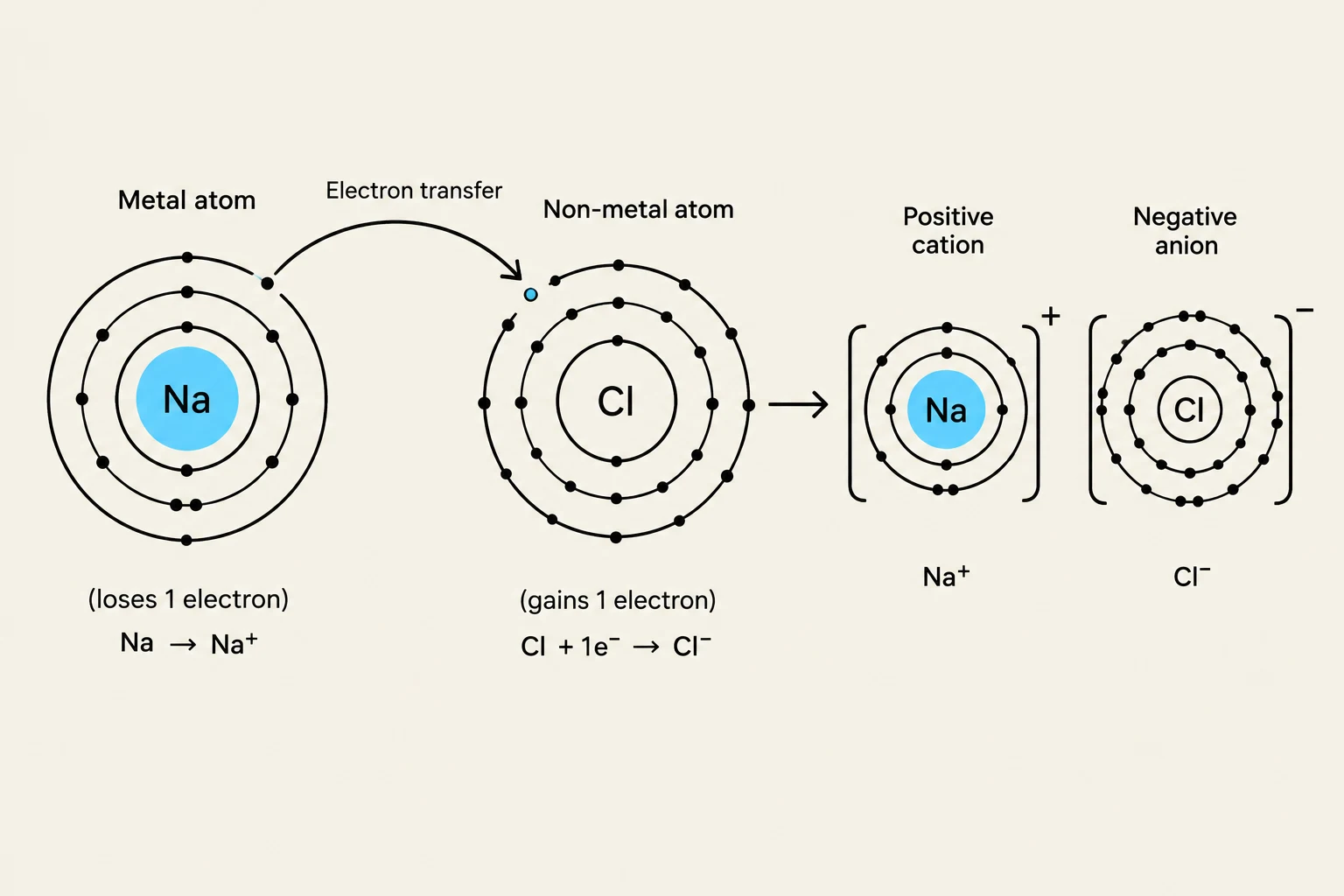
- The Metal (Cation): Metals tend to lose electrons during a chemical reaction. When a metal atom loses one or more negatively charged electrons, it becomes a positively charged ion, known as a cation.
- The Non-metal (Anion): Non-metals tend to gain electrons. When a non-metal atom gains electrons, it becomes a negatively charged ion, known as an anion.
The bond itself is the electrostatic force of attraction between these oppositely charged ions. Because opposites attract, the positive metal and the negative non-metal snap together to form a neutral compound.

Keep reading for free.
Create an account to finish this reading and make it part of your study routine.
Continue reading freeAlready have an account? Log in
Updated