


The skeletal system is a dynamic organ system responsible for more than just providing a structural framework for the body. It serves as a vital reservoir for minerals like calcium and phosphate, a site for hematopoiesis (blood cell production), and a storage site for triglycerides. Because bone is a living tissue undergoing constant remodeling through the coordinated actions of osteoblasts (builders) and osteoclasts (resorbers), it is susceptible to a wide range of pathologies. These disorders can range from infectious processes and metabolic imbalances to complex neoplastic growths.
Bone Infections: Osteomyelitis
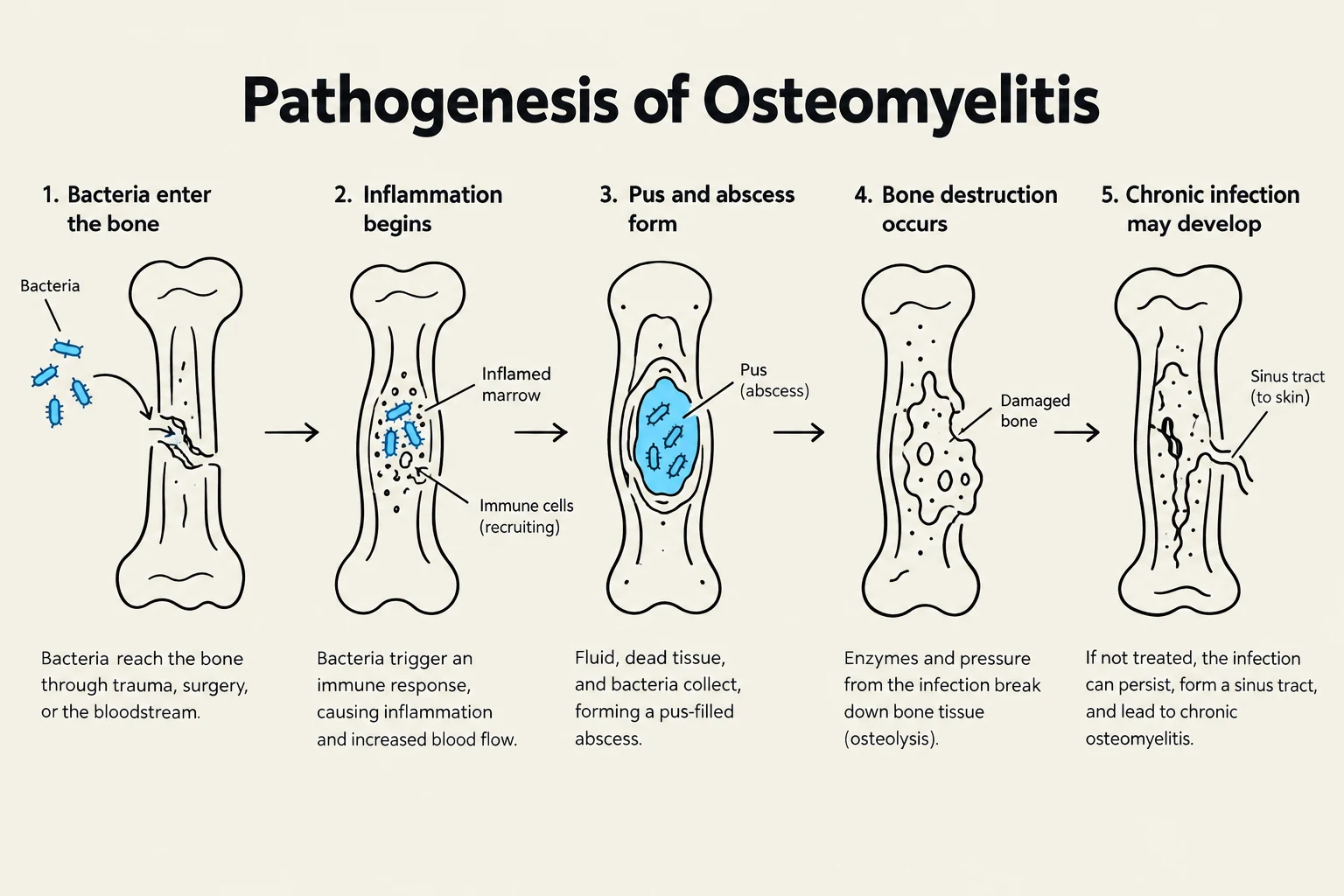
Osteomyelitis is a pyogenic (pus-forming) inflammation of the bone and bone marrow caused by infection. Pathogens, most commonly Staphylococcus aureus, can enter the bone through an open wound, via the bloodstream (hematogenous spread), or by spreading from nearby skin infections.
Once microorganisms invade the bone, the resulting inflammatory response can lead to thrombosis (blood clotting) of local blood vessels. This causes ischemic necrosis, where the bone tissue dies due to a lack of blood supply. A significant complication of this process is the formation of sequestra—islands of necrotic, dead bone that serve as a medium for continued bacterial proliferation, making the infection difficult to clear. If the infection enters the bloodstream, it can lead to septicemia, a life-threatening systemic condition.
Exam Tip: When discussing osteomyelitis, remember the relationship between inflammation and ischemia. Inflammation Thrombosis Ischemia Necrosis (Sequestrum).
Bone Tumours: Primary and Secondary
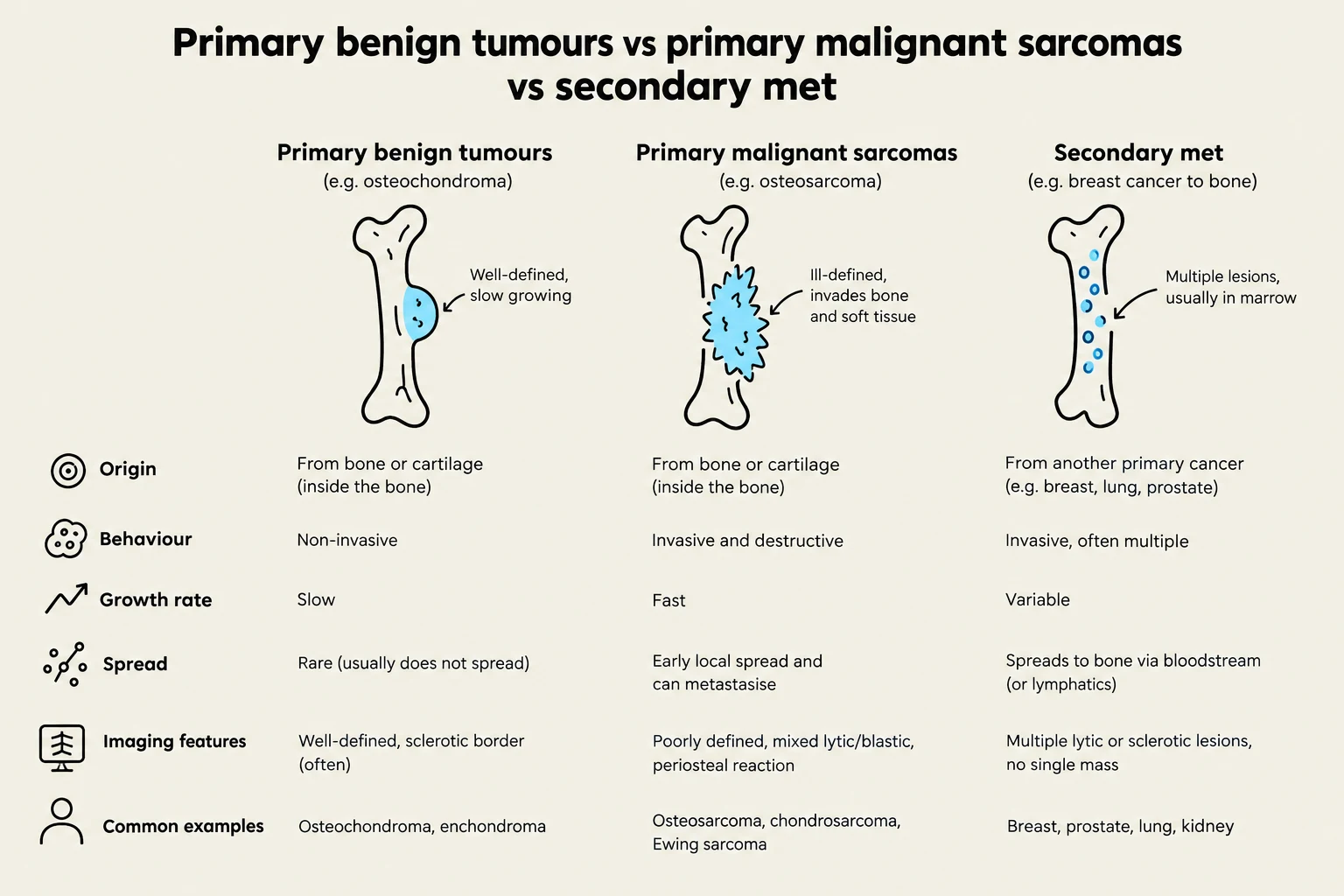
Bone tumours are classified based on their origin and their behavior. Primary bone tumours arise directly from the skeletal components, such as bone cells, cartilage, or fibroblasts. These are further divided into benign and malignant types.
Keep reading for free.
Create an account to finish this reading and make it part of your study routine.
Continue reading freeAlready have an account? Log in
Updated