An explanation of the different types of muscle contractions (concentric, eccentric, isometric) and the principles of static and dynamic flexibility, including assessment methods like the Sit and Reach Test and strategies for improvement.
Understanding how our bodies move requires a look at two fundamental pillars of physical fitness: how muscles produce force and how well our joints move through their available space. Whether you are training for athletic performance, working to improve general health, or recovering from injury, mastering the concepts of muscle contractions and flexibility is essential for creating an effective and safe movement program.
The Mechanics of Muscle Contractions
When we perform physical activity, our skeletal muscles must exert force to move our limbs or stabilize our bodies. This force is produced through different types of contractions, which are categorized based on how the muscle length changes relative to the force being applied.
Concentric Contraction
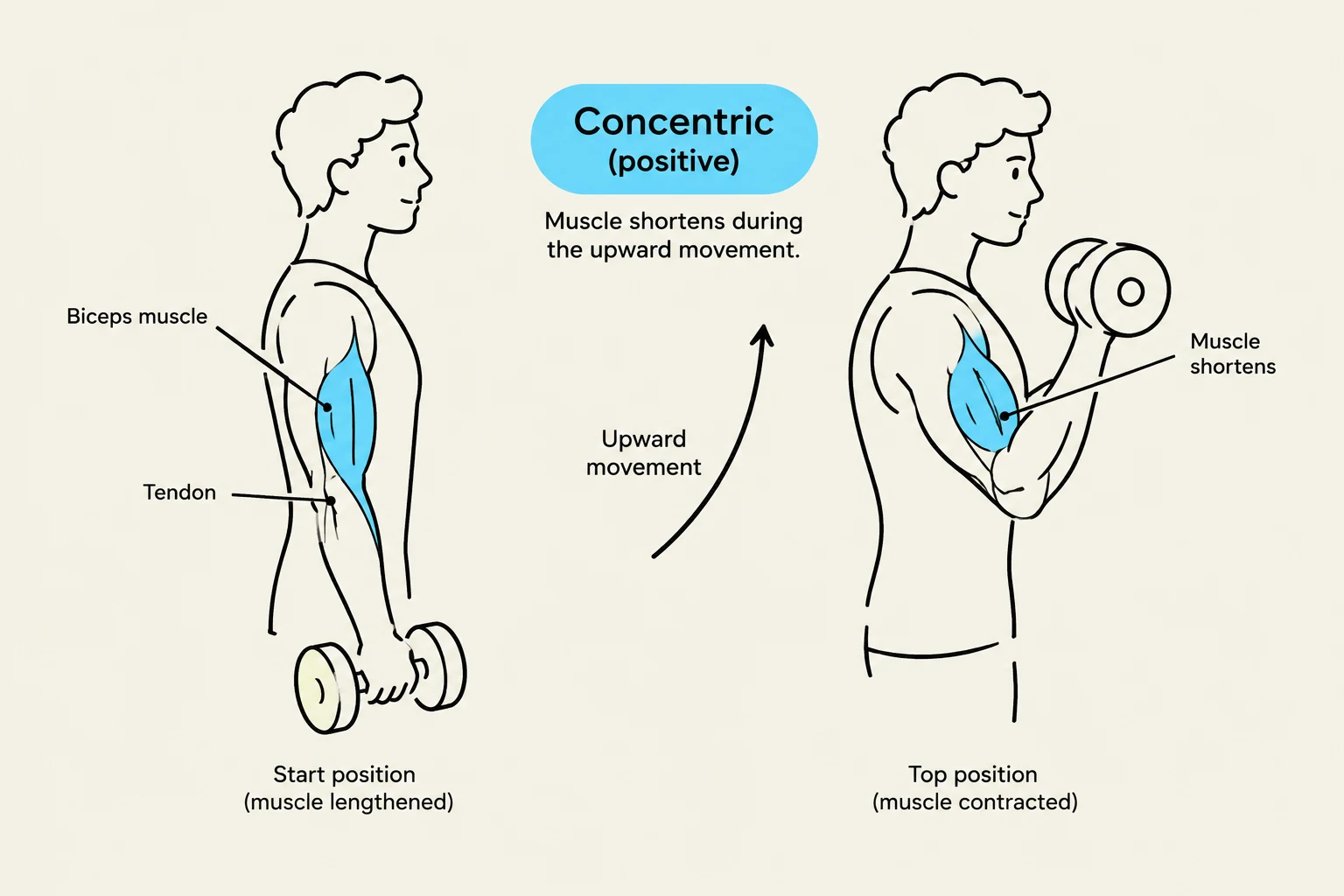
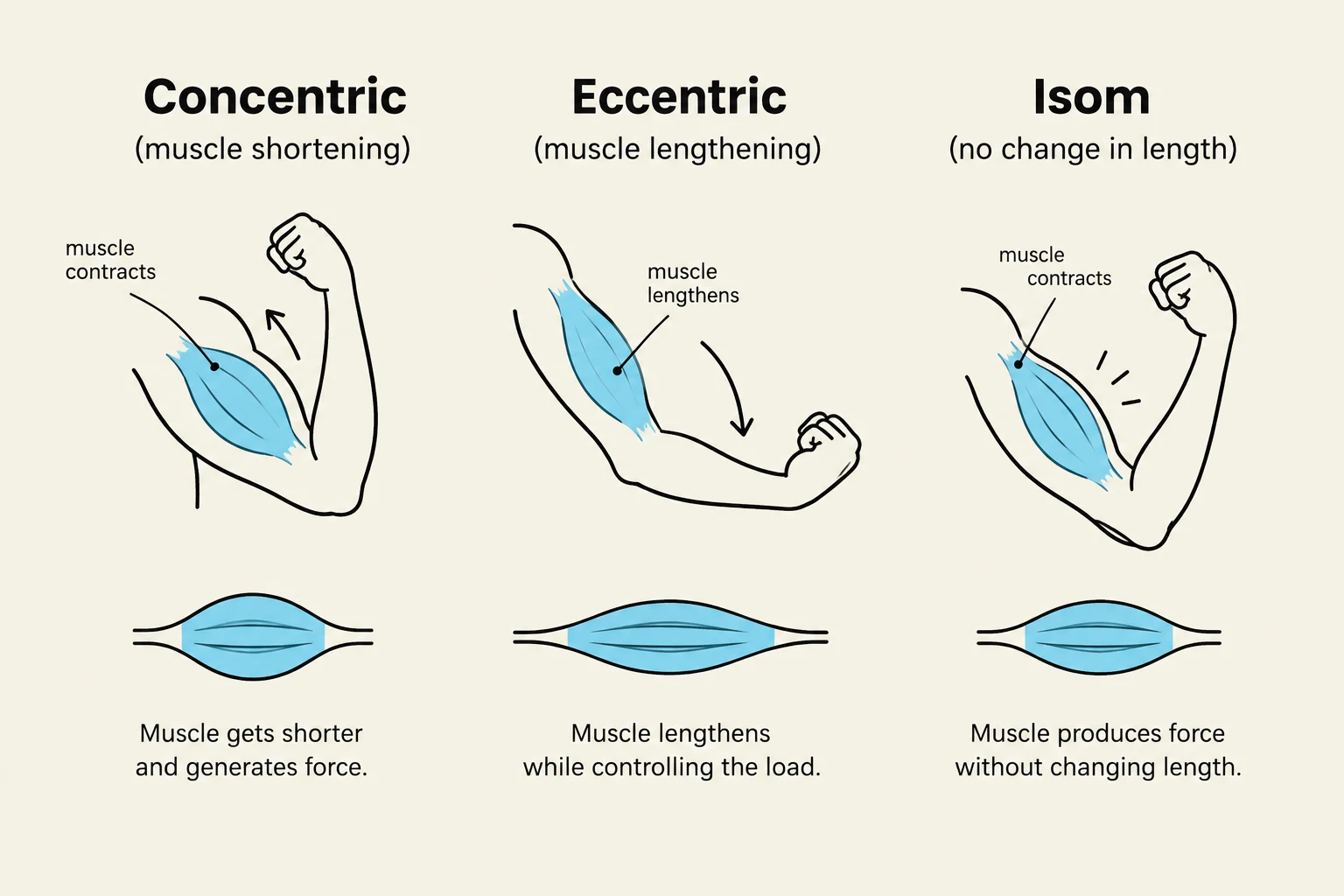
A concentric contraction, often called the "positive phase" of an exercise, occurs when the muscle produces force while it is shortening. This typically happens when you are moving a weight in the opposite direction of gravity. A classic example is the upward phase of a bicep curl, where the muscle shortens to lift the weight toward your shoulder. Of the three main types of contraction, the concentric phase produces the least amount of force.
Diagram illustrating the concentric (positive) phase of a bicep curl, showing muscle lengthening in the start position and shortening in the top position during upward movement.
Eccentric Contraction
The eccentric contraction, or the "negative phase," occurs when the muscle produces force while it is lengthening. This usually happens when the movement is in the same direction as the pull of gravity. For instance, as you slowly lower the weight during a bicep curl, your muscle is lengthening even though it is still working to control the descent. Notably, the eccentric phase is capable of producing the most force among the three types.
Isometric Contraction
An isometric contraction involves muscle tension without any change in the length of the muscle or the angle of the joint. This occurs when the force produced by the muscle is exactly matched by the resistance, meaning the movement is stalled. Common examples include holding a plank position or unsuccessfully attempting to push a heavy car out of a snowbank. The level of force produced during an isometric contraction typically falls between the levels produced during concentric and eccentric contractions.
Diagram illustrating concentric, eccentric, and isometric muscle contractions.
Exam Tip: If a question asks which phase of an exercise produces the most force, remember that the "negative" or lengthening phase (eccentric) is the strongest.
Understanding Flexibility and Range of Motion
While contractions focus on force, flexibility focuses on the range of motion (ROM)—the amount of movement possible at a particular joint or a series of joints. Maintaining adequate flexibility is a critical component of fitness because inflexible muscles increase the risk of injury.
Beyond injury prevention, regular flexibility training offers several physiological and psychological benefits, including:
Improved posture.
Increased fluidity of movement.
Enhanced psychological well-being through deep breathing and relaxation.
Static vs. Dynamic Flexibility
Flexibility is not a single, uniform measurement; it is divided into two distinct types:
Static Flexibility: This measures the absolute limits of a joint's overall ROM. It is assessed by stretching a joint to its maximum range and holding that position, often using passive forces from an external source (like gravity or a partner) to reach the limit.
Dynamic Flexibility: This is a more subjective measure that assesses joint stiffness during active movement. It is often judged by how easily a person can perform functional daily tasks, such as climbing stairs, swinging a tennis racket, or getting in and out of a car.
Assessing and Improving Flexibility
The Sit and Reach Test
A common clinical method to assess flexibility, specifically in the lower back and hamstrings, is the Sit and Reach Test. Because tightness in these areas is frequently linked to muscle pain and stiffness, this test can help predict a person's risk for future injury.
How to perform the test:
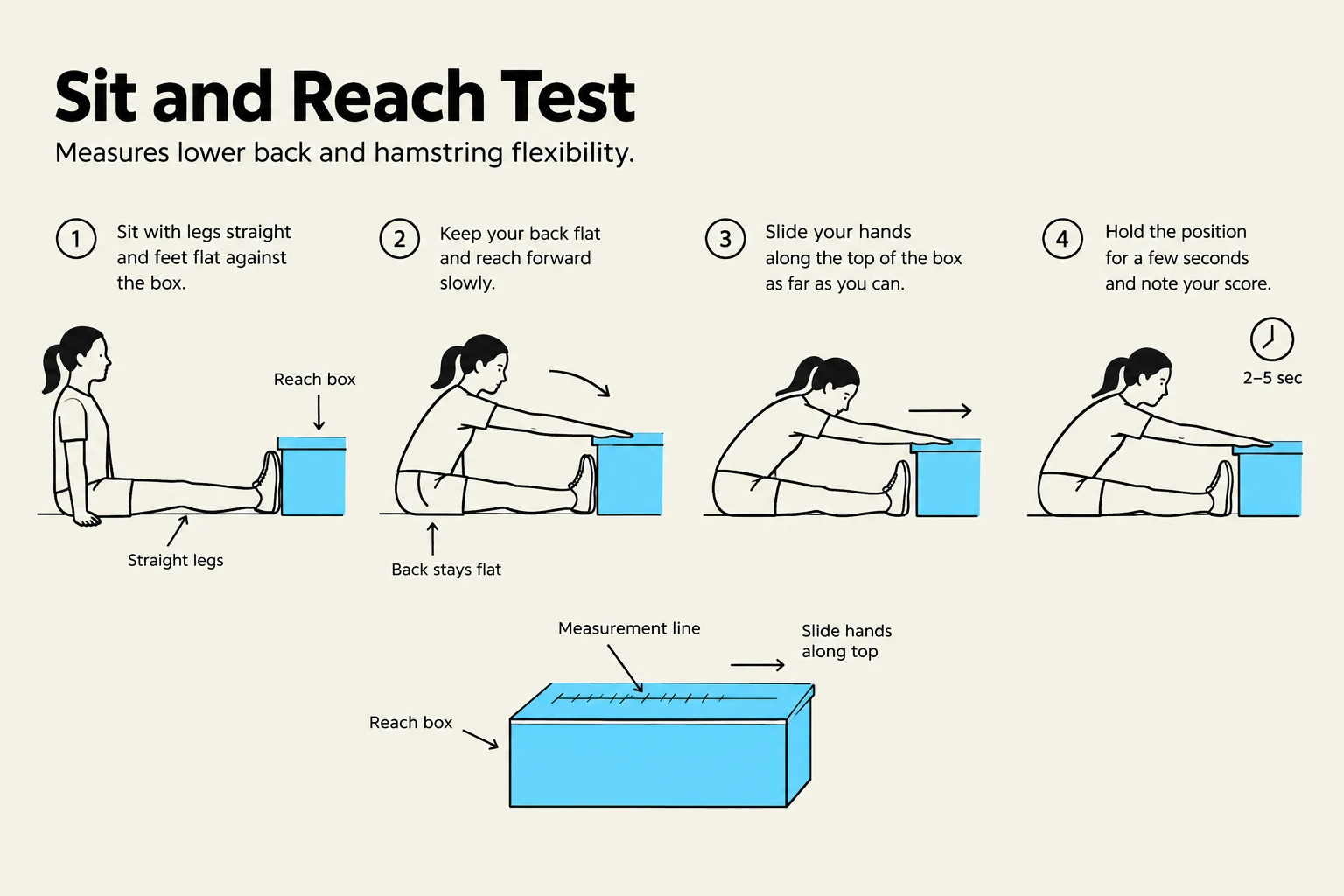
Remove your shoes and sit on the floor with your legs extended straight in front of you.
Place your feet flat against the front of a testing box.
In a slow, steady motion, lean forward at the hips while keeping your knees straight.
Slide your hands along a ruler toward your feet as far as possible.
To ensure accuracy, results should be recorded in centimeters, and the test should be repeated three times. The final score is typically the average of these three trials.
The Sit and Reach Test is a common assessment to measure the flexibility of the lower back and hamstrings. It involves sitting with legs extended towards a box and reaching forward as far as possible, holding the position briefly to record the score.
Strategies for Improvement
To effectively improve both static and dynamic flexibility, consistency is key. It is recommended to engage in stretching activities 4 to 7 days per week.
Static Stretching: This involves slowly moving a joint until you feel a stretch and then holding that position for 15 to 60 seconds. This method slowly stretches the muscle and the connective tissues surrounding the joint.
Dynamic Stretching: This involves controlled, active movements rather than holding a position. Movements usually start gently and increase in speed or reach, such as performing arm circles. Caution is required here; sudden or overly energetic movements can lead to pain or injury.
Holistic Activities: Disciplines such as Yoga, Tai Chi, or Pilates can be highly effective, as they combine flexibility work with strength, endurance, and stress management through deep breathing.
Keep reading for free.
Create an account to finish this reading and make it part of your study routine.