


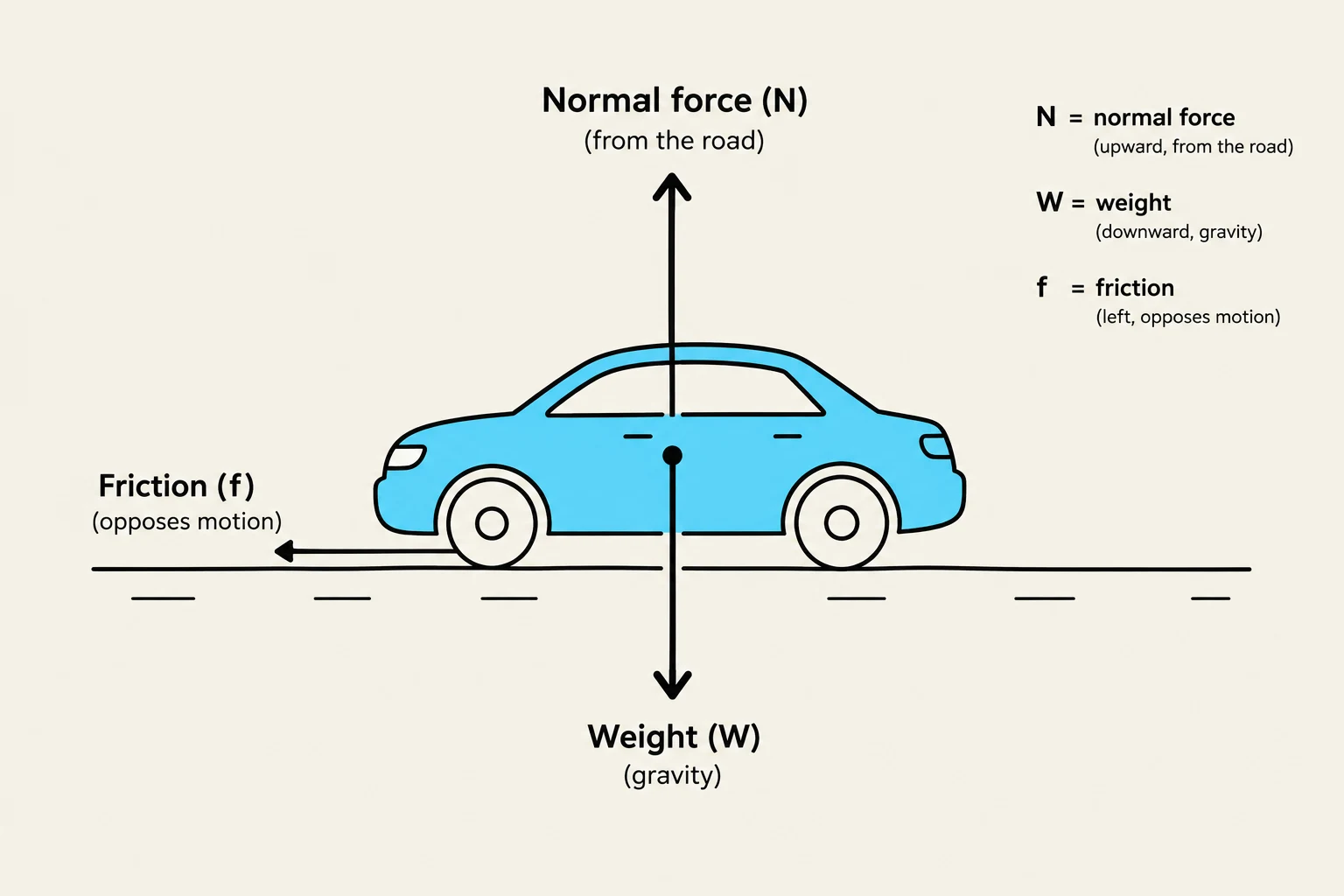
In classical mechanics, we often move beyond studying a single particle in isolation. Real-world scenarios frequently involve interactions between multiple entities—such as a predator chasing prey or a vehicle attempting to stop before a collision. To solve these problems, we must bridge the gap between describing how things move and explaining why they move. This article explores the intersection of kinematics and dynamics through the lens of synchronized motion and free-body diagrams.
Kinematics: Describing the Motion
Kinematics is the branch of mechanics concerned with the motion of objects without reference to the forces which cause the motion. When we deal with the motion of two objects, we are often looking for a specific moment in time where their positions or velocities coincide.
Common scenarios include:
- The Pursuit Problem: A "Cheetah and Gazelle" scenario where one object must intercept another.
- The Interception Problem: A "Catching the bus" scenario where a pedestrian and a vehicle must reach the same coordinate at the same time.
To solve these, you must set up kinematic equations for both objects ( and ) and solve for the variable that "synchronizes" them, usually time () or position ().

Keep reading for free.
Create an account to finish this reading and make it part of your study routine.
Continue reading freeAlready have an account? Log in
Updated