Mortgage Industry: History, Roles, and Regulations
Explore the evolution of the mortgage industry, from early private agreements to modern regulations. Understand key roles like loan originators, underwriters, and appraisers, and learn about consumer protection laws such as the CFPB and UDAAP.
The mortgage industry is a complex ecosystem of professionals, regulations, and financial instruments designed to facilitate homeownership. While the concept of lending money has existed since the dawn of organized mankind, the modern mortgage landscape is a relatively recent development, shaped significantly by economic shifts, financial crises, and subsequent legislative reforms. Understanding this industry requires a look back at how we arrived at our current regulatory environment and an appreciation for the specific roles that ensure the stability and fairness of the lending process.
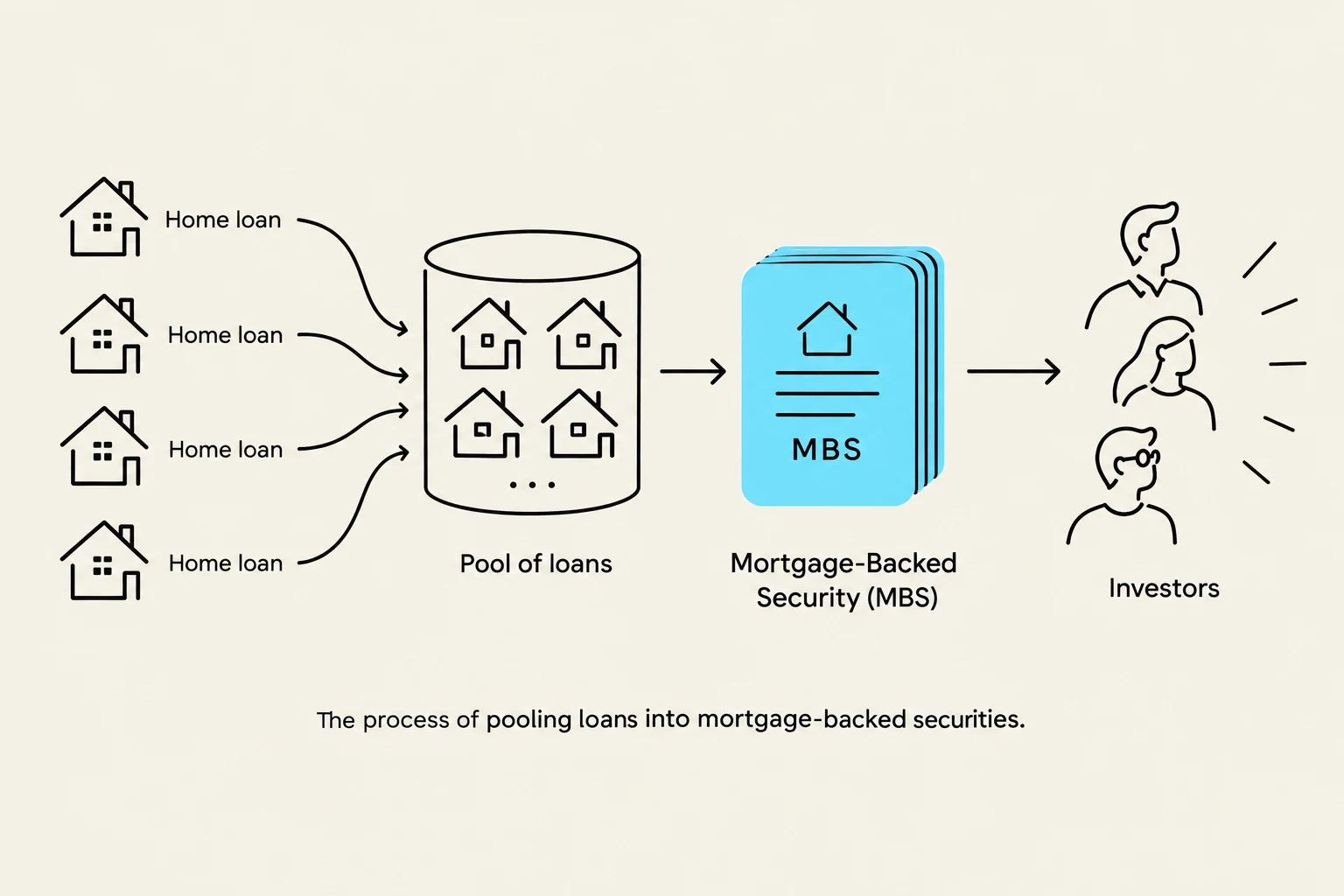
This diagram illustrates the process of pooling multiple home loans into a mortgage-backed security (MBS), which is then offered to investors.
The Evolution of Mortgages: From Private Deals to the Great Meltdown
For much of history, mortgages were difficult to obtain. Prior to the 1990s, these loans were often private agreements between a seller and a buyer. These early arrangements were frequently short-term—lasting only three to five years—and required borrowers to provide substantial down payments and pay off the entire principal balance at the end of the term.
The landscape began to shift in the 1990s as the U.S. government sought to remove barriers to homeownership. A pivotal moment occurred in 2003 with the American Dream Down Payment Initiative, which provided government assistance for down payments and closing costs to low-income borrowers. While intended to increase access, this era also saw a loosening of lending standards and controls.
The Rise of Sub-prime Mortgages
As standards eased, lenders began focusing less on a borrower's ability to repay and more on high-risk opportunities. This led to the proliferation of sub-prime mortgages. These are loans designed for "sub-prime" borrowers—individuals with higher-risk qualifications, such as poor credit histories due to bankruptcy or late payments. Because these loans carry higher risk, they typically come with higher interest rates and increased fees.
The Mortgage Meltdown
In the mid-2000s, the industry faced a catastrophic turning point known as the mortgage meltdown. Many sub-prime borrowers were unable to meet their payment obligations, leading to a domino effect of defaults and foreclosures. This crisis was exacerbated by the financial market's heavy reliance on mortgage-backed securities (MBS)—investment tools created through the process of securitization, where similar loans are pooled together. When the underlying loans failed, the value of these securities plummeted, triggering a global financial crisis.
Modern Regulation and Consumer Protection
In the wake of the crisis, the federal government moved to overhaul the industry to prevent a recurrence. On July 21, 2010, Congress enacted the Dodd-Frank Wall Street Reform and Consumer Protection Act.
The CFPB and UDAAP
This illustration distinguishes between unfair, deceptive, and abusive financial practices, providing examples for each category.
A primary outcome of the Dodd-Frank Act was the establishment of the Consumer Financial Protection Bureau (CFPB). The CFPB serves as a central regulatory authority tasked with protecting consumers from unethical financial practices. One of its most critical functions is the enforcement of prohibitions against UDAAPs:
Unfair: Acts that cause unavoidable financial injury to a consumer.
Deceptive: Behaviors intended to mislead a consumer, often causing them to make poor financial decisions based on false expertise.
Abusive: Conduct where an originator takes advantage of a consumer's lack of understanding or intentionally confuses them.
Exam Tip: When distinguishing between these three, remember that "Unfair" focuses on the injury (often financial), "Deceptive" focuses on the intent to mislead, and "Abusive" focuses on taking advantage of a consumer's confusion or lack of knowledge.
Key Roles in the Mortgage Process
This diagram illustrates the process of obtaining a loan, showing the roles of the Loan Originator, Processor, Appraiser, Underwriter, and Lender.
The mortgage process involves a variety of specialized professionals. These roles are often categorized by whether they negotiate terms, process paperwork, or provide independent valuations.
The Loan Originators
The Mortgage Loan Originator (MLO) is a central figure who takes residential mortgage applications and negotiates rates and terms for compensation. MLOs can fall into several categories:
Individual Loan Originators: Professionals working for loan origination companies.
Mortgage Brokers: Independent originators who find a lender to provide the loan for their customer.
Support and Risk Assessment Roles
Once an application is submitted, several other professionals step in to move the loan toward closing:
Processor: Provides clerical support, such as collecting documents and verifying information. Crucially, processors are prohibited from negotiating rates or terms.
Underwriter: Evaluates the application to determine the risk level of the loan. Like processors, underwriters cannot negotiate terms with the borrower.
Appraiser: An independent professional who determines the property's value following the Uniform Standards of Professional Appraisal Practice (USPAP) guidelines.
Transaction and Closing Roles
Title Agent: Researches property ownership (title) and provides title insurance to protect against future claims.
Real Estate Agent: An independent party (sometimes called a REALTOR®) who works on behalf of the buyer or seller to facilitate the sale of the property.
Lender (Mortgagee): The entity that provides the actual funds for the loan.
Investor: An entity that provides capital with the expectation of profit.
Regulator: State or federal institutions that supervise the financial system to ensure stability and fairness.
Consumer vs. Customer: A Legal Distinction
In the mortgage industry, the terms "consumer" and "customer" are not interchangeable; the distinction is vital for legal compliance regarding what information must be disclosed.
Term
Definition
Customer
An individual in an ongoing relationship with a financial services provider.
Consumer
An individual who may obtain financial services, often "shopping around" for the best deal.
Keep reading for free.
Create an account to finish this reading and make it part of your study routine.