


Managing metastatic breast cancer requires a delicate balance between detecting disease progression and avoiding the unnecessary toxicity of ineffective treatments. Because metastatic disease is often managed over long periods, clinicians must employ a multidimensional monitoring strategy to evaluate whether a patient is receiving clinical benefit from a specific therapy. This approach integrates clinical assessments, laboratory data, and advanced imaging to form a comprehensive picture of the patient's status.
Clinical Assessment: Symptoms and Cancer Burden
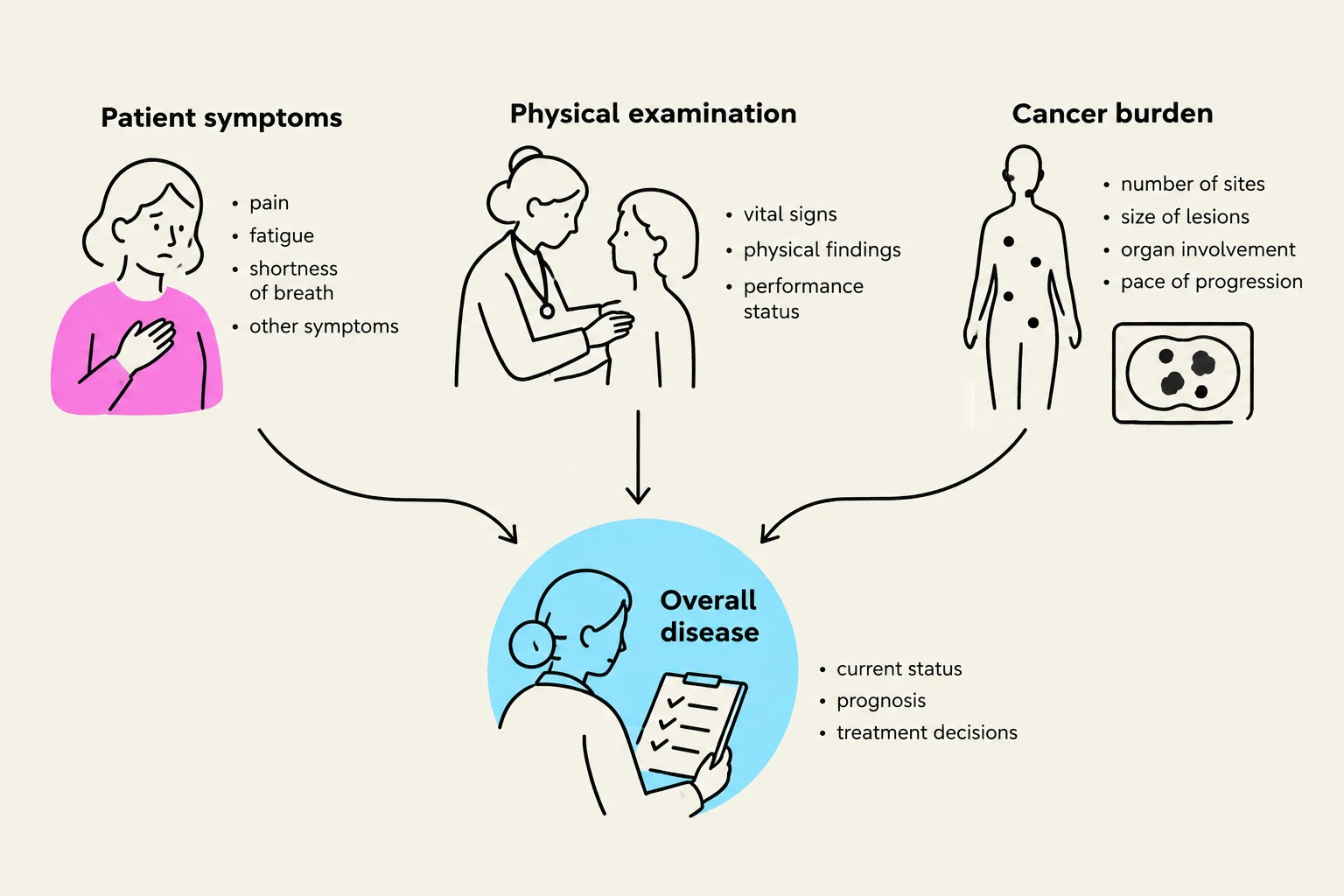
The most fundamental component of monitoring is the continuous assessment of the patient's clinical status. This involves two primary pillars: the monitoring of patient symptoms and the evaluation of the overall cancer burden.
Patient symptoms—such as pain, fatigue, or neurological changes—often serve as the first indicators that a disease state is changing. Simultaneously, the "cancer burden" refers to the total volume and activity of the metastatic sites within the body. By tracking both, clinicians can determine if a treatment is successfully stabilizing the disease or if the cancer is becoming more aggressive.
Clinical Tip: Never ignore a change in a patient's baseline symptoms, even if imaging appears stable. Symptom changes can sometimes precede radiographic evidence of progression.
Imaging Studies and Radiographic Assessment
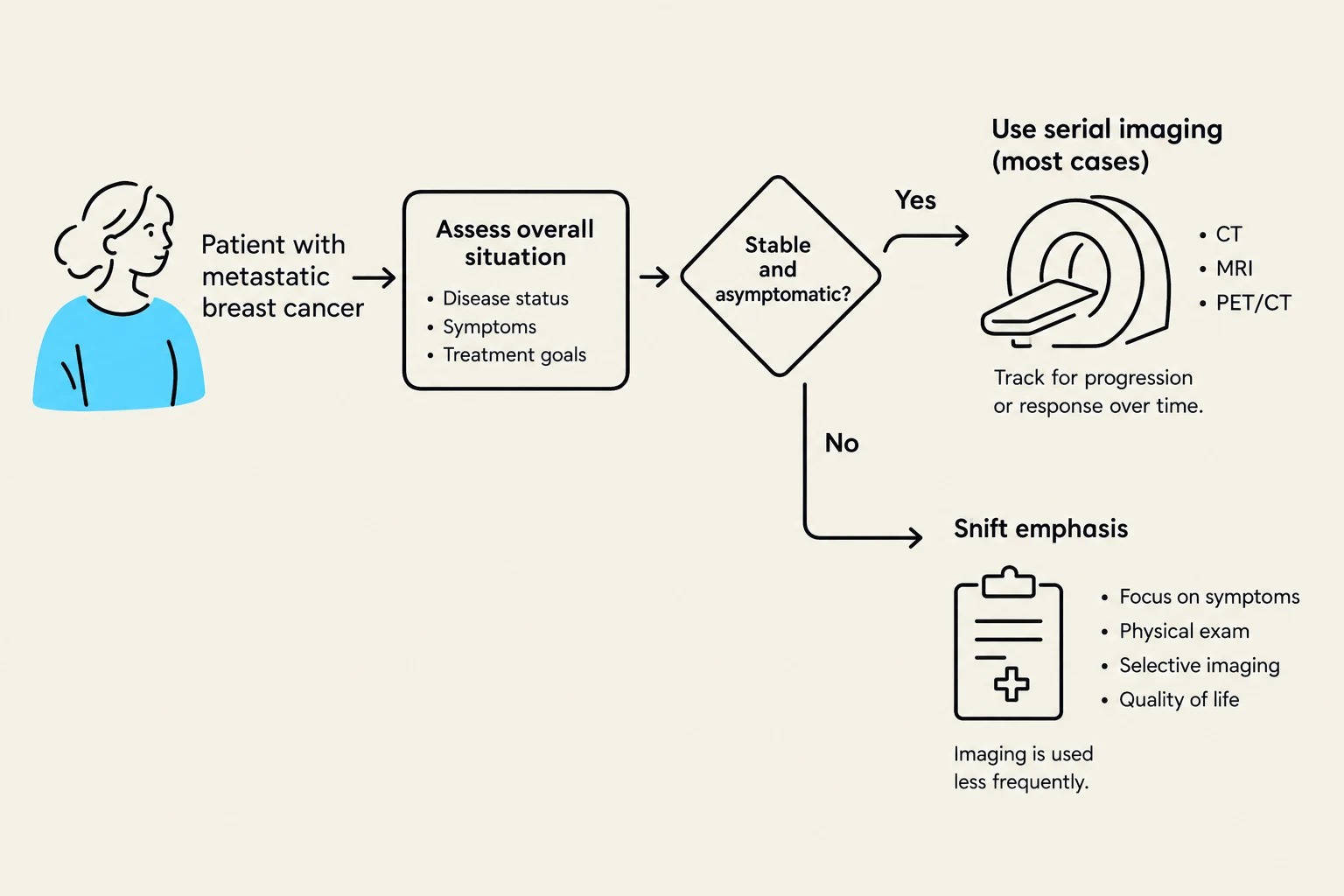
Imaging plays a critical role in providing objective evidence of disease activity. Common modalities include bone scans, PET/CT, and cross-sectional imaging (such as CT or MRI).

Keep reading for free.
Create an account to finish this reading and make it part of your study routine.
Continue reading freeAlready have an account? Log in
Updated