This reading explains Mollicutes, a unique group of bacteria lacking cell walls that colonize plant vascular systems, causing diseases like Aster Yellows. It details their pathogenesis, symptoms, reliance on insect vectors for transmission, and management strategies including host resistance, sanitation, vector control
Bacterial plant pathogens present a significant challenge to global agriculture due to their rapid reproduction, ease of entry into host tissues, and diverse methods of dissemination. While many bacteria are harmless saprotrophs or even beneficial endophytes, a subset of approximately 100 species are specialized pathogens capable of causing devastating diseases such as blights, rots, cankers, and wilts. Among these, the Mollicutes represent a unique and particularly difficult group of prokaryotes that bypass traditional plant defenses by colonizing the very plumbing of the plant: the vascular system.
Understanding Mollicutes
The term "Mollicutes" is derived from the Latin mollis (soft) and cutes (skin), a name that reflects their most defining biological characteristic: they lack a cell wall. Because they do not possess a rigid cell wall, they are among the smallest and simplest self-replicating prokaryotes, typically measuring only 0.3 to 0.5 μm in size.
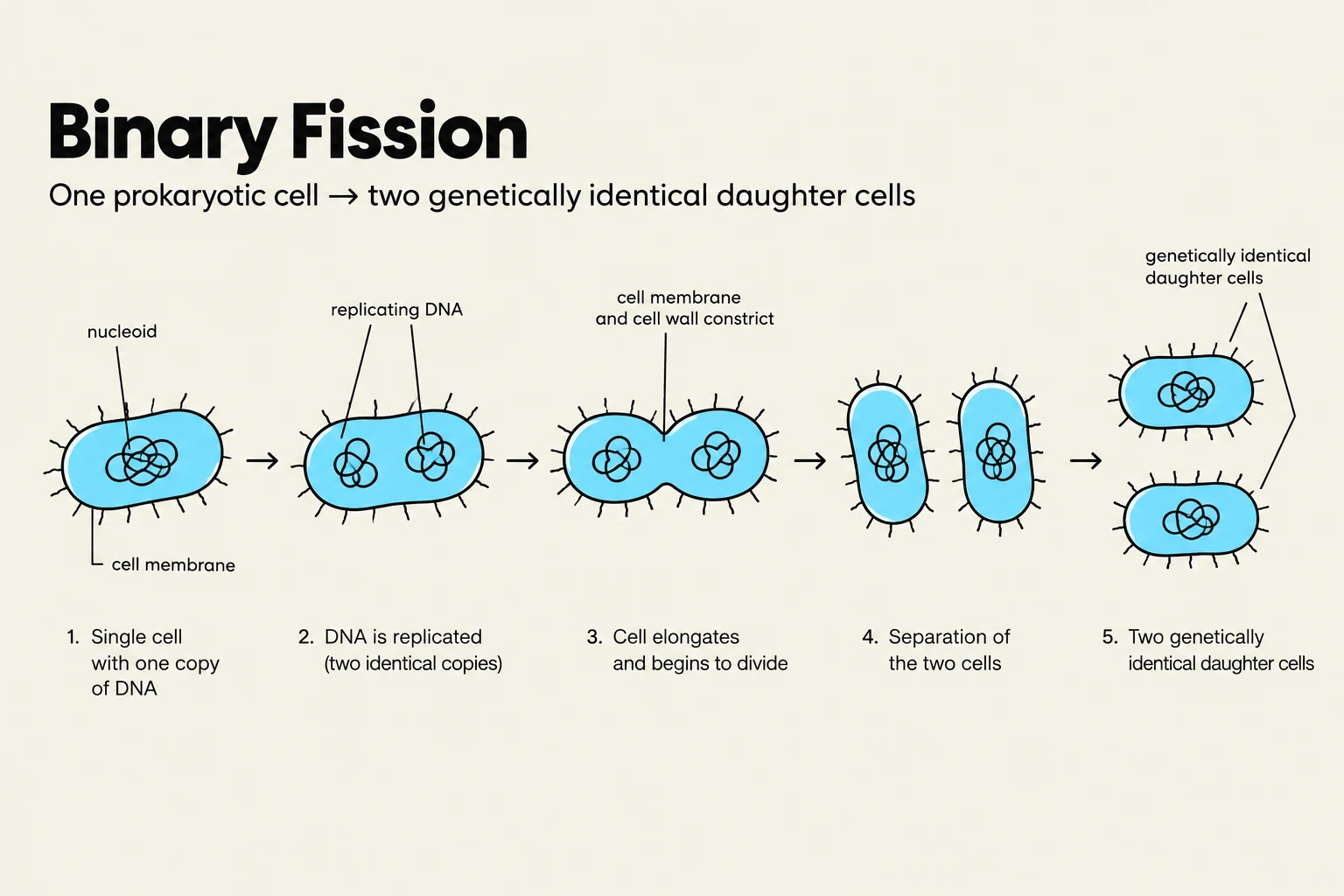
Unlike many other bacteria that inhabit the intercellular spaces of leaves or the surface of plants (epiphytes), Mollicutes are specialized to survive within living plant tissue and colonize the vascular system. They undergo reproduction via binary fission, an asexual process where a single cell divides into two genetically identical daughter cells.
Exam Tip: When distinguishing Mollicutes from typical bacteria, remember that the absence of a cell wall is their primary structural difference. This also means they do not fit the standard Gram stain classifications used for walled bacteria.
Diagram illustrating the process of binary fission in a prokaryotic cell, where one cell divides into two genetically identical daughter cells.
Pathogenesis and Symptoms
Mollicutes disrupt plant physiology through several mechanisms. Once they colonize the vascular vessels, they can induce the deposition of callose—a polysaccharide—within the vessels. This callose deposition acts as a physical blockage, preventing the transport of water and nutrients throughout the plant. Furthermore, Mollicutes can alter plant growth by producing toxins or interfering with the plant's natural hormones and growth regulators.
Common symptoms of Mollicute infection include:
Dwarfing/Stunting: Reduced overall plant size.
Chlorosis and Yellowing: Loss of chlorophyll in leaves.
Witches' Broom: The growth of a dense mass of shoots from a single point, resembling a broom or bird's nest.
Deformation: Malformed flowers or pods (e.g., in Aster Yellows).
A classic example is Aster Yellows, which is of particular concern in the Canadian Prairies. In infected canola, flowers may be replaced by sterile, leaf-like structures, and the plants may even turn unusual colors like purple or blue-green.
The Role of Vascular-Feeding Insects
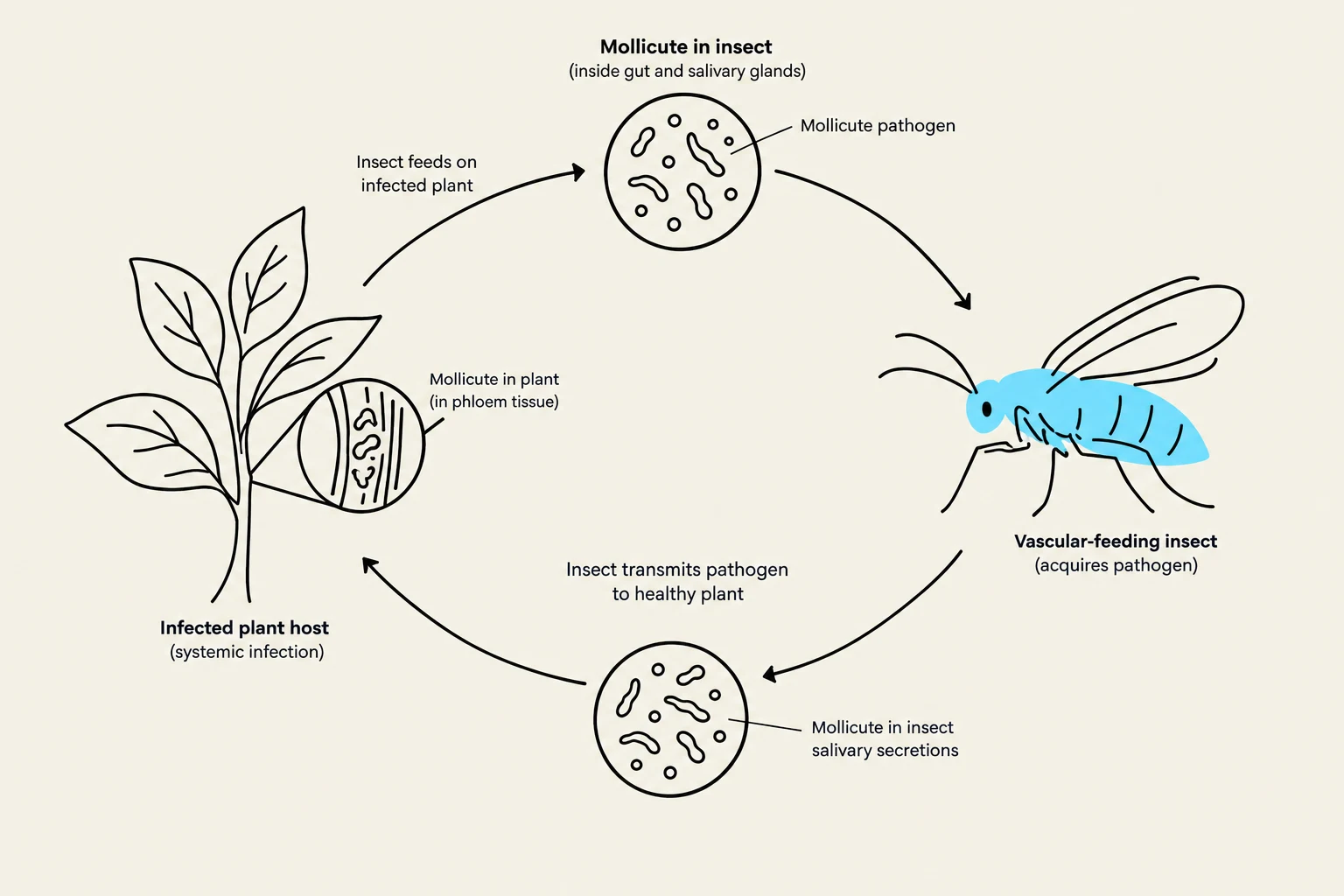
A critical aspect of the Mollicute life cycle is their reliance on vascular-feeding insects for transmission. Mollicutes exist in a two-part living cycle: they reside both within the plant host and within the insect vector (such as leafhoppers).
Because these bacteria live in the xylem or phloem, they cannot easily move through the plant via wind or rain splash like other bacteria. Instead, they "hitch a ride" on insects that pierce the plant tissue to feed on sap. For instance, the Potato leafhopper is a known vector for various Mollicute-related issues.
Diagram illustrating the life cycle of a mollicute pathogen, showing its transmission between an infected plant host and a vascular-feeding insect.
Bacterial Disease Management Strategies
Managing bacterial diseases is notoriously difficult because many pathogens can overwinter in protected cells, reproduce rapidly, and enter hosts through tiny natural openings like stomates, lenticels, or hydathodes.
General Bacterial Management
For most bacterial pathogens, the best strategy is prevention. Effective methods include:
Host Resistance: Using resistant cultivars to minimize infection.
Sanitation: Using disease-free transplants and seeds, and disinfecting pruning tools to prevent spreading pathogens from one plant to another.
Cultural Practices: Minimizing leaf wetness, practicing crop rotation, and avoiding planting in overly wet or dry soils.
Chemical Control: Using copper-based chemicals or antibiotics like streptomycin, though the latter may only offer a "cure" and can lead to antibiotic resistance.
Specialized Mollicute Management
Because Mollicutes are often resistant to standard chemical applications, management must focus heavily on the vector and the host:
Vector Management: Controlling the insect populations (like leafhoppers) that spread the bacteria is paramount.
Removal: Promptly removing and destroying infected plants to eliminate the local inoculum source.
Biological Control
An emerging area of management is biological control, which uses beneficial organisms to combat pathogens. An example is the use of phages—viruses that specifically infect and kill bacteria. In the case of Xylella fastidiosa (a vascular bacterium causing Olive Quick Decline Syndrome), researchers have utilized "XylePhage" to target the bacteria.
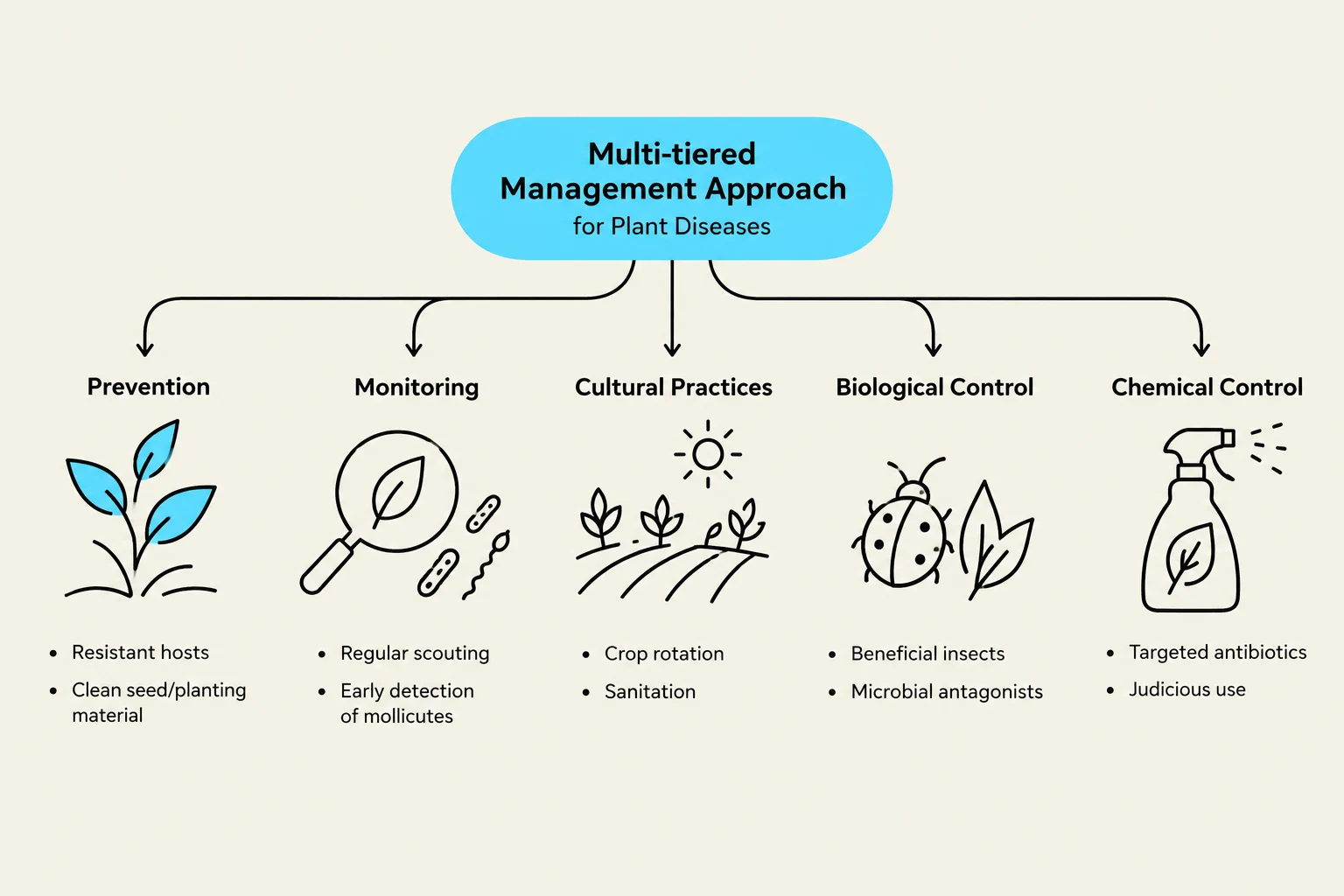
A diagram illustrating a multi-tiered management approach for plant diseases, encompassing prevention, monitoring, cultural practices, biological control, and chemical control methods.
Summary Table: Comparison of Management Focus
Pathogen Type
Primary Entry/Spread
Key Management Focus
General Bacteria
Wounds, Stomata, Rain splash
Sanitation, Copper, Crop rotation
Mollicutes
Vascular-feeding insects
Vector control, Host resistance, Removal
Keep reading for free.
Create an account to finish this reading and make it part of your study routine.