


In the study of chemistry, understanding how matter is organized at the atomic level is essential. Matter is often categorized into two fundamental groups: elements and compounds. While both are made of atoms, the way these atoms interact and combine determines the unique properties of the substances we encounter in the world around us. This article explores the distinctions between molecular elements and compounds, the mechanism of the covalent bond, and the predictable patterns that govern molecular structures.
Elements vs. Compounds

Molecular Elements
An element is a substance that consists of only one type of atom. When these atoms bond to one another, they form molecular elements. Because the atoms are identical, the chemical notation often uses subscripts to show how many atoms are paired together. Common examples include:
- Oxygen gas:
- Iodine: (represented as )
- Hydrogen: (represented as )
Compounds
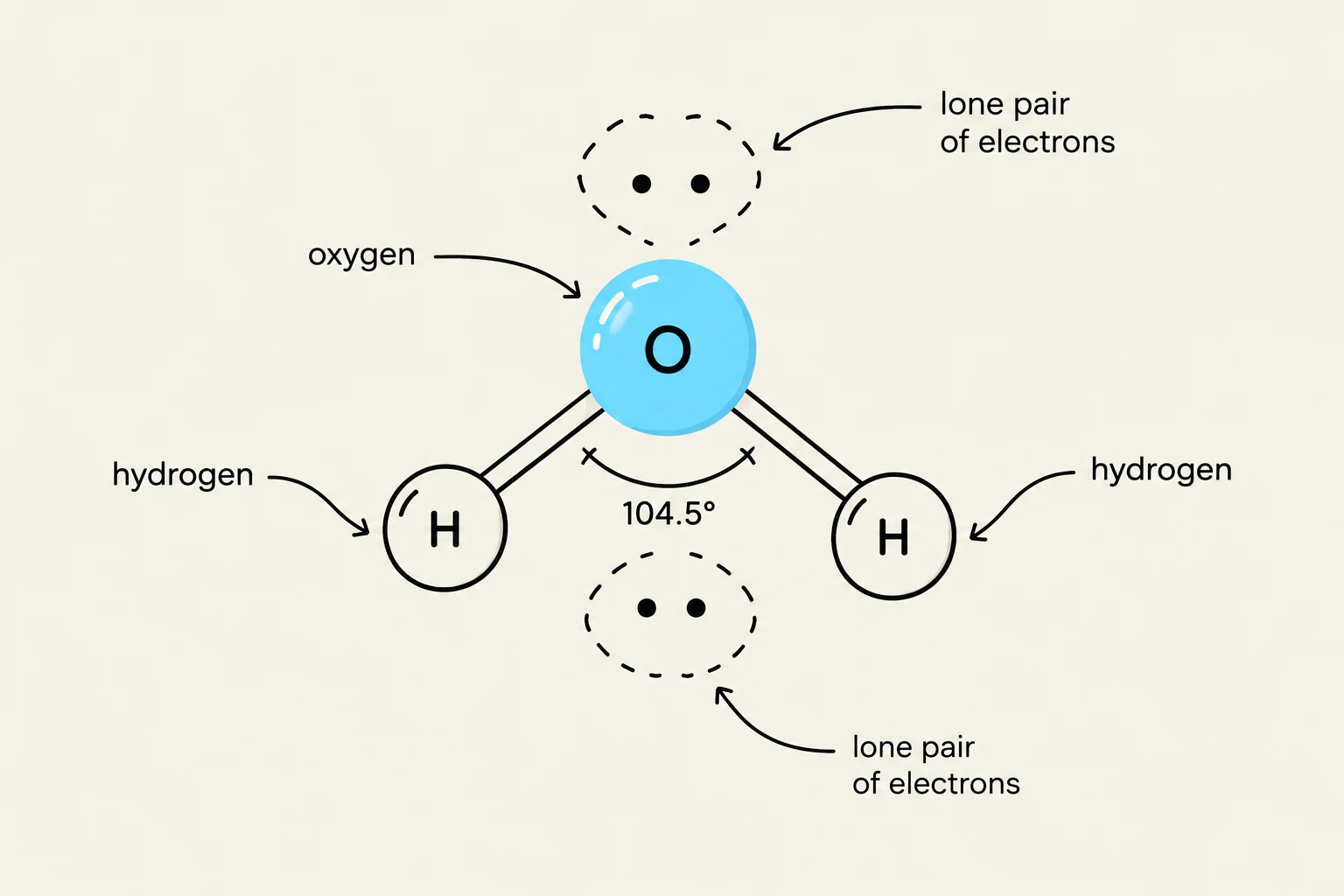
In contrast, a compound is formed when different types of elements are chemically combined. A classic example is water (), which brings together hydrogen and oxygen atoms to create an entirely new substance with different properties than the original elements.
The Covalent Bond
How do these atoms stay together? For many nonmetals and metalloids, the primary mechanism is the covalent bond.
The Role of Valence Electrons
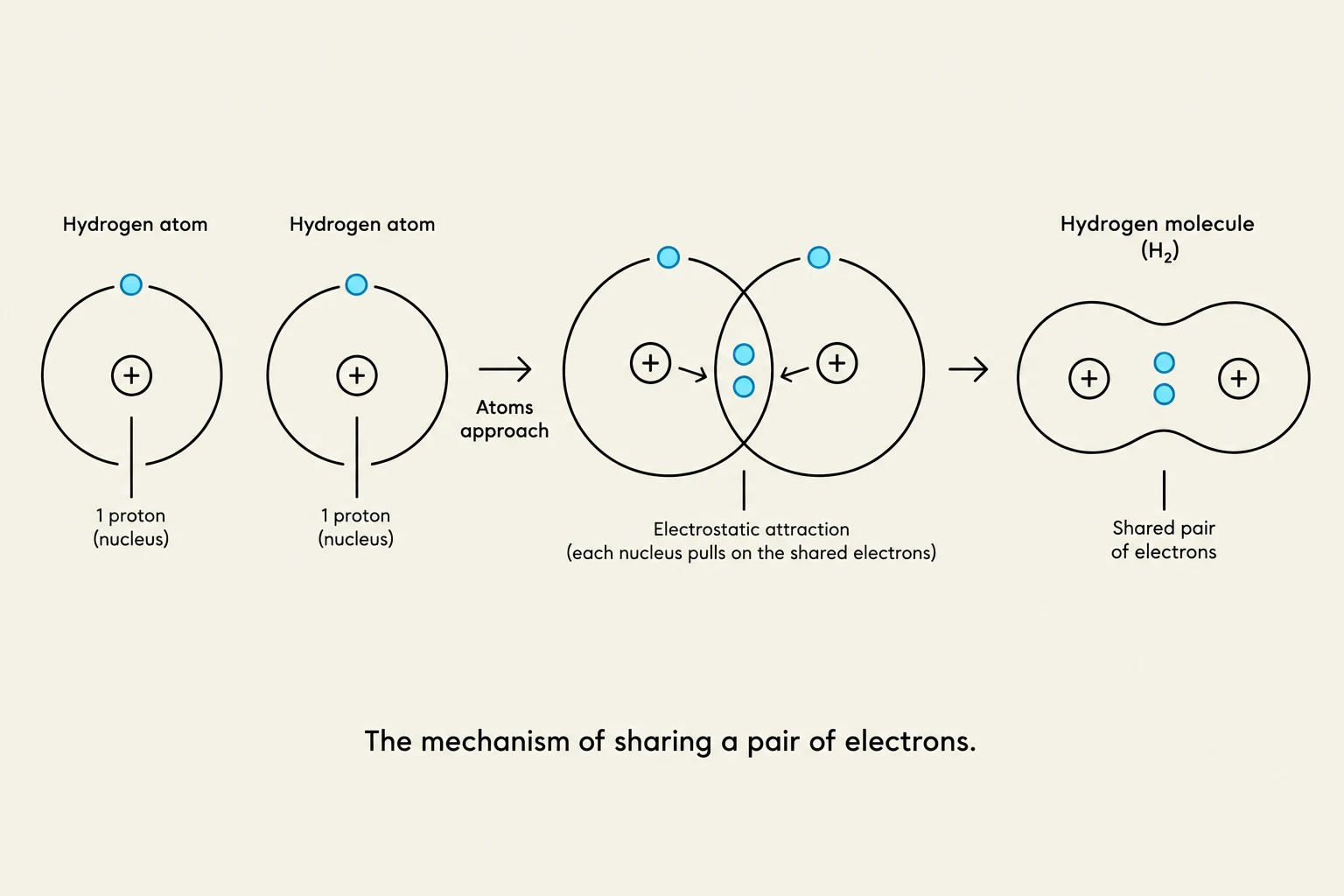
Atoms seek stability, which they achieve by filling their outer electron shells. The electrons located in these outermost shells are known as valence electrons. For instance, a Hydrogen atom achieves stability by filling its first and only electron shell with exactly 2 electrons.
Keep reading for free.
Create an account to finish this reading and make it part of your study routine.
Continue reading freeAlready have an account? Log in
Updated