


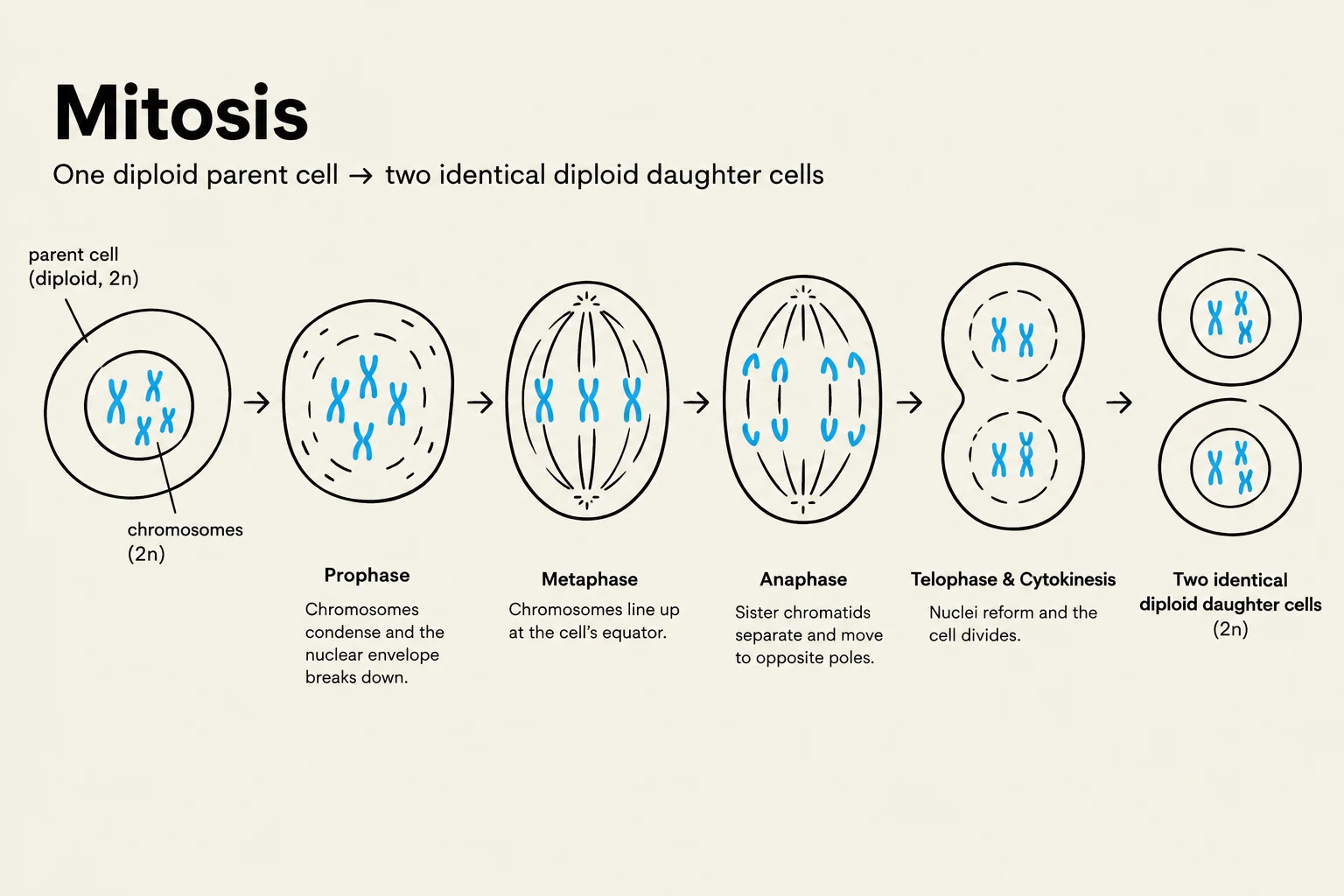
In the study of clinical anatomy and physiology, understanding how life perpetuates at a cellular level is fundamental. Every organism, from the smallest mammal to the largest dinosaur, relies on the precise replication and distribution of genetic material to grow, repair tissues, and reproduce. This biological continuity is governed by two distinct mechanisms of cell division: mitosis and meiosis. While both processes involve a parent cell dividing to create new life, their biological objectives, the resulting daughter cells, and the chromosomal counts they produce are vastly different.
The Foundation: Chromosomes and Genetic Makeup
Before diving into the mechanisms of division, we must understand the "blueprints" being divided: the chromosomes. Chromosomes carry the genetic makeup of an organism, containing the instructions necessary for all biological functions.
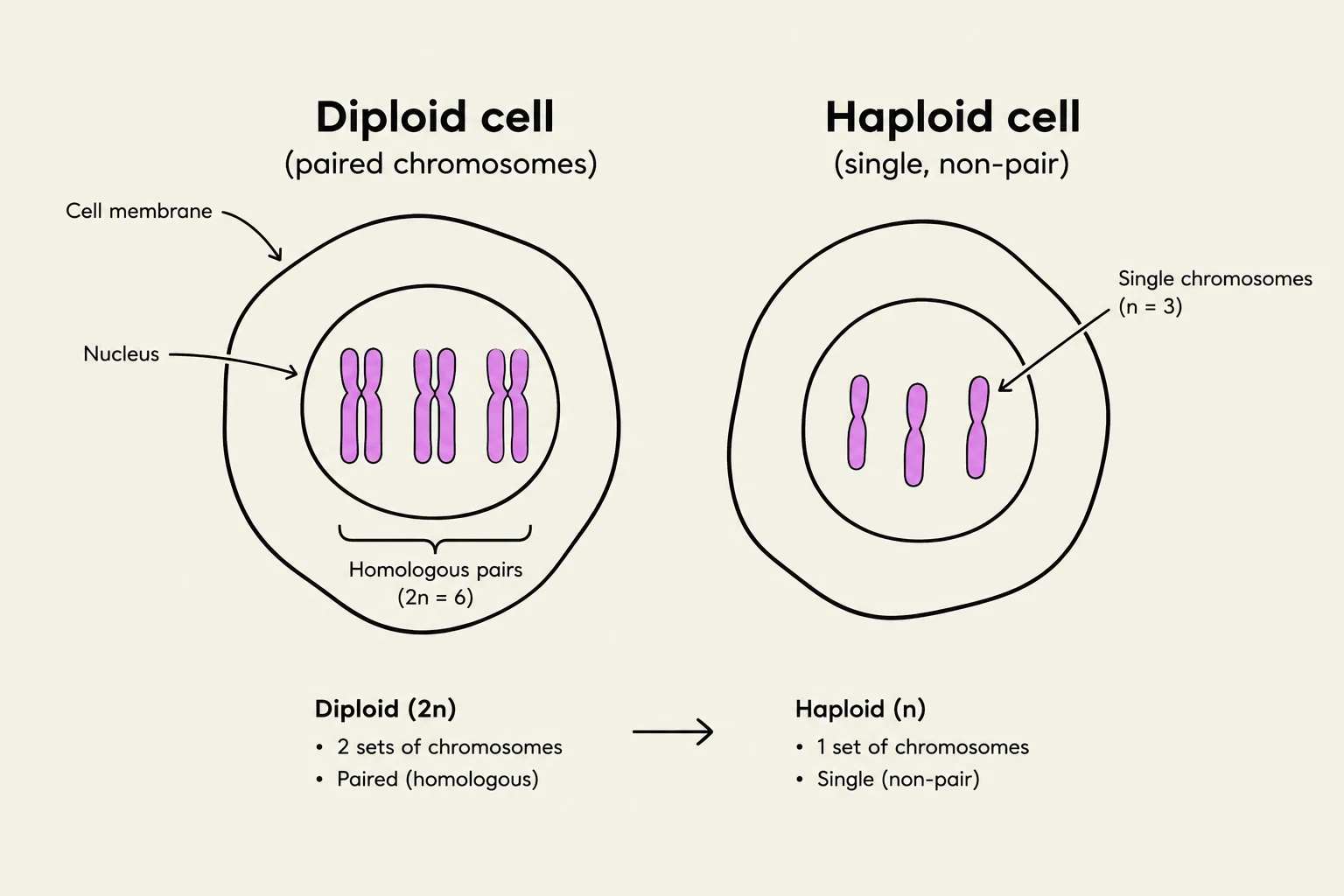
In most organisms, cells are categorized by their chromosome count:
- Diploid Chromosomes: A diploid set refers to the full complement of chromosomes characteristic of a specific species. In a diploid cell, chromosomes exist in pairs—one inherited from each parent. This state is essential for maintaining the stability of the organism's genetic identity.
- Haploid Chromosome Number: A haploid set contains only half the number of chromosomes found in a diploid cell. This reduction is a specialized requirement for reproductive cells.
Clinical Note: Understanding the difference between diploid and haploid states is crucial when studying genetics, congenital abnormalities, and reproductive health in veterinary and human medicine.

Keep reading for free.
Create an account to finish this reading and make it part of your study routine.
Continue reading freeAlready have an account? Log in
Updated