


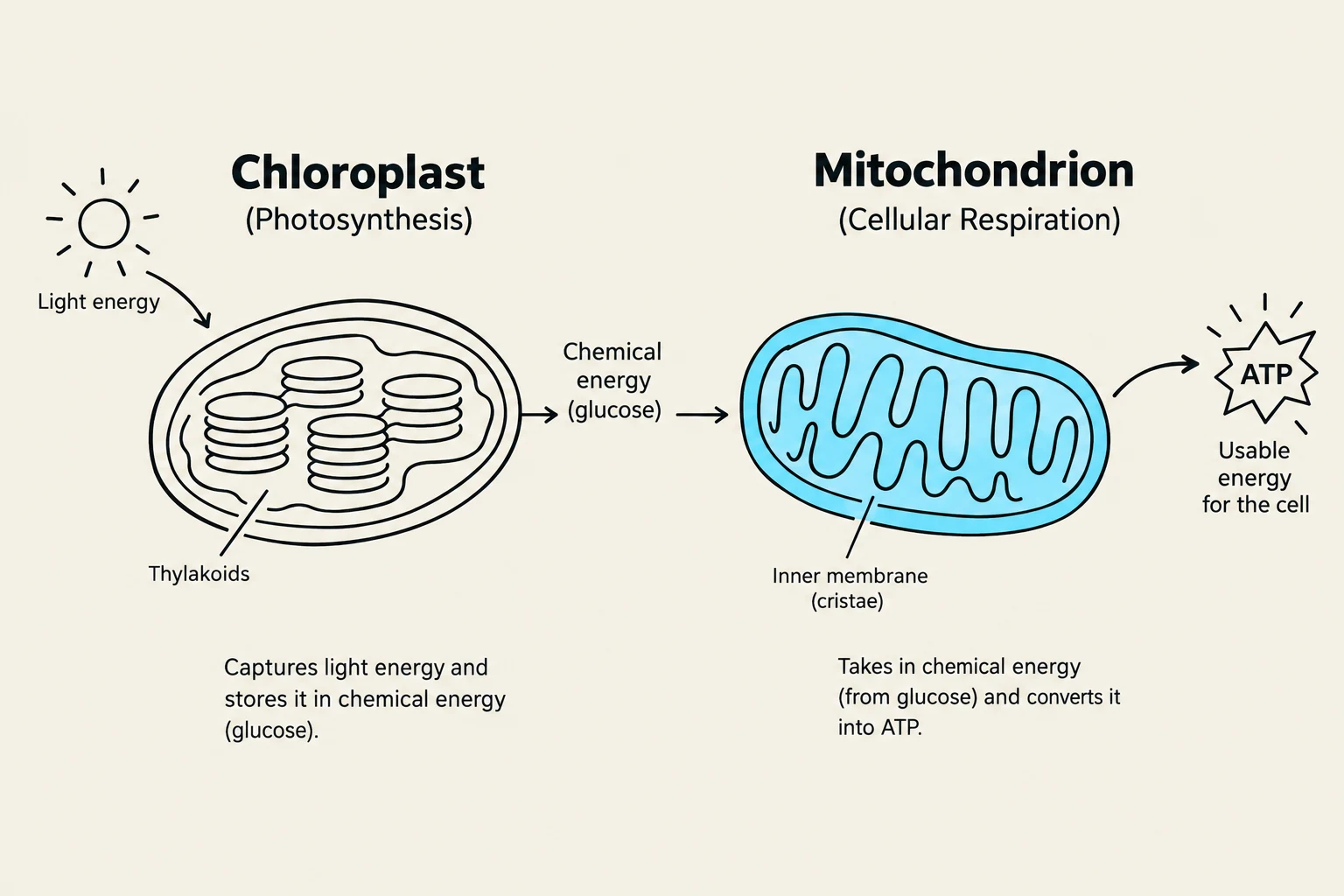
At the heart of cellular life lies the ability to convert energy from the environment into a usable chemical form: Adenosine Triphosphate (ATP). While all cells require energy to maintain homeostasis, specialized organelles have evolved to master this conversion through complex membrane-bound processes. In animal cells, the mitochondria serve as the primary powerhouses through oxidative phosphorylation, whereas in plants, chloroplasts harness sunlight through photosynthesis. Despite their different energy sources, both organelles share a fundamental logic: they use electron transport chains to create proton gradients that drive the synthesis of ATP.
The Evolutionary Origin: Endosymbiont Theory
To understand why mitochondria and chloroplasts are so unique, we must look at their evolutionary history. The Endosymbiont Theory suggests that these organelles originated from a symbiotic relationship between a eukaryotic cell and a prokaryote. Several pieces of evidence support this theory:
- Double Membranes: Both organelles are surrounded by two distinct lipid bilayers.
- Genetic Independence: They possess their own circular DNA and 70S ribosomes, which are characteristic of bacteria.
- Reproduction: They divide independently of the cell cycle through a process called fission.
Mitochondrial Structure and Energy Harvesting
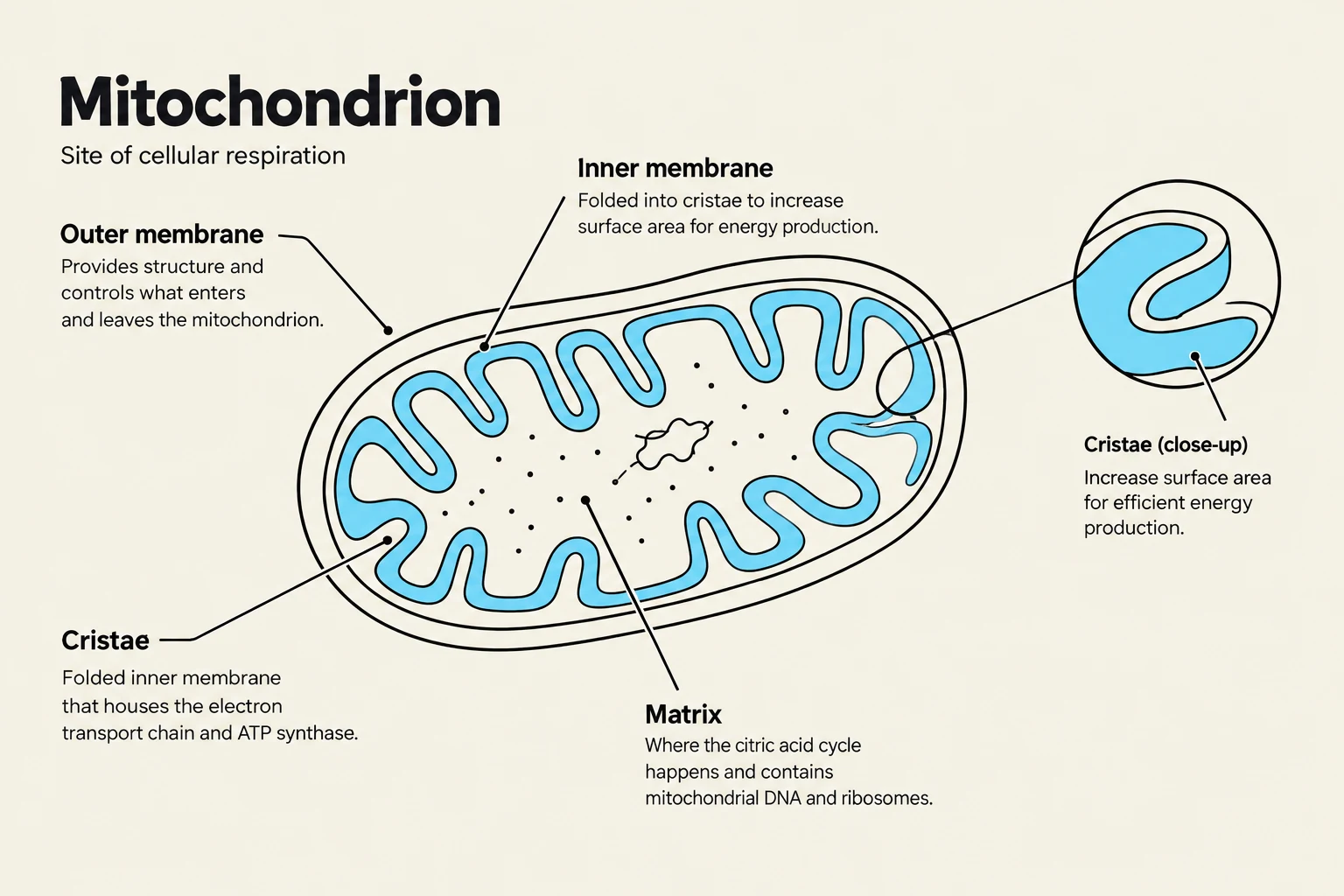
The mitochondrion is a highly dynamic organelle that constantly changes shape through fusion and fission. Its structure is specifically optimized for energy production:
- Outer Membrane: Contains porins that allow for the passage of certain molecules.
- Inner Membrane: Highly folded into structures called cristae, which significantly increase the surface area available for chemical reactions.
- Mitochondrial Matrix: The innermost compartment containing enzymes for the citric acid cycle, circular DNA, and ribosomes.
Before the mitochondria can produce large amounts of ATP, the cell must first break down glucose in the cytosol through glycolysis. This process yields a small amount of energy (2 ATP and 2 NADH per glucose molecule) and produces pyruvate, which then enters the mitochondria. Once inside the matrix, the Citric Acid Cycle (also known as the TCA cycle) processes the derivatives of pyruvate, generating high-energy electron carriers: NADH and .
Keep reading for free.
Create an account to finish this reading and make it part of your study routine.
Continue reading freeAlready have an account? Log in
Updated