


The middle ear is a complex, air-filled space essential for the amplification of sound. Because it is protected by the tympanic membrane (TM) and relies on a delicate chain of ossicles, it is susceptible to both mechanical injury and pathological growths. Understanding the distinction between traumatic injuries and neoplastic processes is vital for preventing long-term hearing loss and identifying potentially dangerous vascular masses.
Middle Ear Trauma
Trauma to the middle ear most commonly manifests as a traumatic perforation of the tympanic membrane. This injury can disrupt the normal pathway of sound conduction and, in severe cases, damage the underlying bony structures of the ear.
Etiology of Tympanic Membrane Perforation
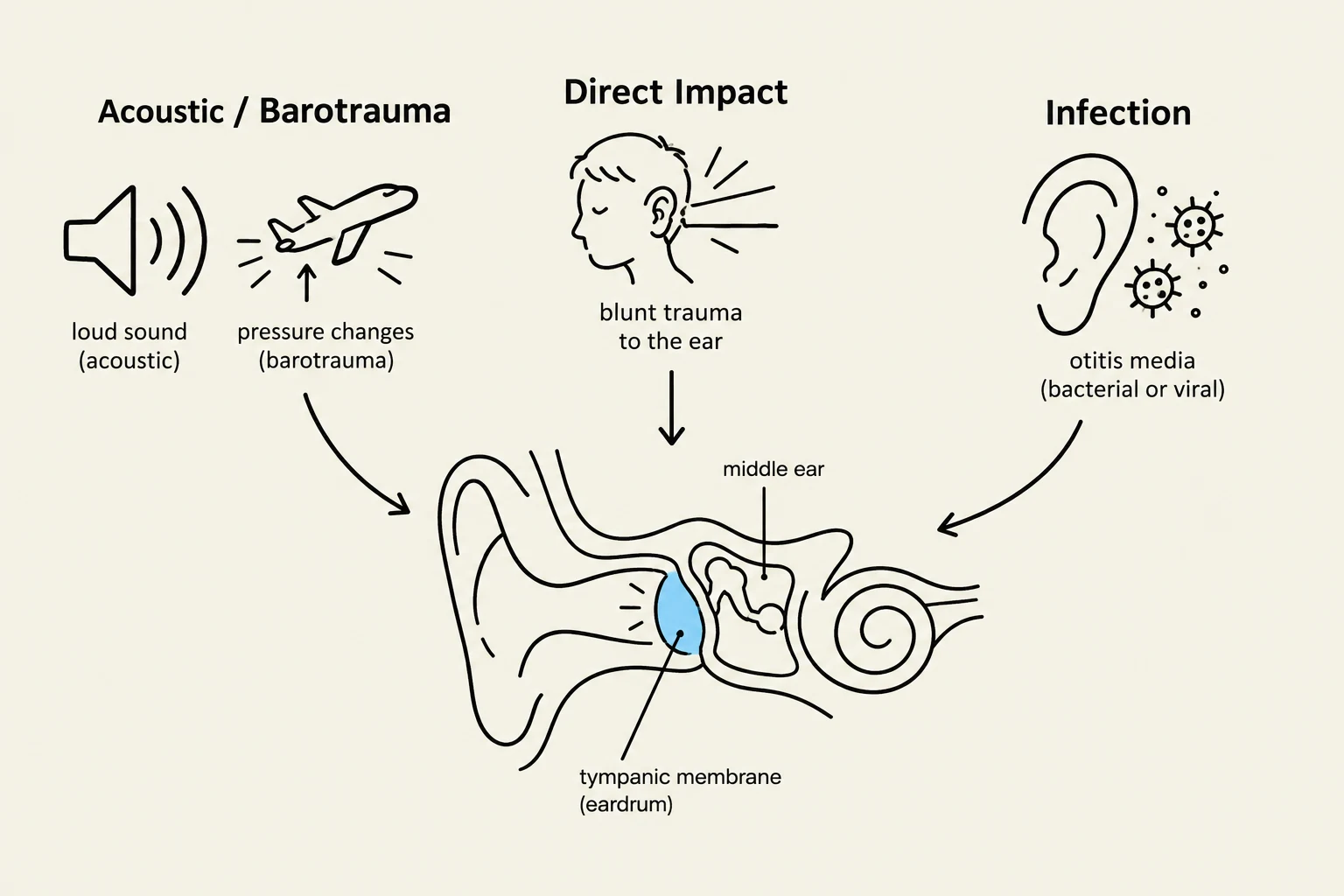
Perforations can arise from several distinct mechanisms:
- Acoustic/Barotrauma: Rapid changes in pressure, such as those experienced during airplane descent or scuba diving, can distort the TM. Explosions can also cause sudden acoustic trauma.
- Direct Trauma: Physical impact to the ear or the insertion of foreign objects can cause immediate tearing.
- Iatrogenic/Infection: Perforations may occur during medical procedures like myringotomy or as a complication of underlying infections.
Clinical Presentation and Hemotympanum
Patients may present with acute ear pain, bloody otorrhea (discharge), or varying degrees of hearing loss. A significant clinical finding in traumatic cases is hemotympanum, which refers to the accumulation of blood behind the tympanic membrane. On otoscopic examination, this may appear as a dark or bruised appearance of the TM.
Ossicular Chain Disruption and Hearing Loss
While many TM perforations are small or linear and heal spontaneously over several weeks, more severe trauma can lead to ossicular chain disruption. The ossicles (malleus, incus, and stapes) are responsible for amplifying sound vibrations from the TM to the oval window. If these bones are displaced or broken, the patient will experience conductive hearing loss.


Keep reading for free.
Create an account to finish this reading and make it part of your study routine.
Continue reading freeAlready have an account? Log in
Updated