


In microbiology, the ability to isolate a single, pure strain of bacteria from a mixed population is a fundamental skill. This process, known as "picking a colony," is the bridge between observing a messy, heterogeneous culture and obtaining a genetically uniform sample for further study. Whether you are preparing a subculture, performing a Gram stain, or conducting biochemical tests, the precision with which you select and transfer a colony determines the success of your entire experiment.
Understanding the Goal of Colony Isolation
When bacteria are spread across an agar plate, they grow into visible clusters called colonies. Ideally, each colony arises from a single "Colony Forming Unit" (CFU)—a single cell or a small group of identical cells.
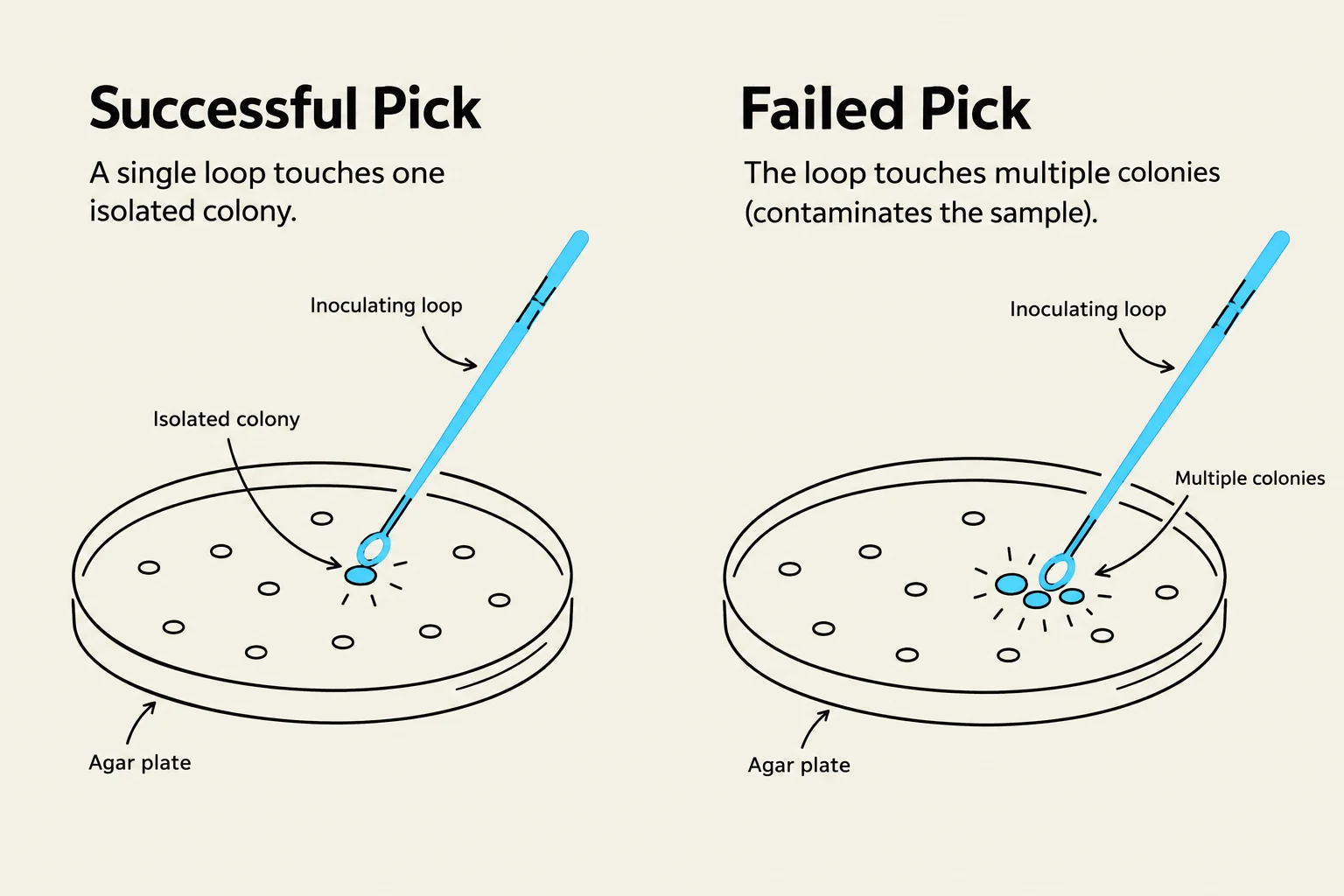
The primary objective of picking a colony is to ensure purity. If you accidentally pick up bits of two different colonies growing side-by-side, you will create a mixed culture, rendering your downstream results unreliable.
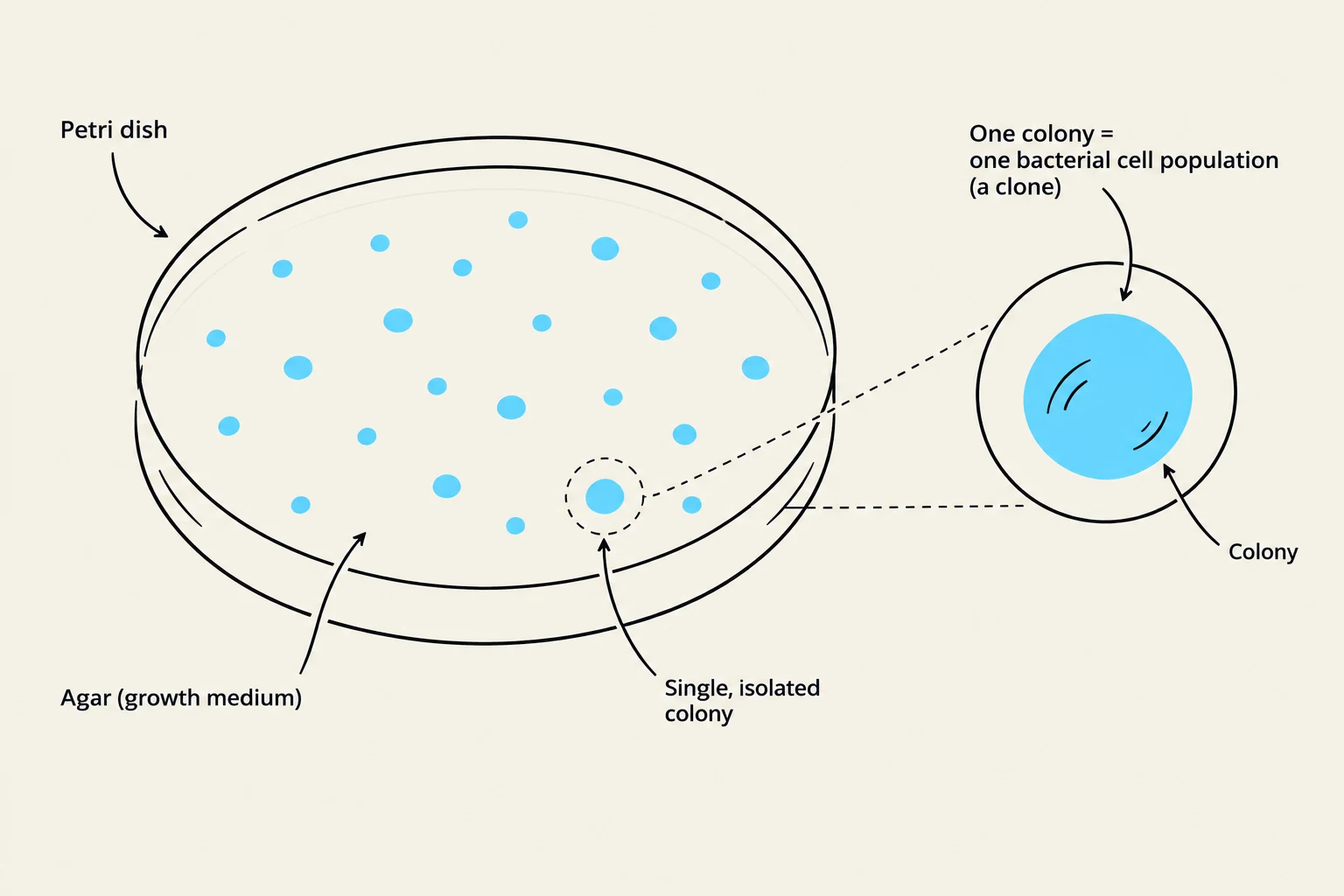
Exam Tip: If a question asks why we pick a single, well-isolated colony rather than a large mass of growth, the answer is always to ensure genetic uniformity and prevent contamination from other species present on the plate.
The Step-by-Step Procedure
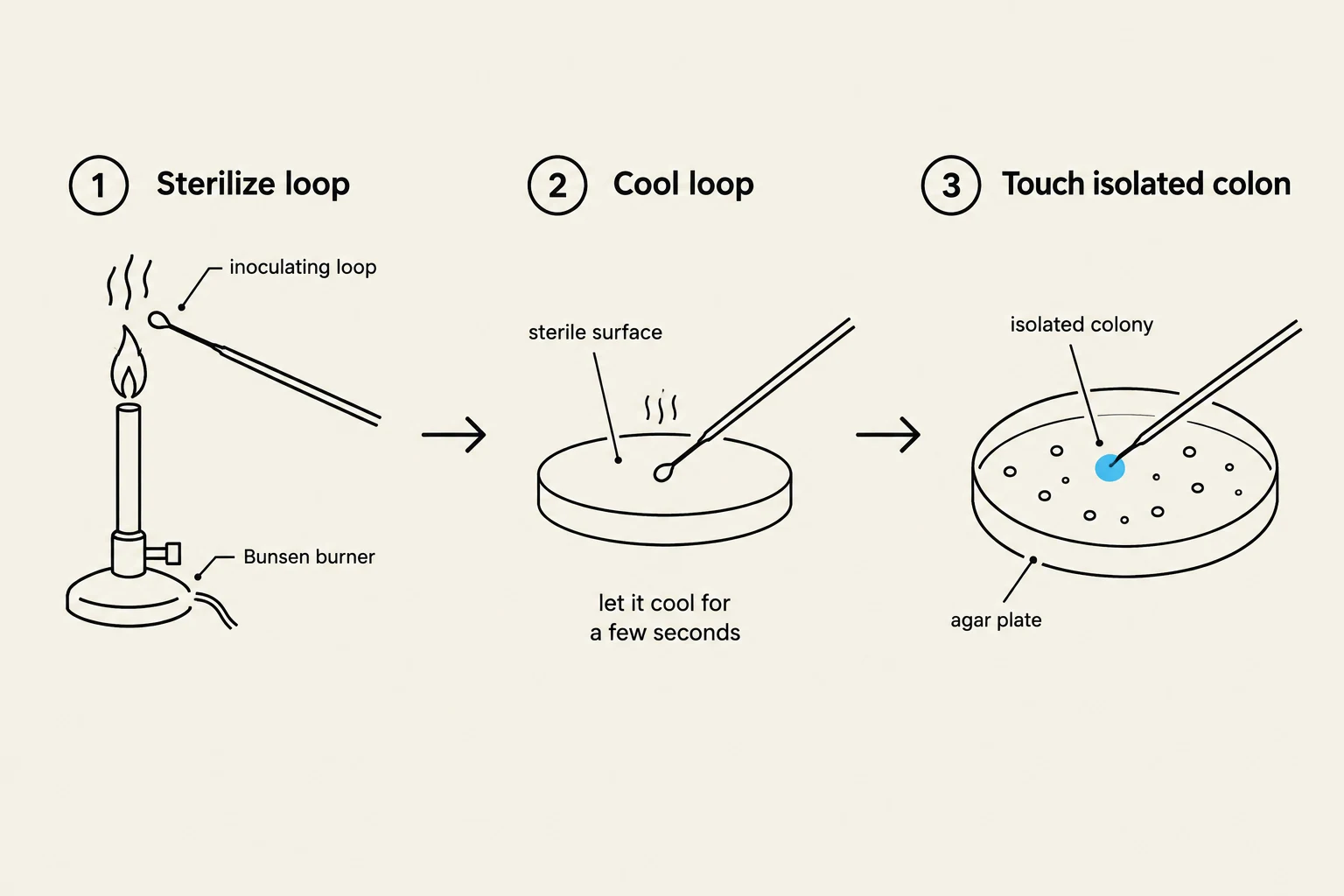
Picking a colony requires aseptic technique to prevent introducing contaminants from the environment (like dust or skin microbes) into your sample, and to protect yourself from the microbes being studied.
Keep reading for free.
Create an account to finish this reading and make it part of your study routine.
Continue reading freeAlready have an account? Log in
Updated