


For a microbe to survive, grow, and reproduce, it must constantly interact with its environment. One of the most critical aspects of this interaction is the movement of nutrients across the cell membrane into the cytoplasm. Because the cell membrane is selectively permeable, it acts as a gatekeeper, ensuring that essential nutrients enter the cell while preventing the loss of internal components. Microbes utilize two primary strategies to move these substances: passive transport and active transport.
Passive Transport: Moving with the Flow
Passive transport is the movement of substances from an area of high concentration to an area of low concentration. This process is "passive" because it does not require the expenditure of cellular energy; instead, it relies on the natural kinetic energy of molecules moving down their concentration gradient.
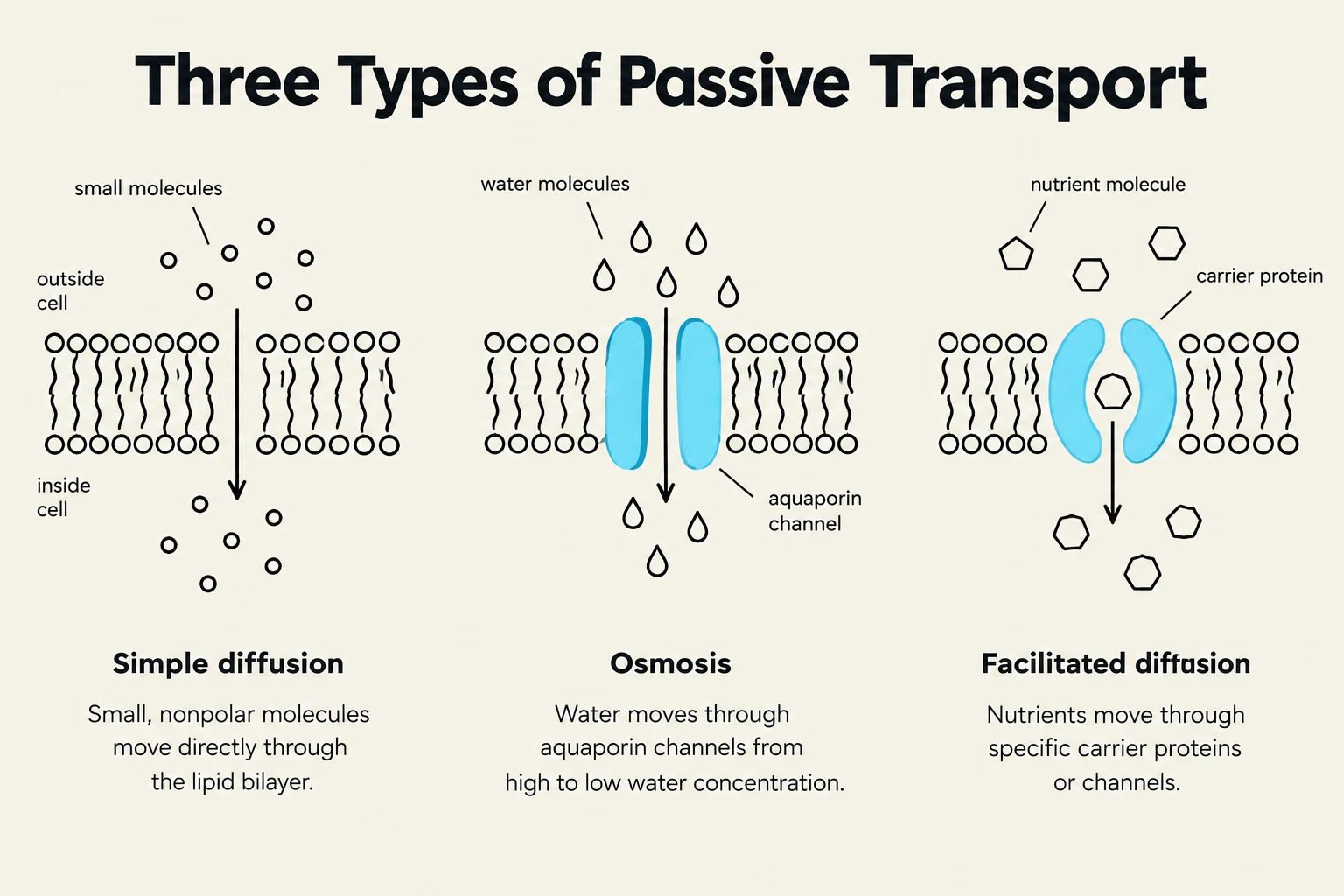
There are three main types of passive transport:
- Diffusion: The random movement of molecules from high to low concentration.
- Osmosis: A specific type of diffusion involving the movement of water molecules.
- Facilitated Diffusion: A process where specific membrane proteins assist the movement of molecules across the membrane, though the direction remains from high to low concentration.
Exam Tip: If a question asks whether passive transport requires energy, the answer is always no. It only moves substances with the concentration gradient.

Keep reading for free.
Create an account to finish this reading and make it part of your study routine.
Continue reading freeAlready have an account? Log in
Updated