


Pathogenicity is not a single event, but rather a sophisticated biological process. For a microorganism to cause disease, it must successfully navigate a series of hurdles: entering the host, attaching to specific tissues, evading the immune system, acquiring nutrients, and ultimately causing damage to host cells. Understanding these mechanisms is fundamental to microbiology, as it reveals how pathogens overcome the complex defenses of the human body.
Measuring Pathogen Potency: Virulence
Before a microbe can cause damage, we must quantify its ability to do so. Virulence refers to the amount of damage a disease caused by a pathogen does to its host. Scientists use two primary metrics to compare the potency of different microbial strains or toxins:
- (Infectious Dose): The number of microbes required to cause infection in 50% of a test population.
- (Lethal Dose): The amount of a toxin or pathogen required to kill 50% of a sample population.
Exam Tip: When comparing two substances, the one with the lower is the more potent or lethal one, because it takes a smaller amount to achieve the same level of lethality.
Step 1: Portals of Entry and Adherence
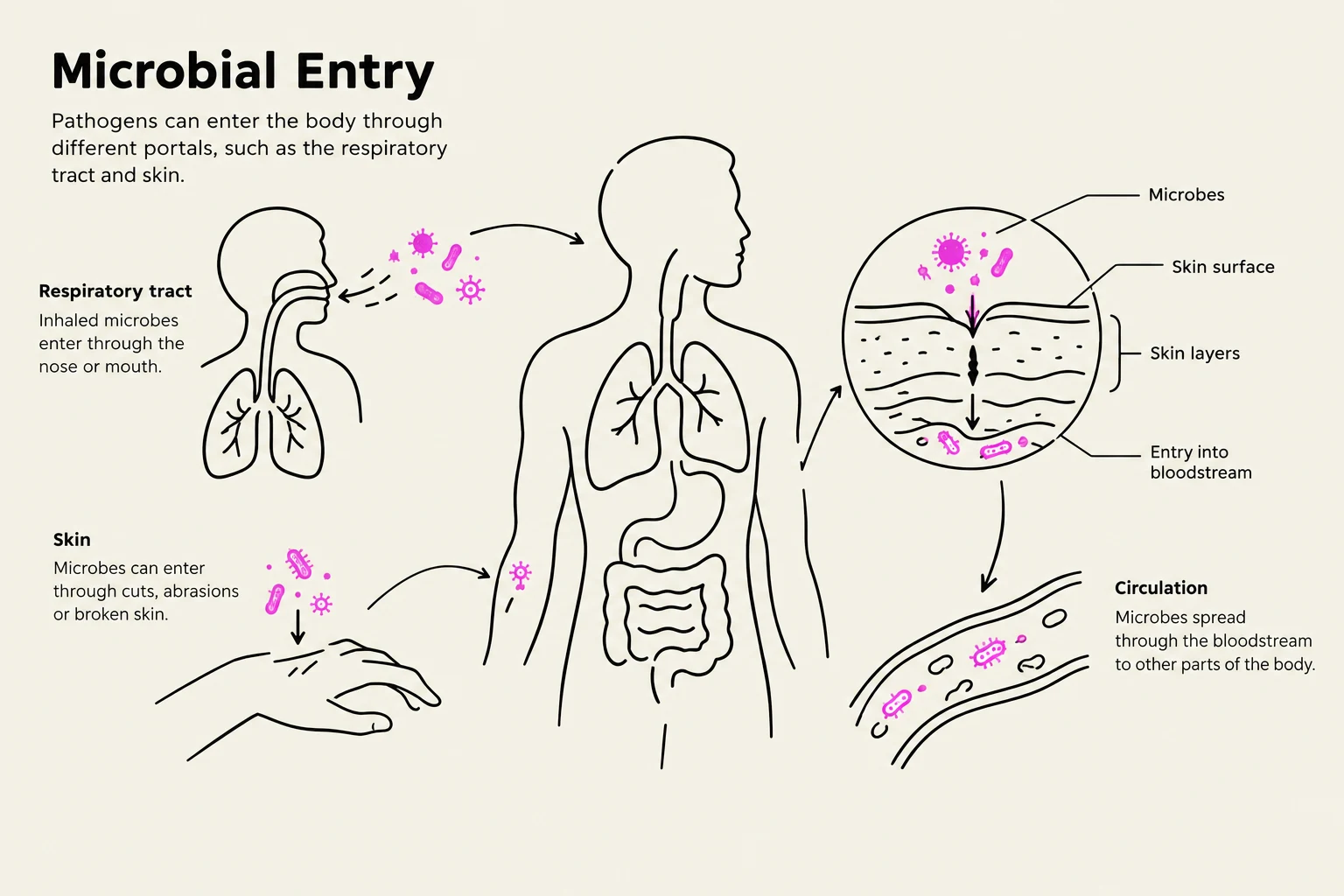
Microbes do not enter the body at random; most have a preferred portal of entry.
Portals of Entry
The most common routes include:
- Mucous Membranes: This includes the respiratory tract (the most common route), the gastrointestinal tract (the enteral route), and the genitourinary tract.
- The Parenteral Route: This involves bypassing the skin through broken skin, wounds, insect bites, or needle punctures.
Adherence: Making the Connection
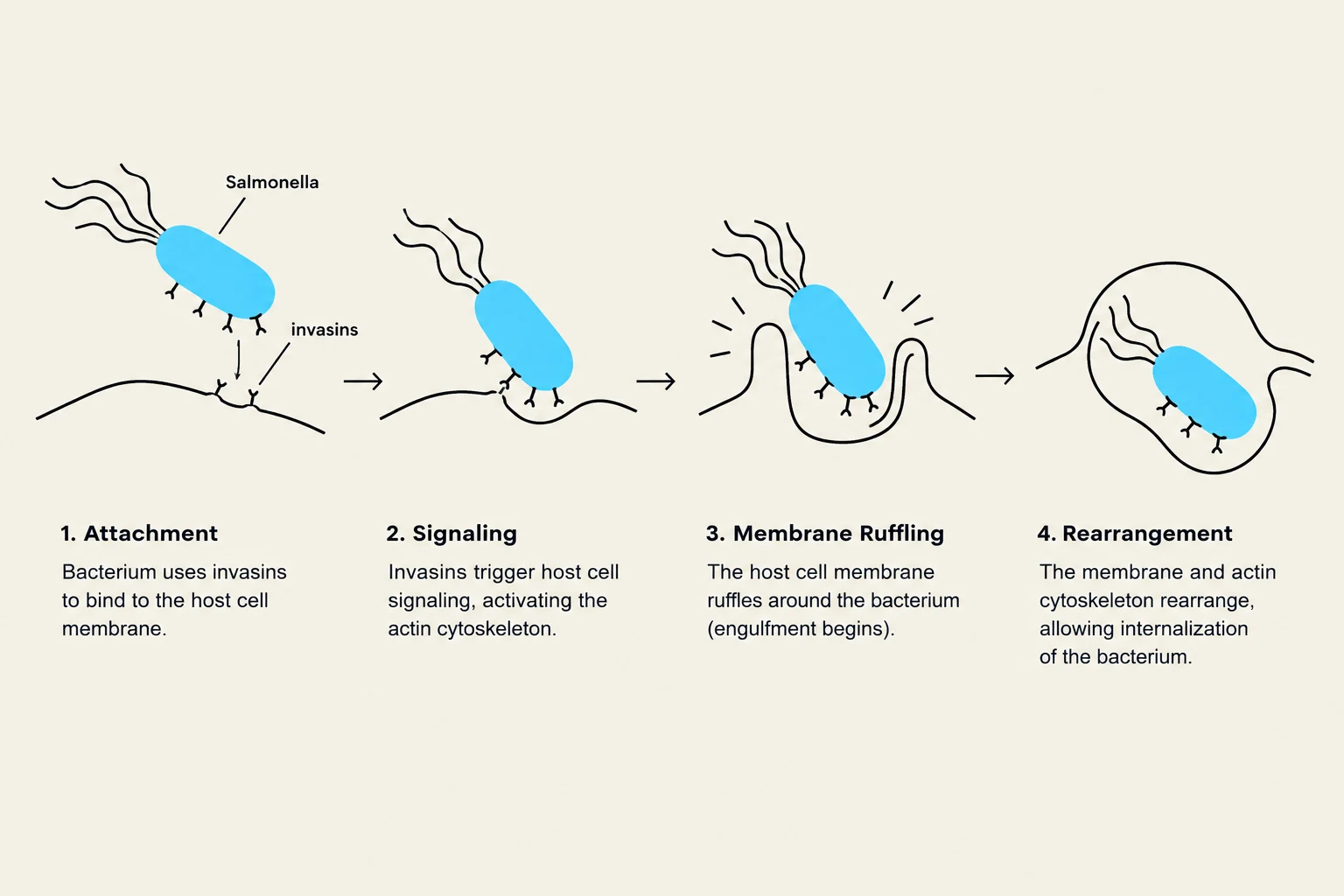
Once inside, a microbe must prevent itself from being washed away by fluids like mucus or urine. This is achieved through adherence, where adhesins (ligands) on the surface of the microbe bind to specific receptors on host cells. Common structures used for this include fimbriae or the glycocalyx. Some bacteria even organize into biofilms, which are complex communities that share nutrients and enhance their ability to attach to surfaces.
Keep reading for free.
Create an account to finish this reading and make it part of your study routine.
Continue reading freeAlready have an account? Log in
Updated