This text discusses various methods of body disposition including cremation, alkaline hydrolysis, and cryomation, as well as the costs and options for memorials.
When a person passes away, the process of deciding how to handle their physical remains is known as body disposition. Historically, traditional cemetery burial was the standard; however, modern trends show a significant shift toward alternative methods. In the United States, for example, cremation was chosen by only 5 percent of the population in the 1970s, but by 2016, that number had risen to 50 percent. This shift is driven by various factors, including cultural changes, economic considerations, and environmental concerns.
Traditional Cremation
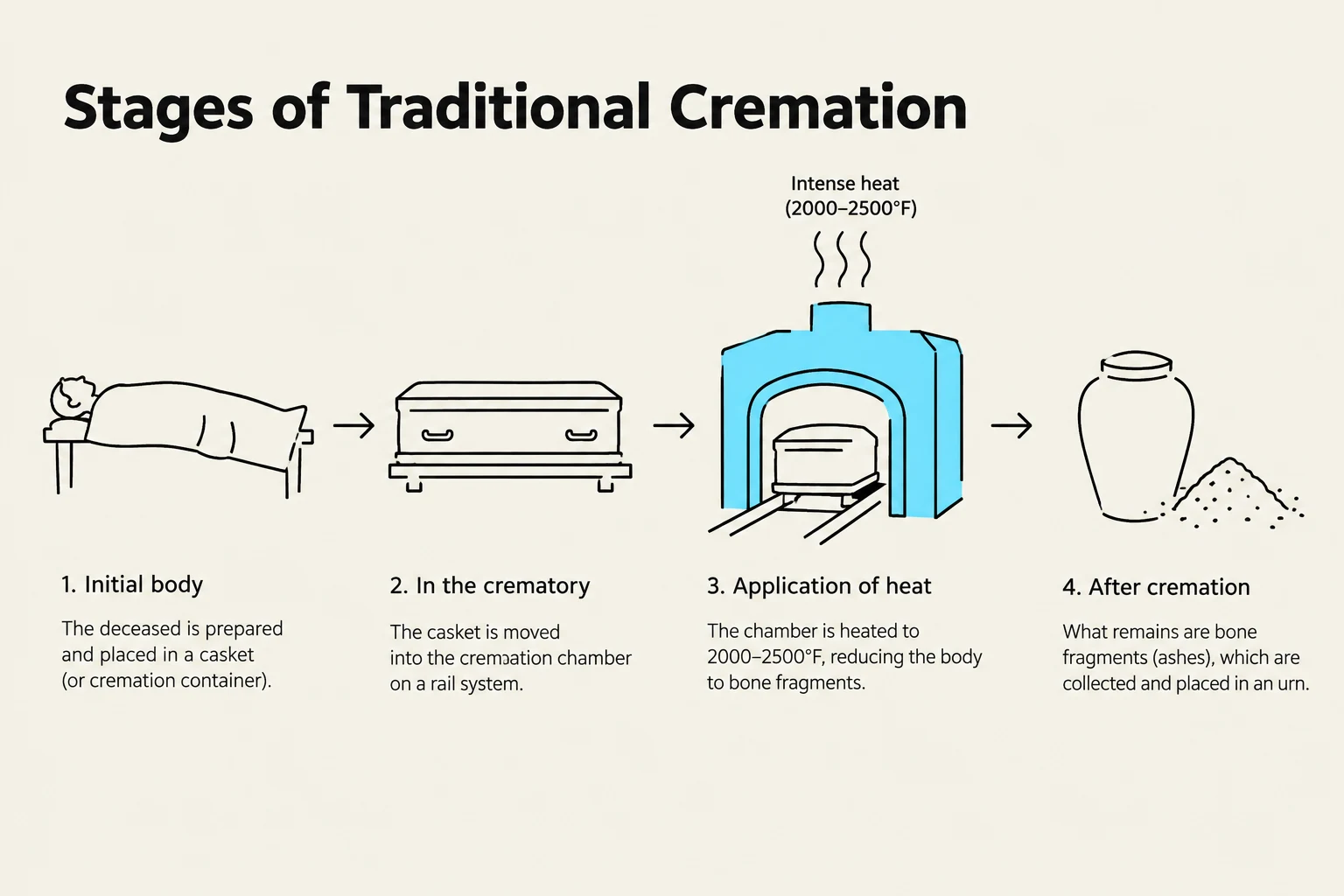
Cremation is the most common method of body disposal in many parts of the world, including India and Japan. The process involves using intense heat—approximately 2000 to 2500 degrees Fahrenheit—to reduce the organic components of a body through dehydration and oxidation.
In the United States, natural gas is the most frequent fuel used in the sophisticated electric or gas retorts that facilitate this process. An average-sized body typically takes about one and a half hours to be reduced to a mineralized skeleton. Once the skeleton is formed, it is processed through a machine called a "cremulator," which reduces the bone fragments into a granular state.
Note on Terminology: While the resulting remains are commonly referred to as "ashes," they do not resemble the soft, powdery ash from wood or paper. Instead, they are small pieces of bone that feel and look similar to coarse coral sands.
This diagram illustrates the four stages of traditional cremation: initial body preparation, placement in the crematorium, application of intense heat, and the collection of bone fragments in an urn.
Green Alternatives: Resomation and Cryomation
As environmental awareness grows, "green" techniques have emerged as substitutes for conventional fire cremation. These methods aim to reduce the carbon footprint or chemical impact of body disposition.
Alkaline Hydrolysis (Resomation)
Resomation, also known as alkaline hydrolysis, is a chemical process that reduces a human cadaver into a few pounds of bone fragments. This process operates on a timeframe approximately equal to that of traditional fire cremation. Once the process is complete, the bones are dried and ground into a powder.
Cryomation
Cryomation serves as the virtual opposite of both fire cremation and alkaline hydrolysis. This method is similar to the freeze-drying processes used to preserve food for space travel. In cryomation, the body is immersed in a liquid nitrogen bath, which freezes the cadaver into brittle particles that can then be pulverized into a fine powder.
Diagram illustrating three methods of body disposition: cremation, resomation (alkaline hydrolysis), and burial.
Memorialization and Final Resting Places
Once the body has been processed, the remaining mineralized skeleton or granular remains must be placed in a final resting location.
Options for Cremated Remains
The choice of where to place cremated remains is often subject to state and local laws. Common options include:
Urns: These can be kept by the family or placed in an "urn garden". Urns typically cost between $50 and $400, though premium options exist.
Columbarium Niches: These are small vaults within a structure specifically designed to hold urns. The cost of a niche varies based on its size and location.
Scattering: Remains may be scattered on land or at sea.
Family Plots: In some cultures, such as in Japan, families use haka—small, private family mausolea—to hold multiple crematory urns.
Traditional Burial and Cemetery Costs
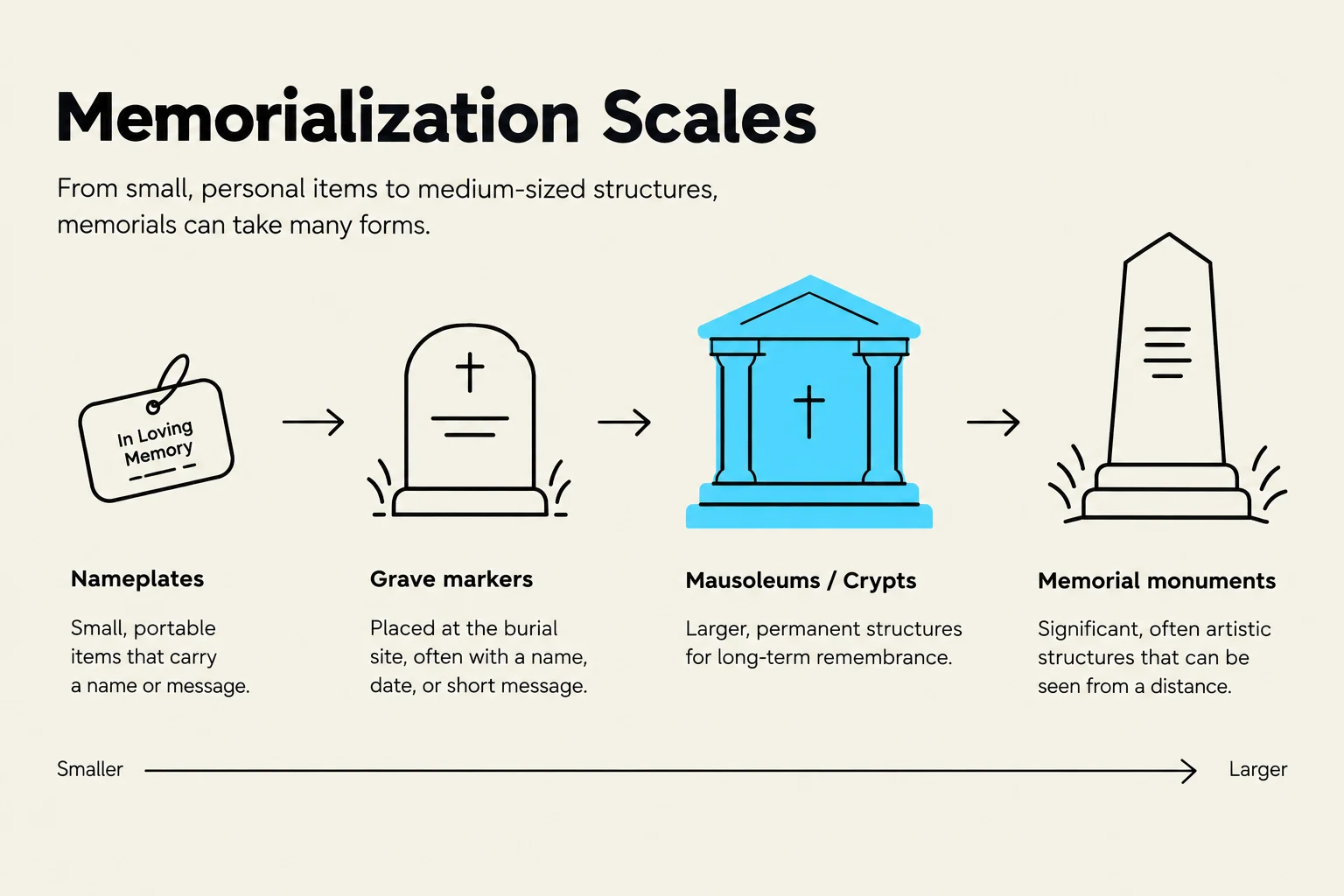
For those choosing traditional burial, memorialization involves various physical markers. Costs can vary significantly depending on the complexity of the memorial:
Simple Markers: Bronze or stone grave markers generally cost several hundred dollars.
Mausoleum Crypts: Nameplates for crypts in a mausoleum often cost slightly less than standalone grave markers.
Elaborate Memorials: Depending on cemetery regulations (some only allow flat-on-the-ground markers), elaborate monuments can cost from several hundred to many thousands of dollars.
Study Tip: When calculating the total cost of a burial, always ask if "perpetual care" is included. Some cemeteries charge an additional endowment fee to subsidize the long-term upkeep of the grounds, while others include this in the initial burial or entombment price.
This diagram illustrates different forms of memorials, ranging from nameplates and grave markers to mausoleums and large monuments, ordered by scale.
Cultural Expressions of Remembrance
Memorialization is not limited to physical markers in a cemetery; it extends into cultural and social practices. For example, the U.S. Department of Veterans Affairs provides various emblems to signify a veteran's spiritual beliefs, such as the cross for Christians or the Star of David for Jewish individuals.
In some African American communities, the obituary itself has evolved into a form of memorialization. Rather than a simple notice, these may take the form of colorful, magazine-style funeral booklets filled with testimonial prose and photographs, celebrating the highlights of the deceased's life.
Ultimately, whether through a simple stone marker or a complex digital or printed tribute, the goal of body disposition and memorialization remains the same: to honor and remember those who have passed.
Keep reading for free.
Create an account to finish this reading and make it part of your study routine.