


The history of human civilization is often traced back to the fertile river valleys of the ancient world. Among the most influential was Mesopotamia, a region located in modern-day Iraq, Iran, Kuwait, and parts of Turkey and Syria. Emerging between the Tigris and Euphrates Rivers, Mesopotamia served as the cradle for the world's first known civilization: the Sumerians. This region saw the rise and fall of various powerful groups, including the Akkadians, Assyrians, Babylonians, and Hebrews, each contributing unique advancements in metallurgy, writing, and social organization.
The Dawn of Technology: Metallurgy and Writing
As societies transitioned from the Stone Age into more complex structures, technological leaps redefined human capability. One such leap was the development of metallurgy, specifically the transition into the Bronze Age. This era is defined by the ability to manipulate metals to create more durable and sophisticated tools and ornaments.
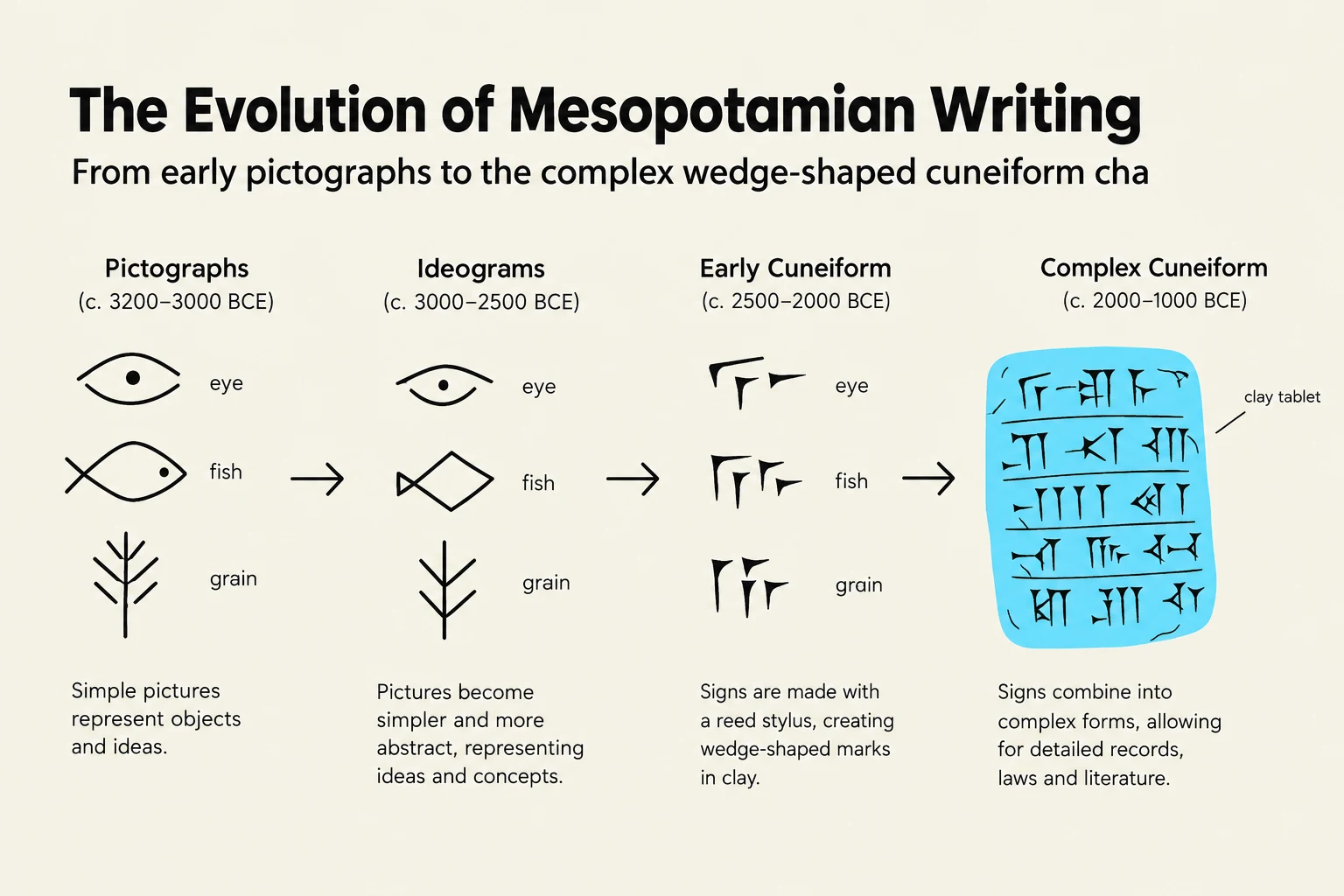
Parallel to these physical advancements was the intellectual revolution of writing. The invention of writing allowed civilizations to move beyond prehistory—the era before written records—into recorded history. In Mesopotamia, this began with pictographs, which were simple symbols representing objects. Over time, these evolved into cuneiform, a wedge-shaped writing system created by pressing cut reeds into wet clay tablets.
Study Tip: Cuneiform was not just for literature; it was used for practical daily tasks. For example, the "Complaint Tablet to Ea-nasir" is actually an ancient customer service complaint regarding the poor quality of copper.

Keep reading for free.
Create an account to finish this reading and make it part of your study routine.
Continue reading freeAlready have an account? Log in
Updated