A comprehensive guide to merchandising operations, covering core financial components like inventory, cost of goods sold, sales, and gross profit. It details the perpetual and periodic inventory systems, gross vs. net methods for recording transactions, and the multi-step income statement calculation in a periodic syst
In the world of business, companies generally fall into two categories: service providers and merchandisers. While a service firm sells expertise or labor, a merchandiser focuses on the purchase and sale of physical goods to generate a profit. The fundamental goal of any merchandising operation is to buy products at a certain cost and sell them at a higher price. The success of this model is measured by the ability to manage inventory efficiently and accurately report the costs associated with those goods.
The Core Financial Components
To understand merchandising, one must master four key financial concepts that appear on the balance sheet and the income statement.
Merchandise Inventory is an asset account found on the balance sheet. It represents the cost of products that a company has purchased for resale but has not yet sold to customers—essentially, the goods "on hand".
Cost of Goods Sold (COGS) is an expense account reported on the income statement. It represents the actual cost the company incurred to acquire the specific products that were delivered to customers during the accounting period.
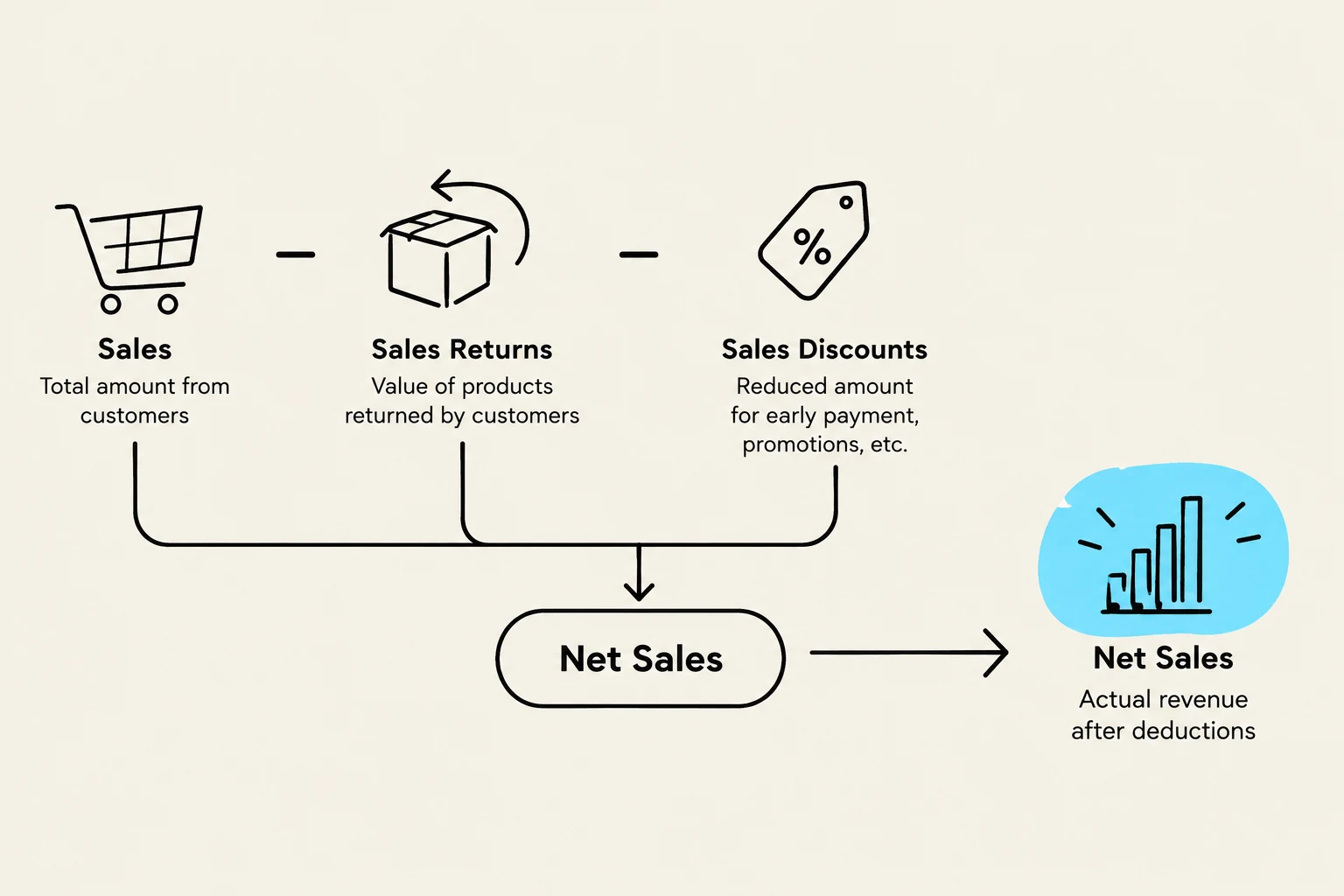
Sales (Revenue) represents the total amount earned from selling goods. However, this is often adjusted by Sales Returns and Allowances (when customers return goods) and Sales Discounts (when customers pay early) to arrive at Net Sales.
Finally, the ultimate measure of merchandising efficiency is Gross Profit (or Gross Margin), which is the difference between what you earned from sales and what those sales cost you:
Gross Profit=Net Sales−Cost of Goods Sold
This diagram illustrates the calculation of net sales, which is derived from gross sales after accounting for sales returns and sales discounts.
Managing Inventory: Perpetual vs. Periodic Systems
How a company tracks its stock depends on the inventory system it chooses. There are two primary methods: the Perpetual system and the Periodic system.
The Perpetual Inventory System
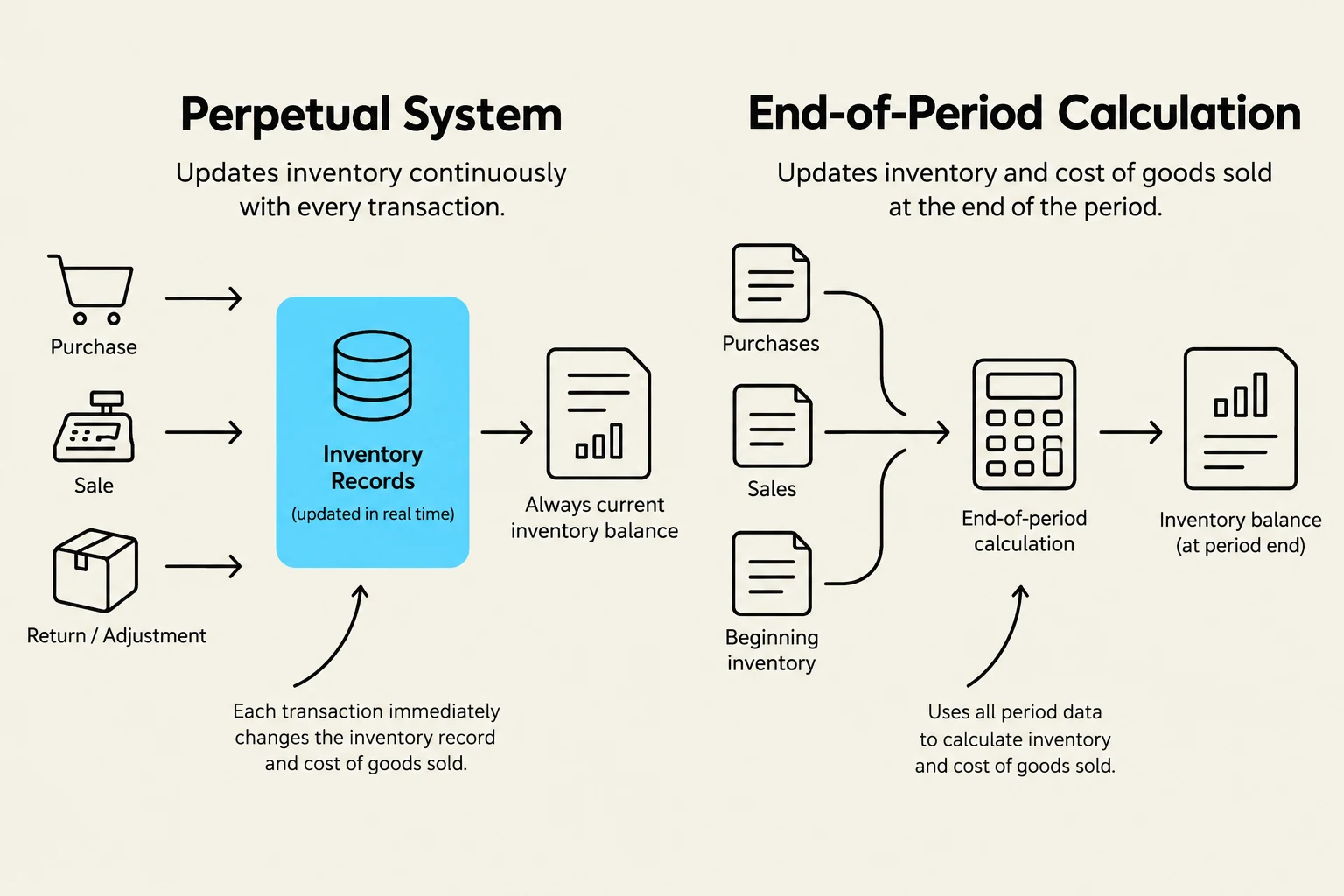
The perpetual system provides continuous, real-time updates to inventory records. Every time a purchase is made, the Inventory account is debited (increased). Every time a sale occurs, the Inventory account is credited (decreased) and the COGS account is debited (increased) simultaneously. Because the records are updated constantly, any adjustments—such as returns or discounts—are recorded directly into the Inventory account.
The Periodic Inventory System
In contrast, the periodic system does not track inventory continuously. Instead of using the Inventory account for daily transactions, it uses temporary accounts like Purchases, Purchase Returns and Allowances, and Purchase Discounts. The actual balance of the Inventory account and the total COGS are only determined at the end of an accounting period after a physical stock count is performed.
Exam Tip: In a Perpetual system, you know your inventory level at any moment. In a Periodic system, you only know your inventory level after you physically count the items in the warehouse.
This diagram illustrates the difference between a perpetual inventory system, which updates inventory in real-time with each transaction, and an end-of-period calculation method, which updates inventory and cost of goods sold at the end of a period.
Recording Transactions: Gross vs. Net Methods
When companies engage in purchase and sales transactions, they often encounter credit terms. For example, terms like "2/10, n/30" mean a 2% discount is available if payment is made within 10 days; otherwise, the full amount is due in 30 days. To record these, accountants use one of two methods:
The Gross Method
Under the gross method, transactions are recorded at the full invoice price. If a buyer takes advantage of a discount, they record a Purchase Discount (for purchases) or a Sales Discount (for sales). If they miss the discount period, they simply pay the full amount.
The Net Method
The net method is more proactive; it records transactions at the invoice price minus the available cash discount. If a company fails to pay within the discount period, they must record the difference as Discounts Lost (for purchases).
Calculating the Income Statement in a Periodic System
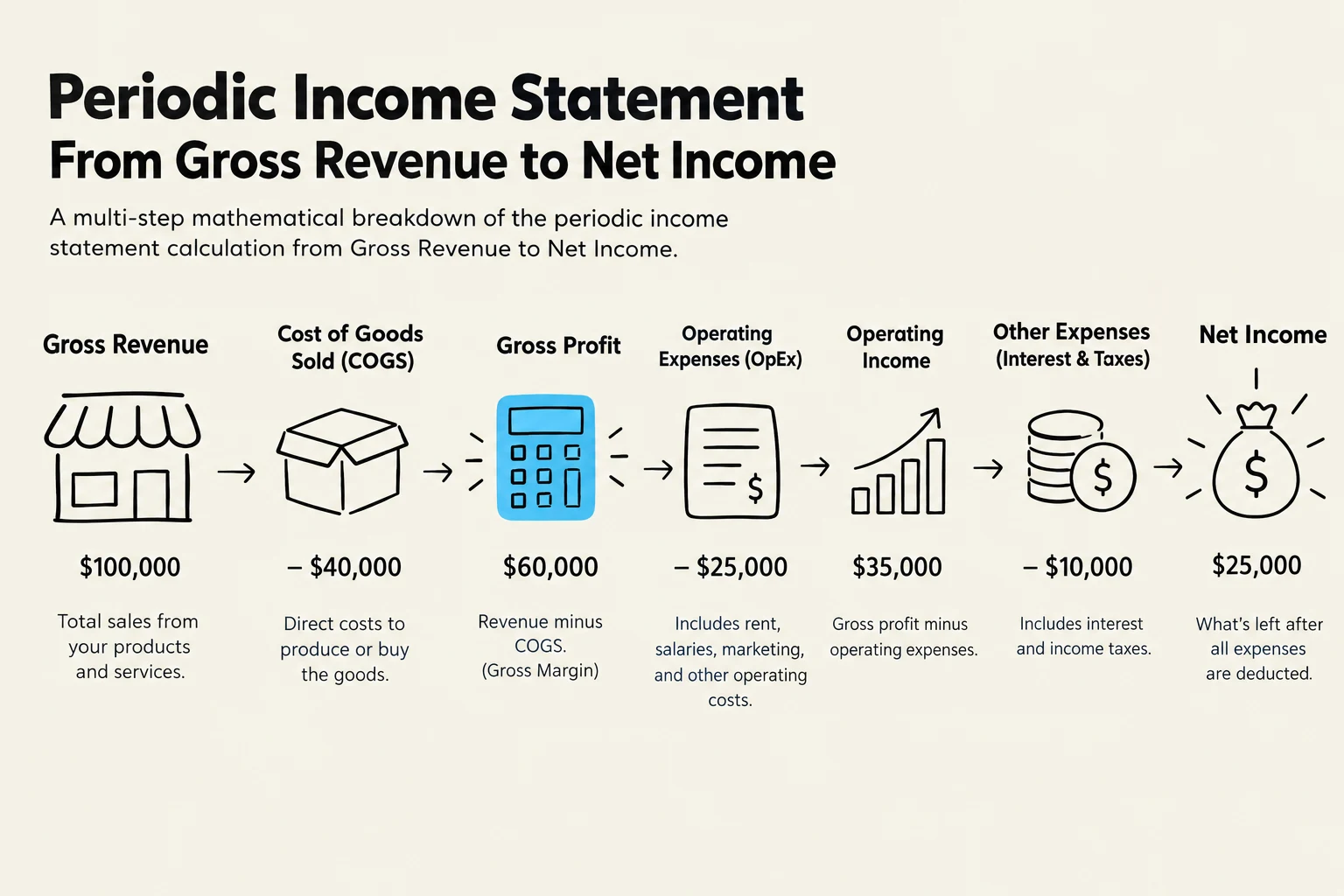
Because the periodic system doesn't track COGS daily, the income statement must be built using a multi-step process at the end of the period.
Calculate Net Sales:Net Sales=Gross Revenue−Sales Returns and Allowances−Sales Discounts
Calculate Net Purchases:Net Purchases=Purchases−Purchase Returns and Allowances−Purchase Discounts
Determine Merchandise Available for Sale:Merchandise Available for Sale=Opening Inventory+Net Purchases
Calculate Cost of Goods Sold (COGS):COGS=Merchandise Available for Sale−Ending Inventory
This diagram illustrates the calculation of Net Income from Gross Revenue, detailing steps like Cost of Goods Sold, Gross Profit, Operating Expenses, and Other Expenses.
Beyond the Ledger: Cash Budgeting
While inventory systems focus on the movement of goods, management must also focus on the movement of money. Cash budgeting is a vital tool in this regard. A budget is a plan that shows how resources will be acquired and used over future periods, typically a year. By comparing the budget to actual results, management can maintain control over cash and other assets, ensuring the company has enough liquidity to purchase new inventory and cover operating expenses.
Keep reading for free.
Create an account to finish this reading and make it part of your study routine.