


In any healthcare setting, the primary goal is to "do no harm." One of the most significant ways a patient can be harmed is through the acquisition of a healthcare-associated infection (HAI). These infections, such as Methicillin-resistant Staphylococcus aureus (MRSA), can lead to prolonged hospital stays, increased mortality, and significant financial burdens on the healthcare system. To combat this, healthcare professionals rely on two fundamental pillars of practice: medical asepsis and surgical asepsis.
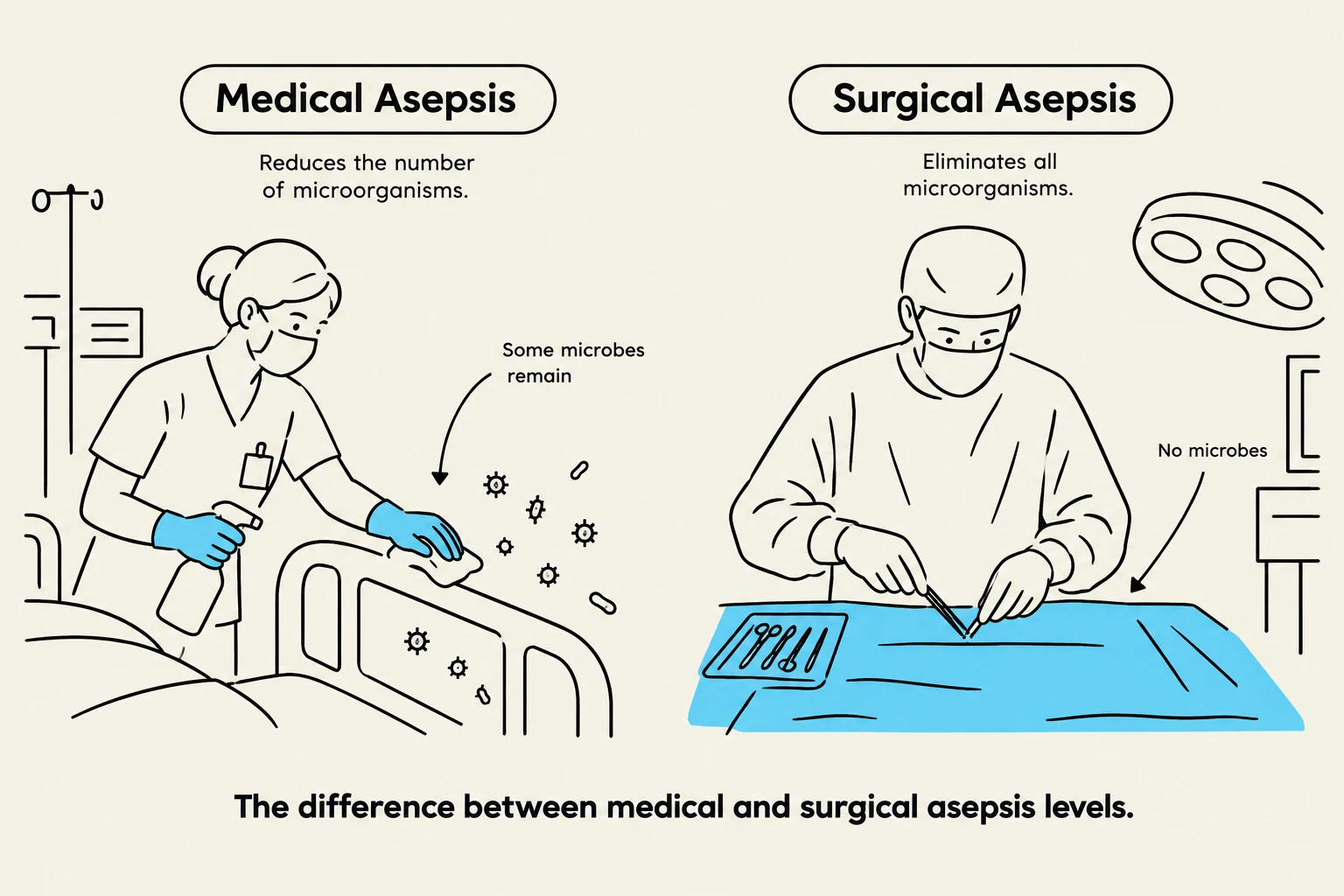
While these terms are often used interchangeably in casual conversation, they represent distinct levels of cleanliness and specific protocols designed for different clinical scenarios. Understanding when to use "clean" techniques versus "sterile" techniques is a critical competency for any clinician.
Medical Asepsis: The "Clean" Technique
Medical asepsis, often referred to as "clean technique," focuses on reducing the number and transfer of pathogens to prevent the spread of infection. It is not intended to eliminate all microorganisms, but rather to minimize their presence in the immediate environment and on the clinician's hands and equipment.
Core Principles of Medical Asepsis
The primary goal of medical asepsis is to limit the spread of microorganisms from one patient to another or from the environment to the patient. Common practices include:
- Hand Hygiene: The single most effective way to prevent the spread of infection. This includes washing with soap and water or using alcohol-based hand rubs.
- Personal Protective Equipment (PPE): Using gloves, gowns, and masks to create a barrier between the clinician and potentially infectious materials.
- Environmental Cleaning: Regularly disinfecting surfaces, bed rails, and medical equipment that comes into contact with patients.
- Standard Precautions: Treating all blood, body fluids, non-intact skin, and mucous membranes as if they are infectious.
Keep reading for free.
Create an account to finish this reading and make it part of your study routine.
Continue reading freeAlready have an account? Log in
Updated