


Alcohol is the most widely abused drug in many regions, including Canada, where significant portions of the population report use, and a notable percentage struggle with true addiction. While often viewed through a social lens, chronic alcohol abuse is a profound medical issue that can decrease a person's lifespan by 10 to 20 years. The physiological impact is not limited to a single organ; rather, it involves a systemic cascade of toxic effects that can damage the central nervous system, the digestive tract, and vital metabolic processes.
Toxic Effects on the Central Nervous System (CNS)
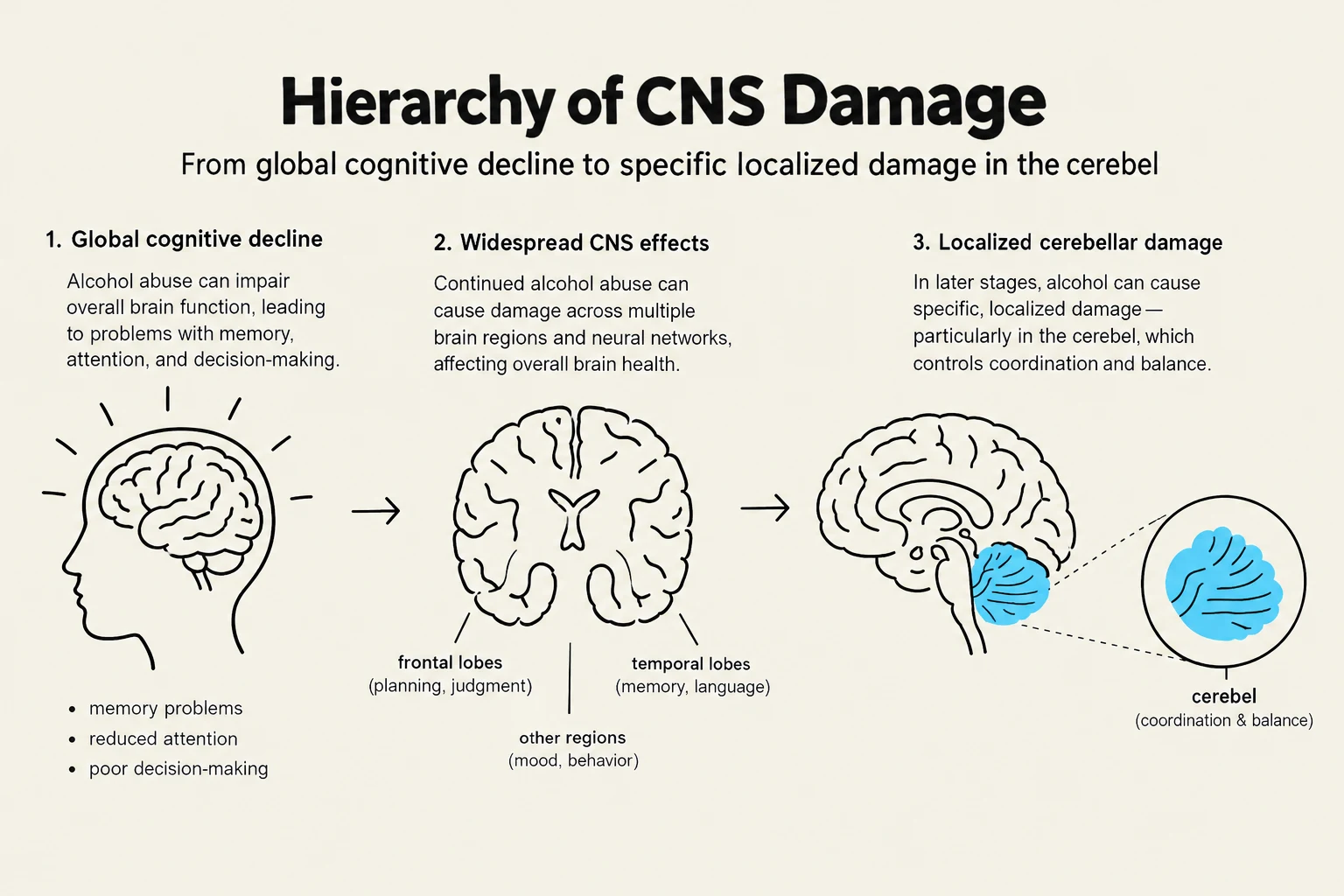
The brain is one of the primary targets of alcohol's toxicity. Because alcohol acts as a CNS depressant, chronic exposure leads to significant neurological deterioration. This damage manifests in several specific ways:
- Higher Mental Functions: Long-term abuse leads to a general deterioration in cognitive abilities and mental processing.
- Cerebellum Damage: The cerebellum is responsible for motor control and coordination. Damage to this area results in significant problems with balance and gait.
- Peripheral Nerve Damage: Beyond the brain, alcohol affects the peripheral nervous system, often leading to decreased sensation in the extremities.
Exam Tip: When assessing a patient with suspected chronic alcohol abuse, look for "red flags" such as tremors, anxiety, or a chronically flushed face, which may indicate underlying neurological or physiological dependence.
Digestive and Hepatic Complications
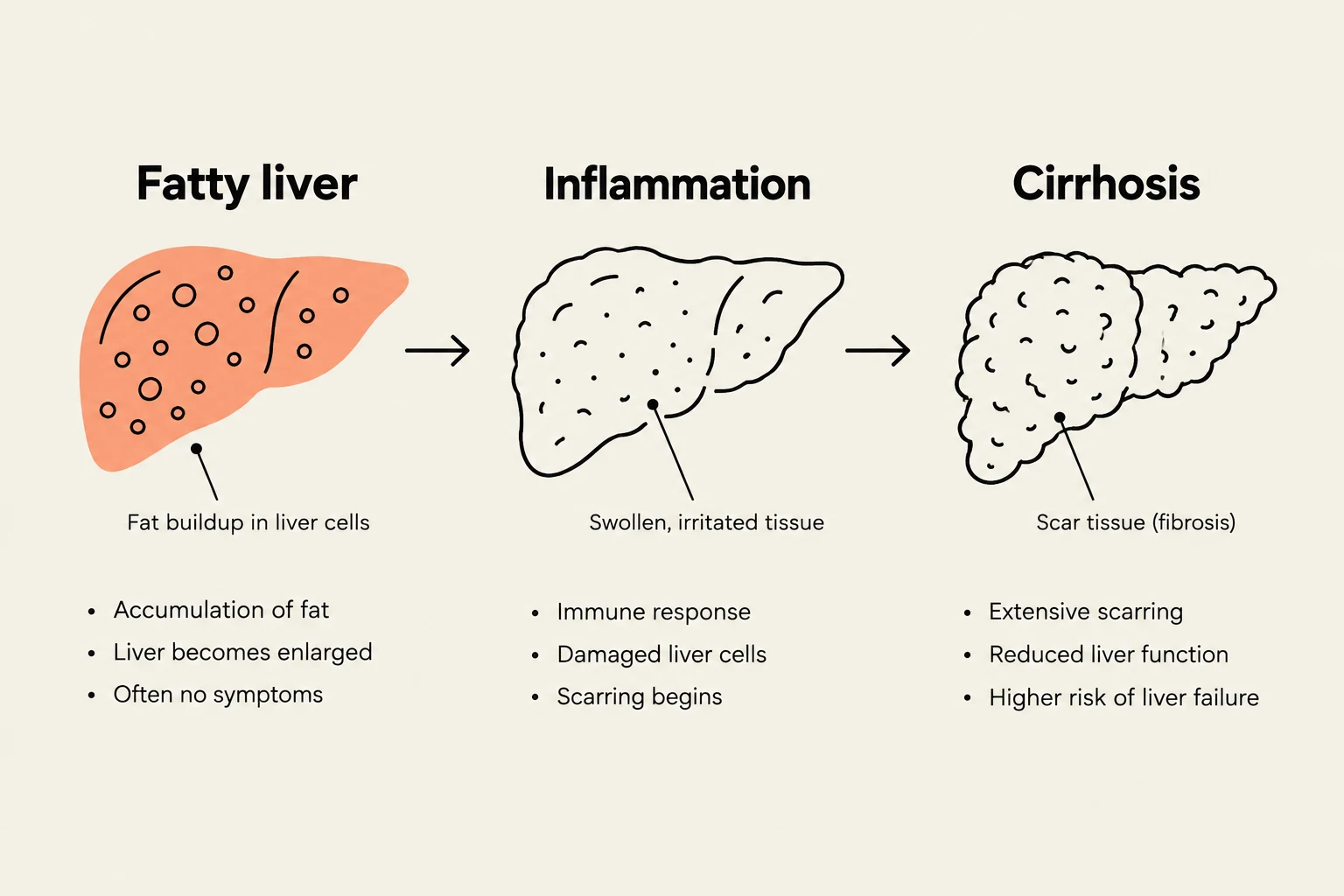
The gastrointestinal tract is frequently the first line of contact for ingested alcohol, making it highly susceptible to irritation and damage.
Keep reading for free.
Create an account to finish this reading and make it part of your study routine.
Continue reading freeAlready have an account? Log in
Updated