


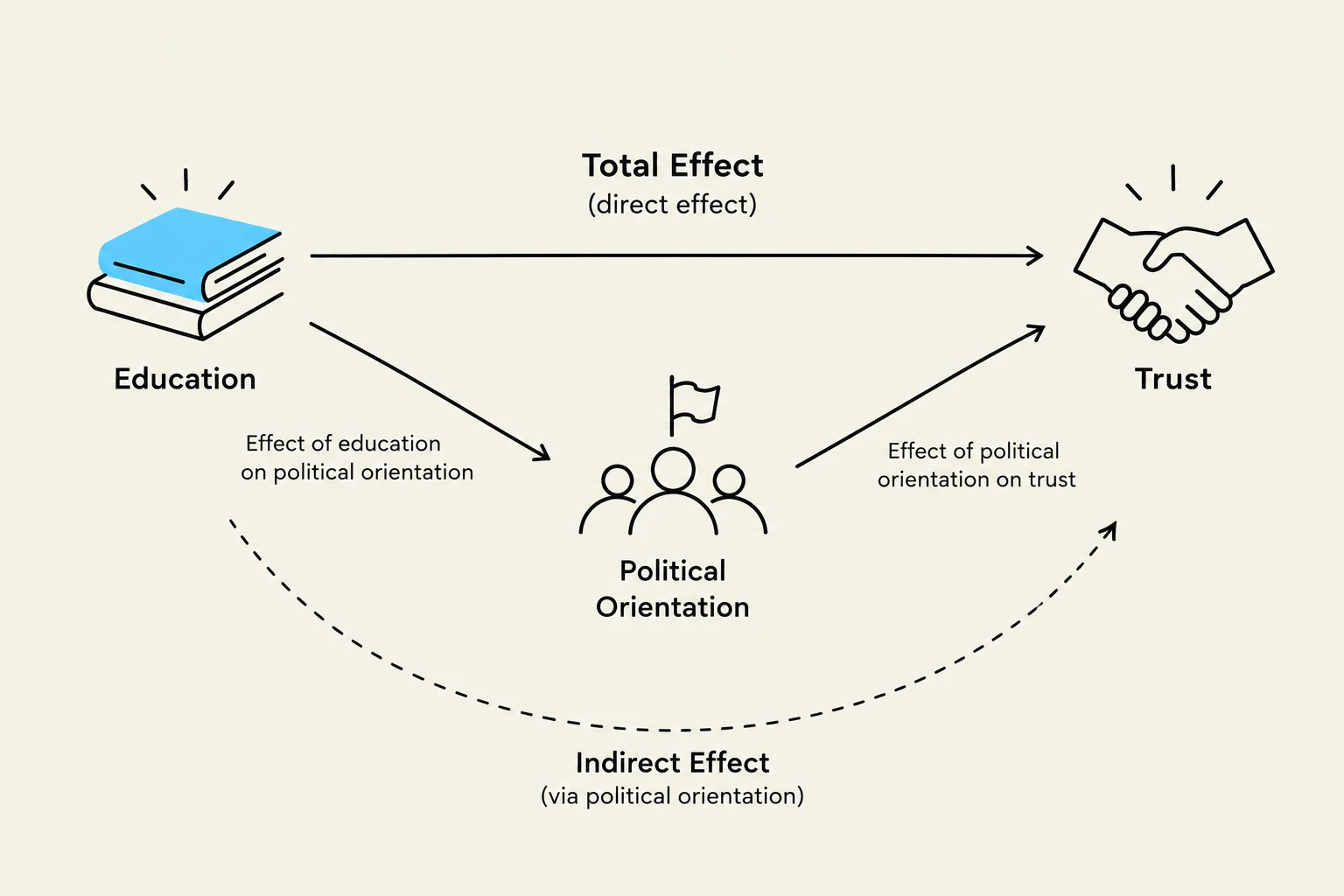
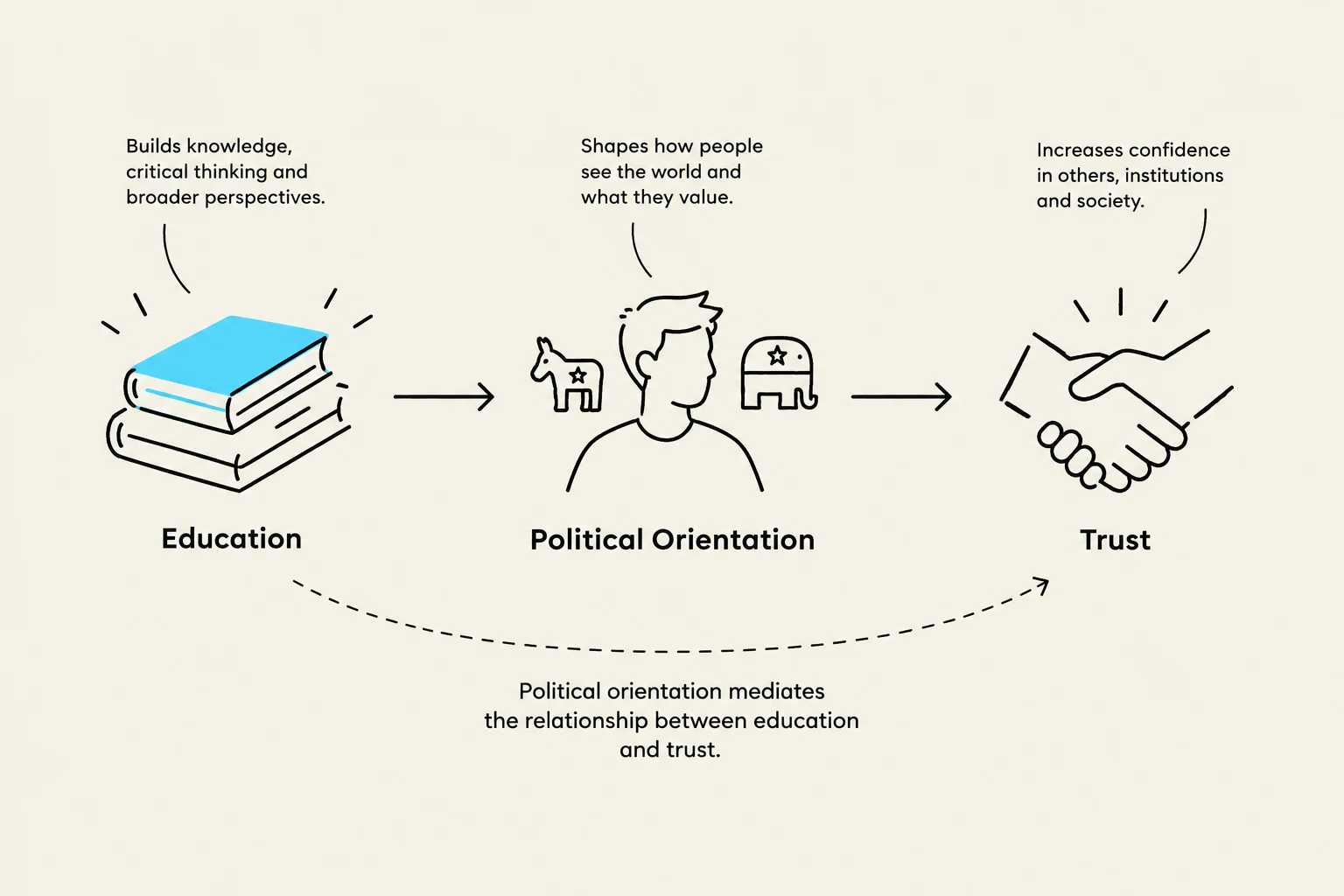
In social science research, we often observe that one variable influences another, but we are rarely satisfied with knowing that it happens; we want to know how it happens. For instance, if we observe that higher levels of education are associated with higher levels of trust in institutions, we must ask: is education directly increasing trust, or does education change a person's political orientation, which in turn affects their trust? This article explores the methodology used to untangle these relationships, specifically focusing on the concepts of regression and mediation analysis using data from the European Social Survey.
The Foundation: Regression Analysis
To understand complex relationships, we must first master the building block of quantitative modeling: the regression analysis. Regression allows us to estimate the relationship between an independent variable (the predictor) and a dependent variable (the outcome).
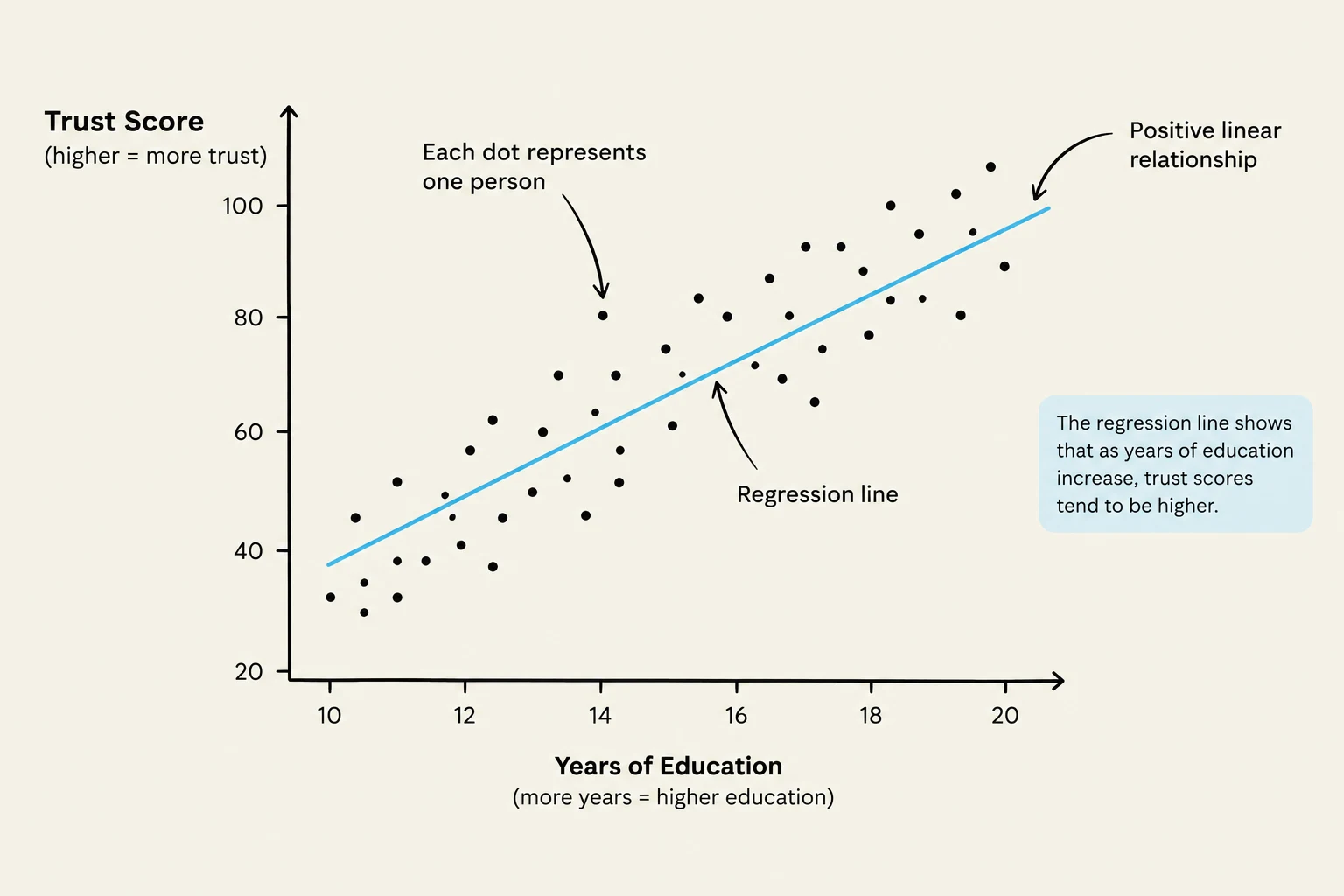
In the context of our study, we look at how education (measured in years of completed full-time education, Eduyrs) predicts trust in institutions (a scale from 0 to 10, Trust). When we run a linear regression, the output provides us with a regression coefficient, often denoted as . This coefficient tells us the magnitude and direction of the effect.
For example, if a regression analysis yields a coefficient of , it means that for every one-unit increase in the predictor (one additional year of education), the predicted value of the outcome (trust) increases by 0.06 points.
Exam Tip: When interpreting a regression coefficient, always check the units. A coefficient describes the change in the dependent variable per single unit of change in the independent variable. If the question asks for the effect of education on trust, ensure you are not accidentally describing the effect of trust on education!
Keep reading for free.
Create an account to finish this reading and make it part of your study routine.
Continue reading freeAlready have an account? Log in
Updated