


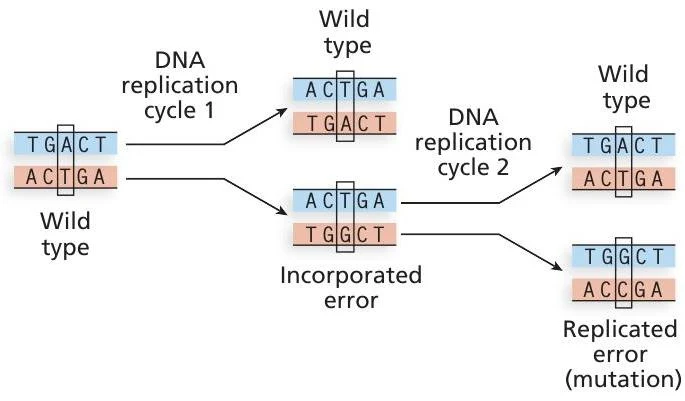
DNA is a remarkably stable molecule, yet it is constantly subject to chemical and mechanical challenges. Spontaneous mutations—changes in the DNA sequence that occur without external mutagen exposure—arise from two primary sources: spontaneous nucleotide base changes (chemical damage) and errors occurring during the replication process itself. While cells possess sophisticated repair mechanisms to correct these issues, a mutation is only "permanently established" when the error survives long enough to be replicated, effectively becoming a part of the genome in subsequent generations.
Spontaneous Nucleotide Base Changes
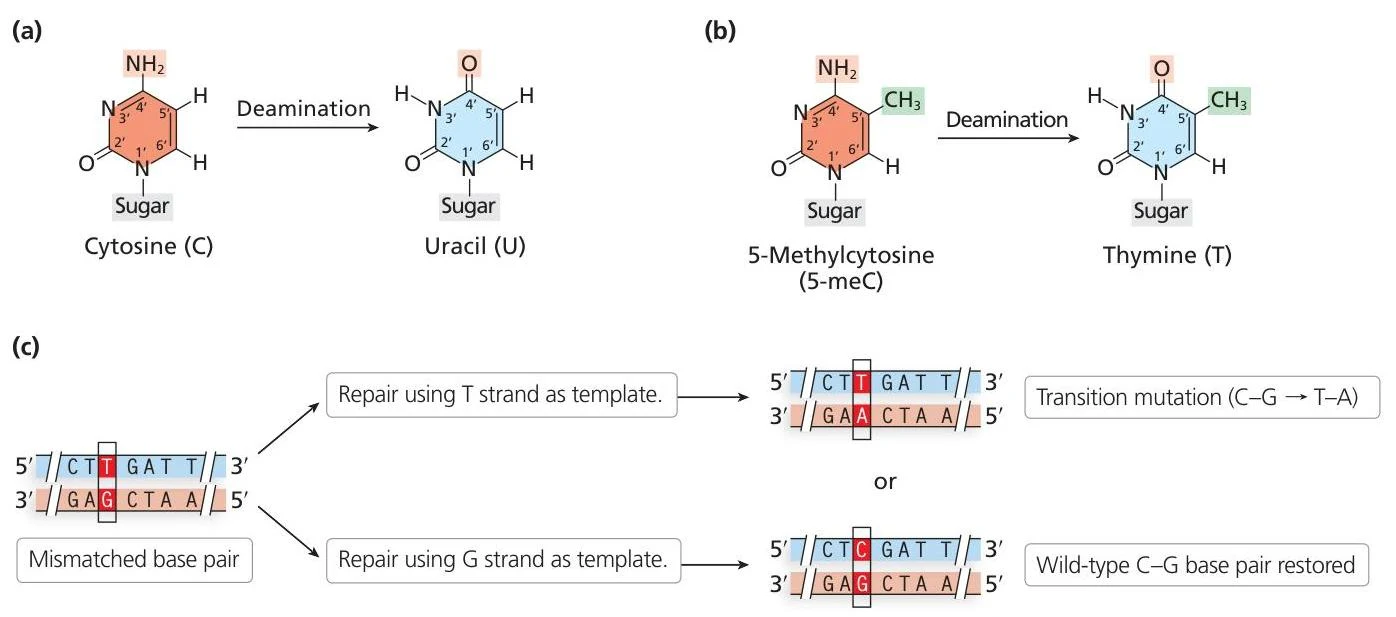
Chemical alterations to individual bases can create lesions that disrupt the integrity of the genetic code. Two of the most common spontaneous chemical changes are depurination and deamination.
Depurination and AP Sites
Depurination is one of the most frequent chemical changes occurring in living cells. This process involves the cleavage of the covalent bond at the carbon of the deoxyribose sugar, which results in the loss of a purine base—either adenine or guanine.
The loss of the base leaves behind an apurinic (AP) site, a DNA lesion where the sugar-phosphate backbone remains intact, but the nucleotide base is missing.

If an AP site is not repaired before the cell enters the S phase, the DNA replication machinery encounters a "blank" template. Because there is no base to guide pairing, the polymerase often defaults to incorporating an adenine opposite the empty site. If this occurs, a second round of replication will pair a thymine with that adenine, resulting in a permanent base substitution mutation (for example, a to transition).
Keep reading for free.
Create an account to finish this reading and make it part of your study routine.
Continue reading freeAlready have an account? Log in
Updated