


Cells are not closed systems; they must constantly interact with their environment by importing essential nutrients, signaling molecules, and even pathogens. While some substances enter the cell through non-specific processes, many critical macromolecules require a highly selective "lock-and-key" mechanism to ensure they reach the correct destination. This process is known as receptor-mediated endocytosis.
The Specificity of Ligand-Receptor Complexes
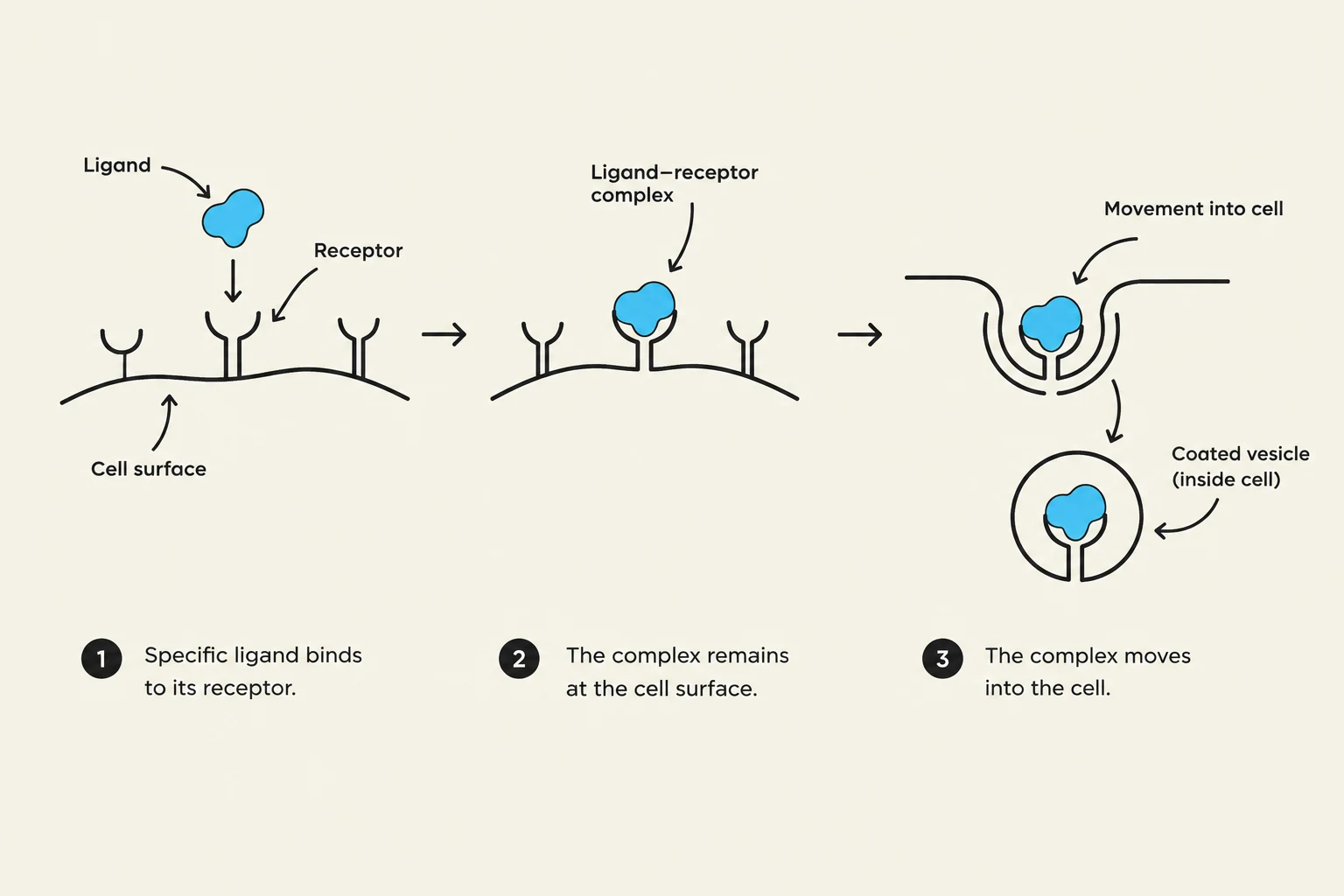
At the heart of this mechanism is the interaction between a ligand and its specific receptor. A ligand is a specific molecule—such as a hormone, a growth factor, or cholesterol—that the cell needs to internalize. These ligands are recognized by specialized receptor proteins embedded in the plasma membrane.
When a ligand encounters its matching receptor on the outer cell surface, they bind to form a ligand-receptor complex. This binding is highly specific, ensuring that the cell only internalizes the intended cargo. Once the complex is formed, these receptors do not stay stationary; they diffuse laterally through the fluid membrane until they encounter specialized regions called coated pits.
Exam Tip: Distinguish between receptor-mediated endocytosis and fluid-phase endocytosis (pinocytosis). While receptor-mediated endocytosis is highly selective and uses specific ligands, fluid-phase endocytosis is a non-specific process where the cell internalizes extracellular fluid at a constant rate.
Clathrin-Dependent Endocytosis and Vesicle Formation
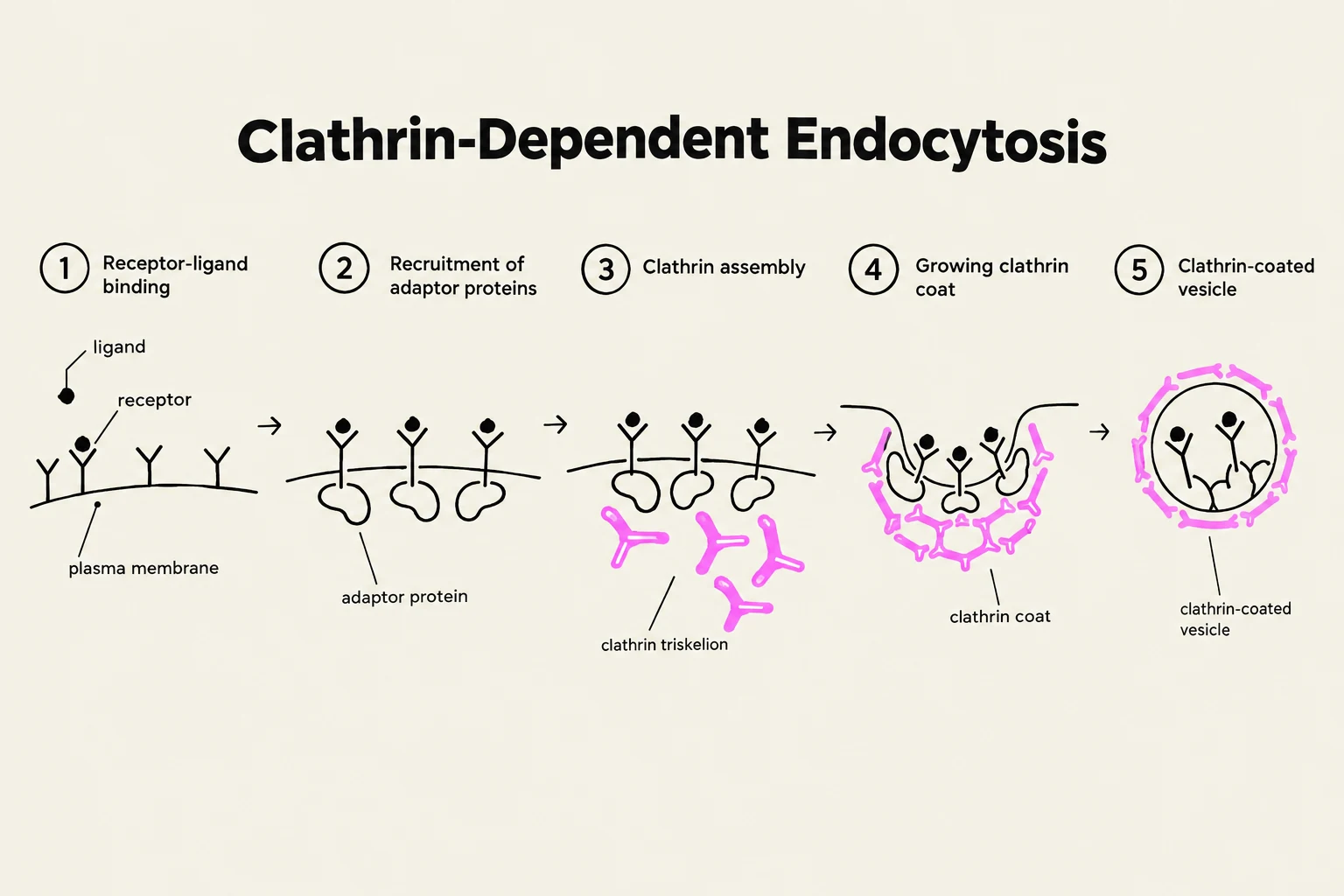
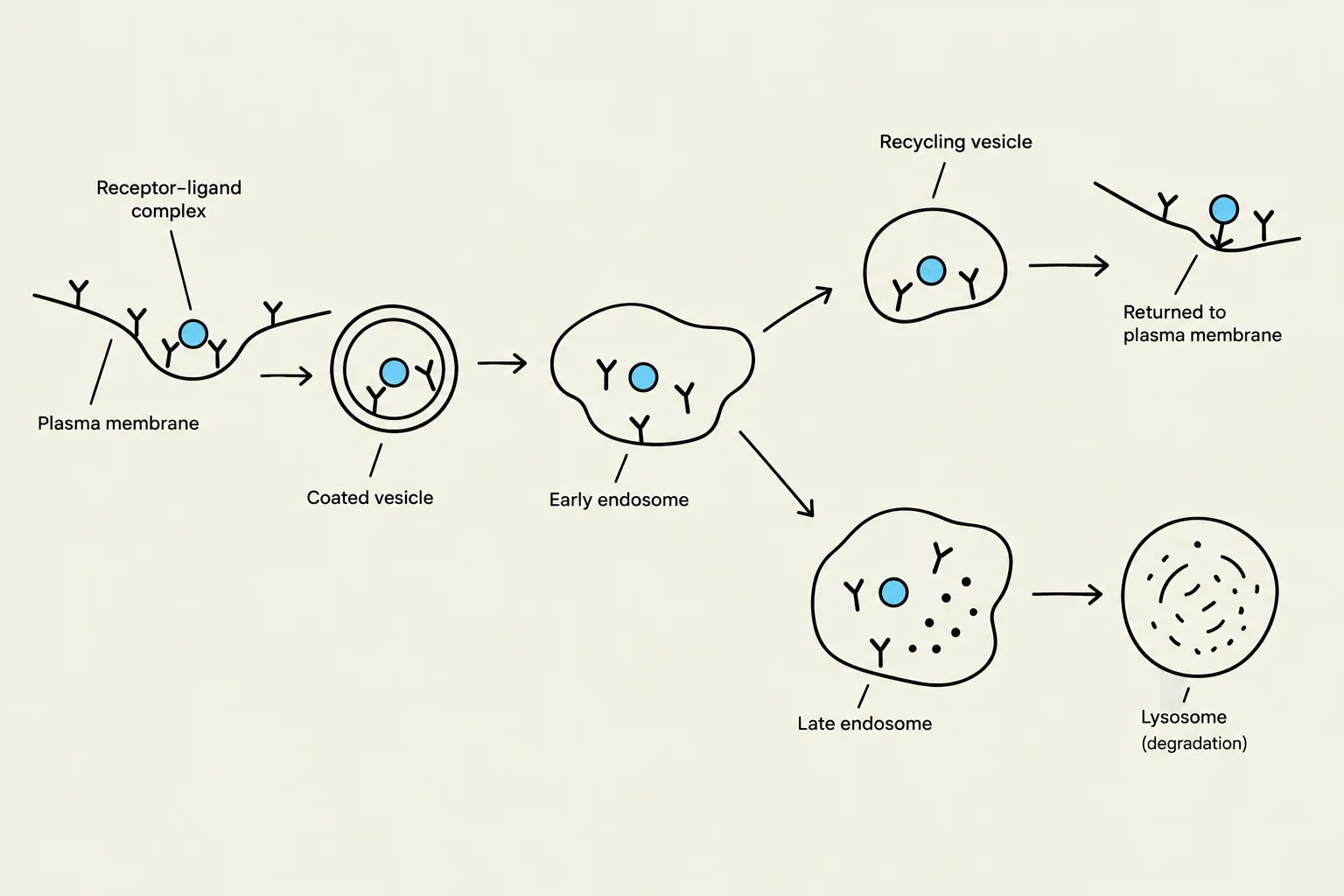
The actual physical process of pulling the membrane inward is driven by a protein scaffold known as clathrin. The areas of the membrane where these processes occur are called coated pits, which occupy approximately 20% of the total cell surface area.
Keep reading for free.
Create an account to finish this reading and make it part of your study routine.
Continue reading freeAlready have an account? Log in
Updated