


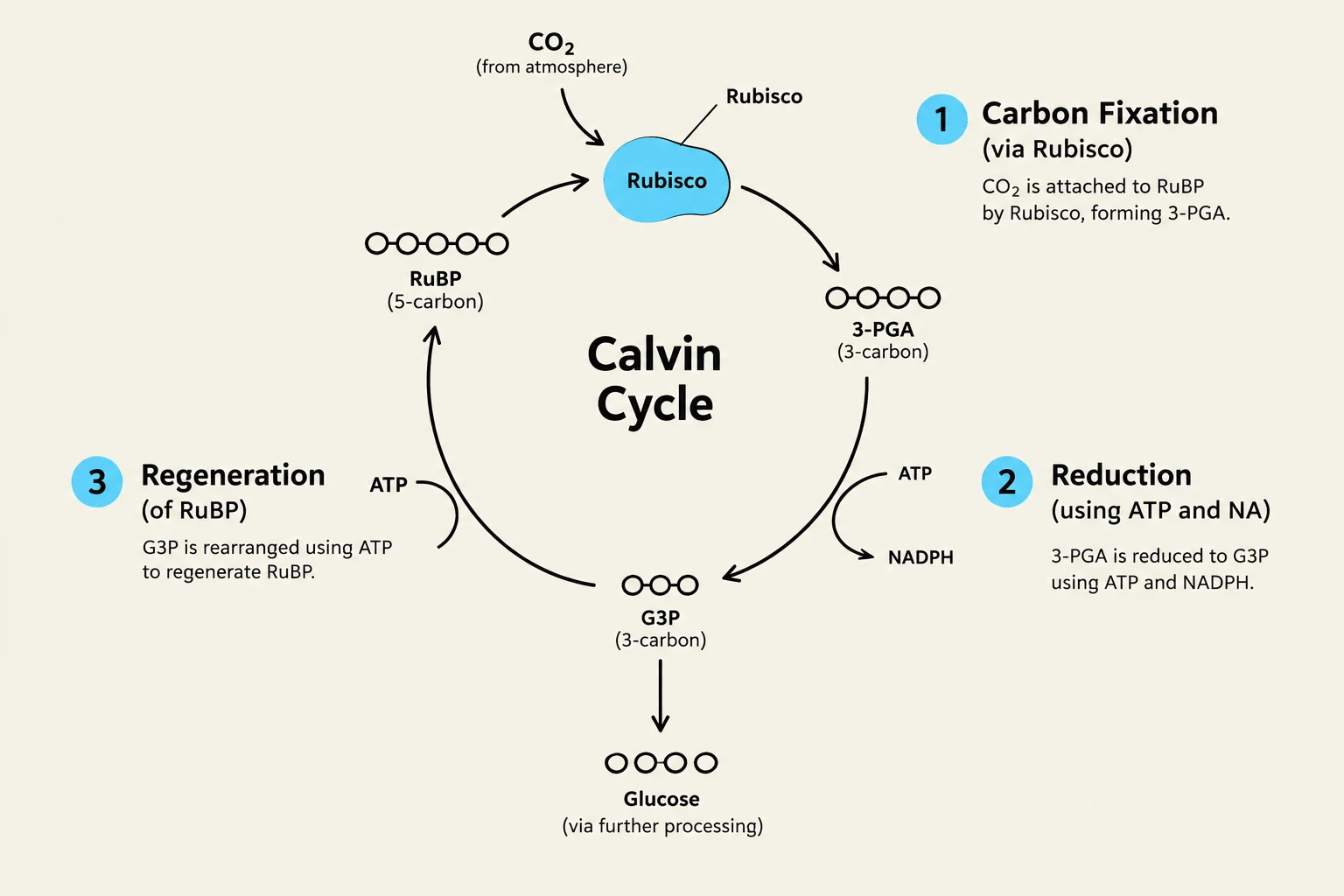
Photosynthesis is the fundamental biological process that converts solar energy into chemical energy, providing the fuel for nearly all life on Earth. This complex process is divided into two main stages: the light-dependent reactions, which capture energy to produce ATP and NADPH, and the light-independent reactions, known as the Calvin cycle, which use those products to build sugars. To understand how plants build organic molecules, we must first understand how they generate the energy required to drive these anabolic pathways through a process called chemiosmosis.
Chemiosmosis: The Universal Energy Engine
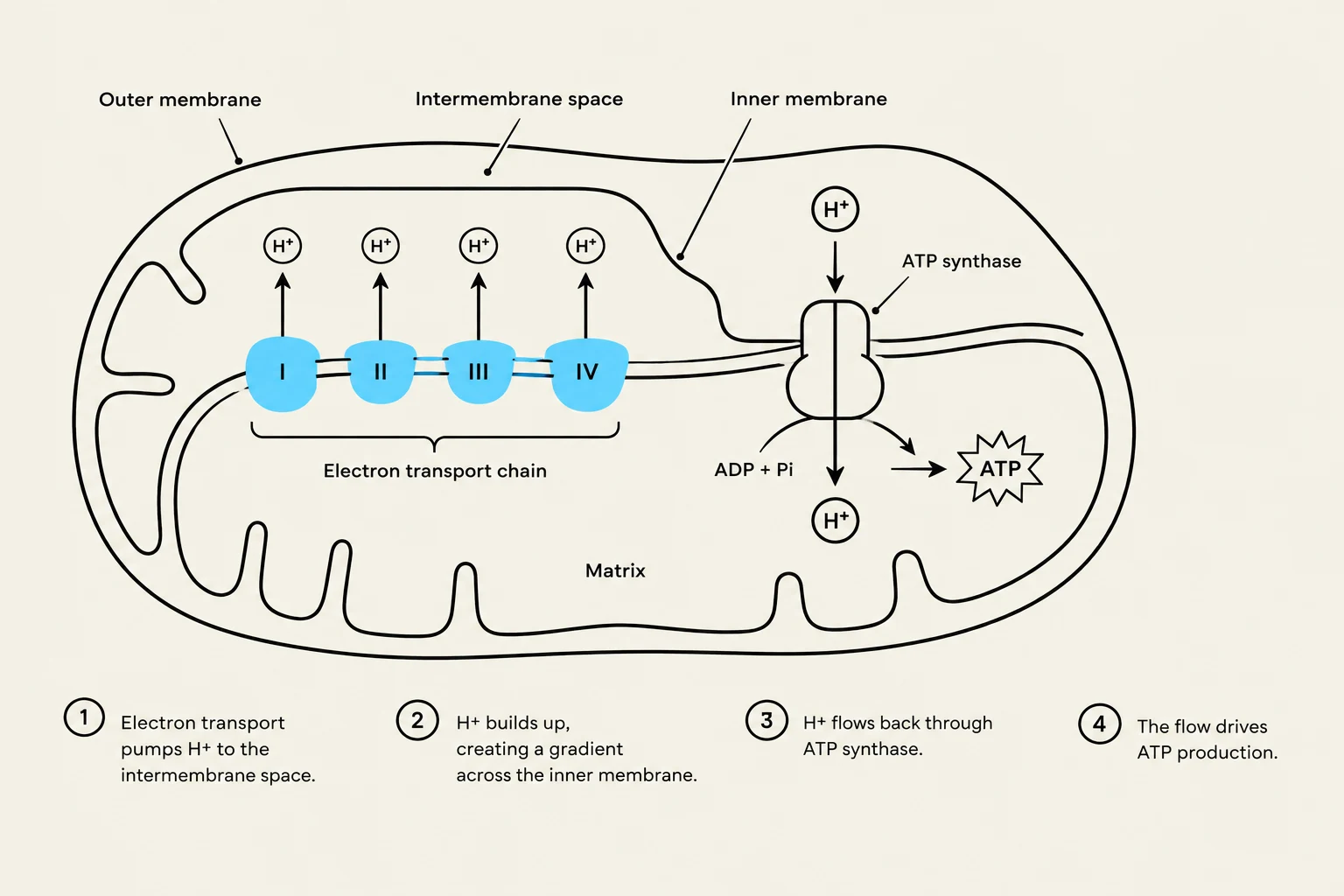
At the heart of both cellular respiration and photosynthesis is a mechanism called chemiosmosis. While the specific organelles and electron sources differ, the fundamental principle remains the same: both chloroplasts and mitochondria generate ATP by using electron transport chains (ETC) to pump protons ($H^+$) across a membrane.
As electrons are passed through a series of membrane-bound carriers with progressively higher electron affinity, the energy released from these redox reactions is used to pump protons across the membrane, creating a concentration gradient. This gradient represents potential energy. To harness this energy, cells use a specialized enzyme called ATP synthase, which couples the diffusion of $H^+$ ions down their electrochemical gradient to the phosphorylation of ADP into ATP.
Comparing Photophosphorylation and Oxidative Phosphorylation
While the mechanism of ATP synthase is similar, the context in which it operates differs significantly between plants and animals.
- Photophosphorylation (Chloroplasts): In the light reactions of photosynthesis, high-energy electrons are derived from water and "drop down" the transport chain. This process transforms light energy into the chemical energy of ATP.
- Oxidative Phosphorylation (Mitochondria): In cellular respiration, electrons are extracted from organic molecules (like glucose) and transferred through the chain to convert the chemical energy from food into ATP.
Keep reading for free.
Create an account to finish this reading and make it part of your study routine.
Continue reading freeAlready have an account? Log in
Updated