


The somatic sensory system is the most diverse of all sensory systems, responsible for translating a vast array of environmental stimuli into meaningful neural information. This system allows us to perceive our physical surroundings through touch, pressure, vibration, temperature, and the critical sensation of pain. To navigate the world safely, the Central Nervous System (CNS) relies on specialized receptors that convert physical energy into electrical signals, which are then transmitted via distinct ascending pathways to the brain.
The Architecture of Somatic Sensation
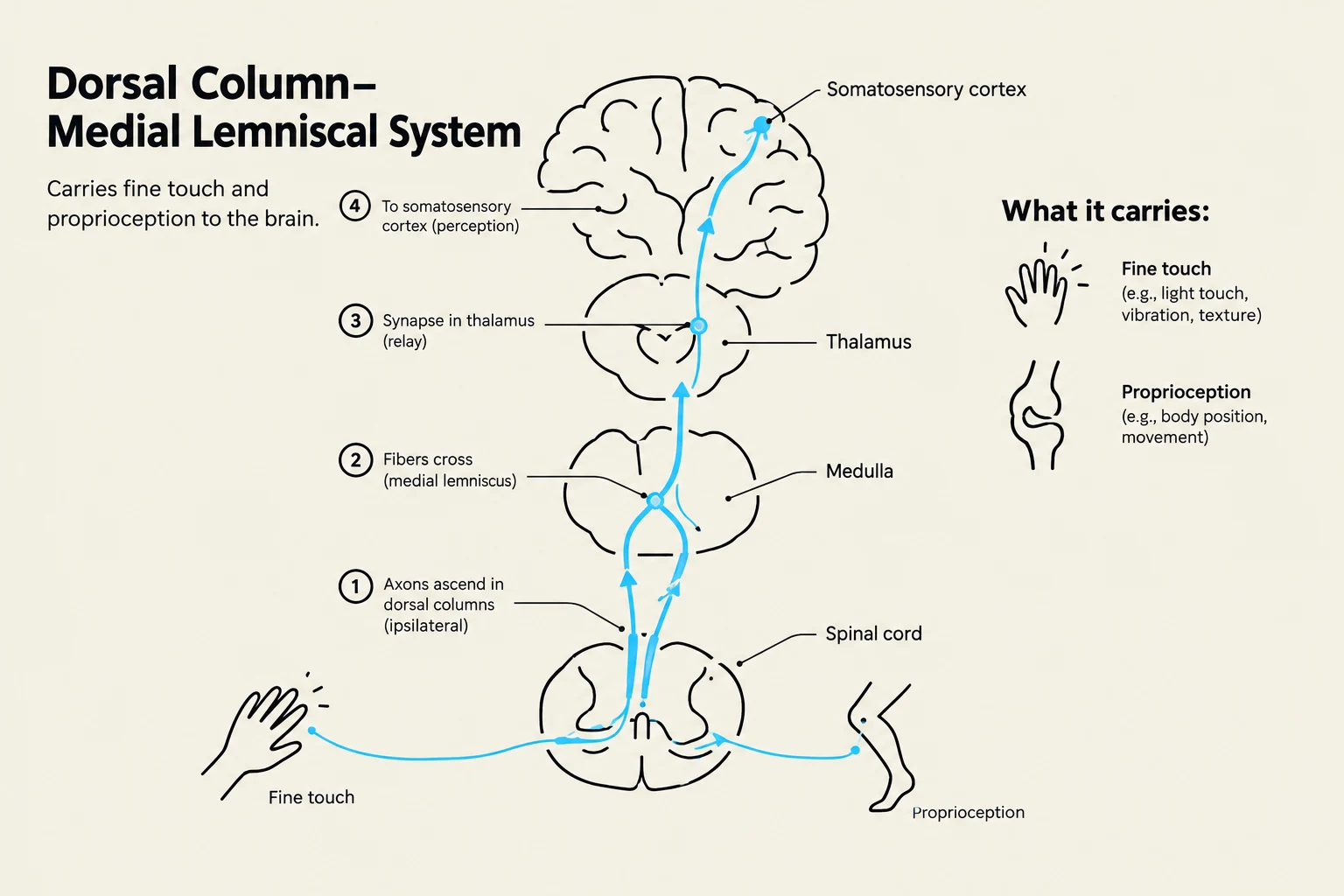
The somatic sensory system is categorized into three major functional components based on the type of receptor and the information being conveyed:
- Proprioception: Mediated by mechanoreceptors in the muscles, tendons, and joints to convey limb position.
- Cutaneous Mechanoreception: Mediated by receptors in the skin to convey touch, pressure, and vibration.
- Nociception and Thermoreception: Mediated by specialized receptors to convey pain, temperature, and coarse touch.
These different modalities do not travel together; instead, they follow parallel ascending pathways to ensure that specific types of information reach their respective targets in the brain with high precision.
Neural Signal Conversion: From Stimulus to Action Potential
At the heart of sensation is transduction—the process by which a physical stimulus is converted into a neural signal. This occurs at the peripheral terminals of sensory neurons through specialized ion channels.
A key player in this process is the Transient Receptor Potential (TRP) channel family. These are nonencapsulated receptors located on the plasma membrane of the nerve terminal. When a specific stimulus (thermal, chemical, or mechanical) is applied, the TRP channel undergoes a conformational change, opening a pore that allows an influx of cations, specifically and . This influx depolarizes the membrane, creating a receptor potential. If this potential reaches a certain threshold, it triggers a train of action potentials (APs) that travel toward the CNS, allowing for the conscious awareness of the stimulus.

Keep reading for free.
Create an account to finish this reading and make it part of your study routine.
Continue reading freeAlready have an account? Log in
Updated