


DNA replication is a fundamental biological process that ensures genetic continuity during cell division. For a cell to divide, it must create two complete copies of its chromosomes, ensuring that each daughter cell receives one copy of each maternal and paternal chromosome. This complex molecular operation requires a highly coordinated team of enzymes working in unison to unwind the double helix, stabilize single strands, and synthesize new complementary strands with high fidelity.
The Key Players in Replication
Before diving into the stages of replication, it is essential to understand the "molecular machinery" involved. DNA replication is not a single-step event but a choreographed dance of several specialized proteins:
- DNA Polymerase: The primary enzyme responsible for synthesizing new DNA strands by adding nucleotides.
- Helicase: An enzyme that unwinds the DNA double helix by breaking the hydrogen bonds between base pairs.
- Primase: An enzyme that synthesizes short RNA primers, providing the necessary starting point for DNA polymerase.
- Topoisomerase: An enzyme that manages the physical tension (torsional strain) created by the unwinding of the DNA.
- Single-Strand DNA Binding Proteins (SSB): Proteins that coat the separated DNA strands to prevent them from re-annealing (snapping back together).
Initiation: Opening the Helix
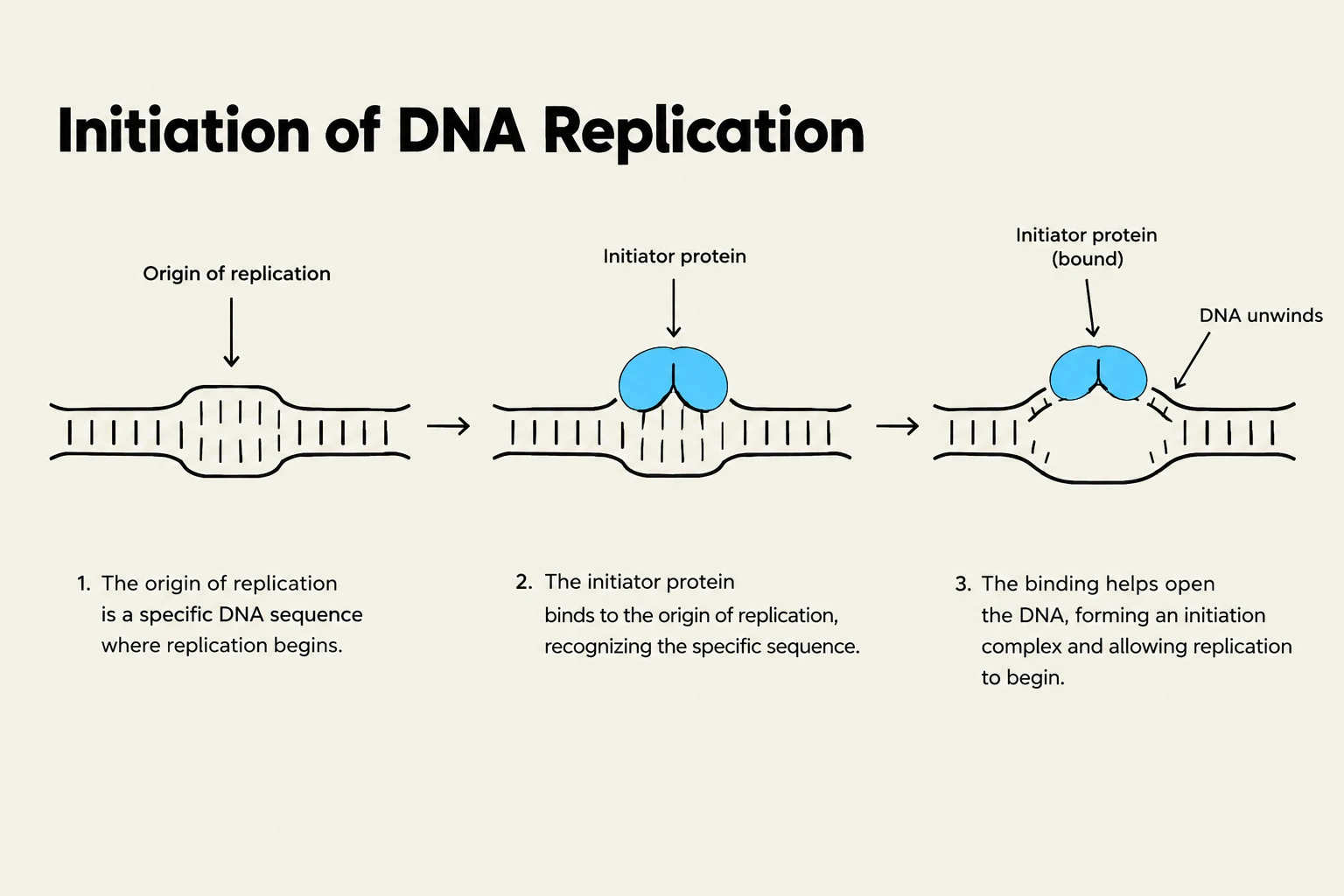
Replication does not begin at random locations. Instead, it starts at specific sequences known as the origin of replication. The process begins when an initiator protein binds to this origin.
Initially, there is a "passive opening" or melting of small areas of the DNA double helix at the origin. Once these small gaps are created, Helicases are recruited to these melted areas to actively unwind the DNA, expanding the opening into what is known as a replication bubble. To ensure the bubble does not collapse, Single-Strand DNA Binding Proteins (SSB) stabilize the exposed single strands.
Keep reading for free.
Create an account to finish this reading and make it part of your study routine.
Continue reading freeAlready have an account? Log in
Updated