


When a microorganism enters a host, it does not simply exist alongside the host's cells; it actively engages in a struggle for resources and survival. To succeed, pathogens must overcome host defenses, adhere to tissues, and often cause direct damage to the host to facilitate their own growth or spread. One of the most potent weapons in a pathogen's arsenal is the production of toxins—poisonous substances that can disrupt vital physiological processes. Understanding the distinction between different types of toxins and their specific mechanisms of action is essential for grasping how diseases like shock, fever, and organ failure occur.
Toxigenicity: Toxemia vs. Intoxication
Pathogens cause disease through toxigenicity, which is the ability of a microorganism to produce toxins. Depending on how these toxins interact with the host, the resulting illness is categorized in two ways:
- Toxemia: This occurs when toxins are actively produced by the microbe and present in the host's bloodstream.
- Intoxication: This refers to an illness caused by the ingestion or absorption of toxins without the presence of active microbial growth in the host. A classic example would be eating food that has already been contaminated by bacterial waste products.
Exam Tip: Remember that in intoxication, the "poison" is the culprit, not necessarily the living bacteria itself. In toxemia, the bacteria are actively working to pump toxins into your system.
Exotoxins: Precision Weapons
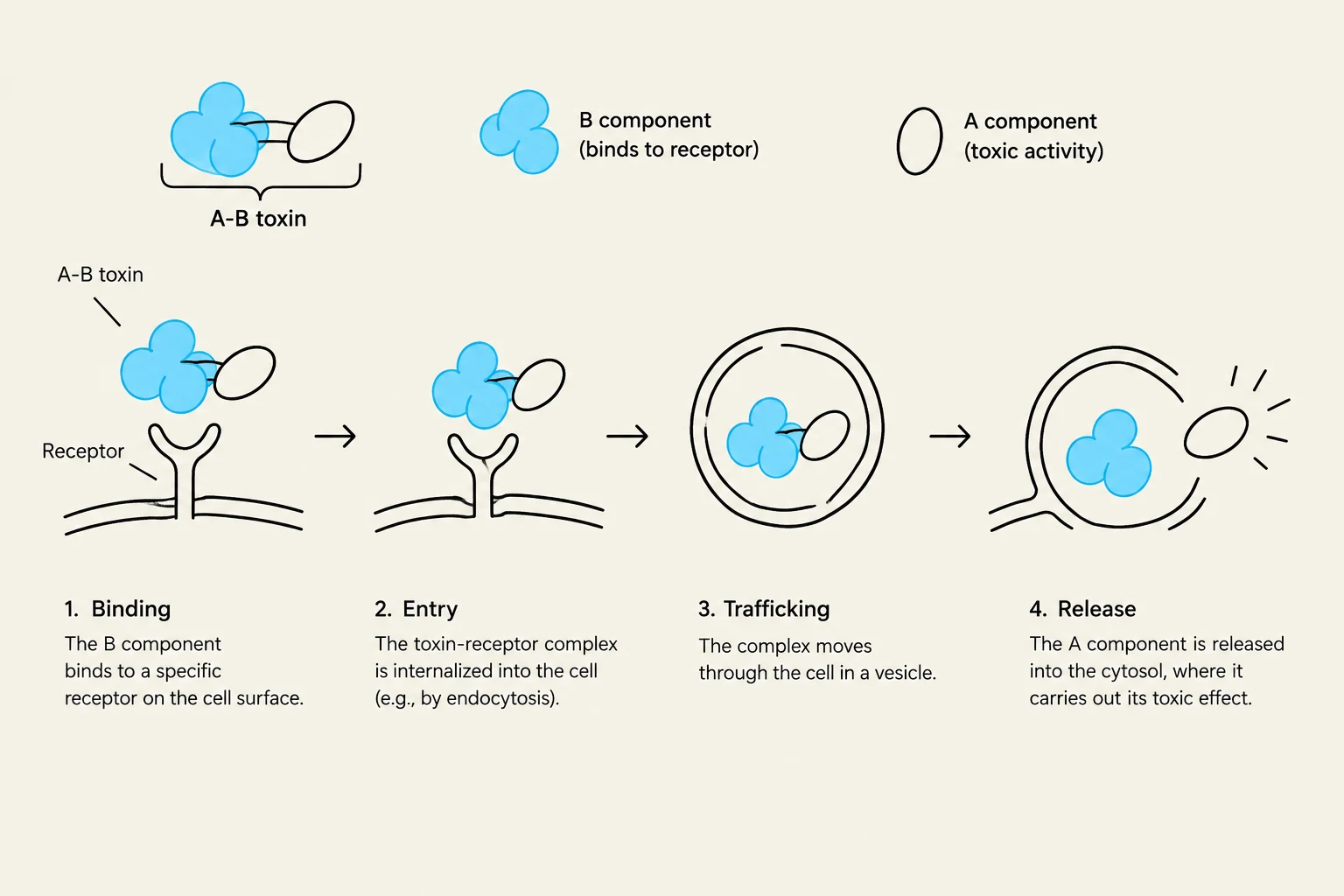
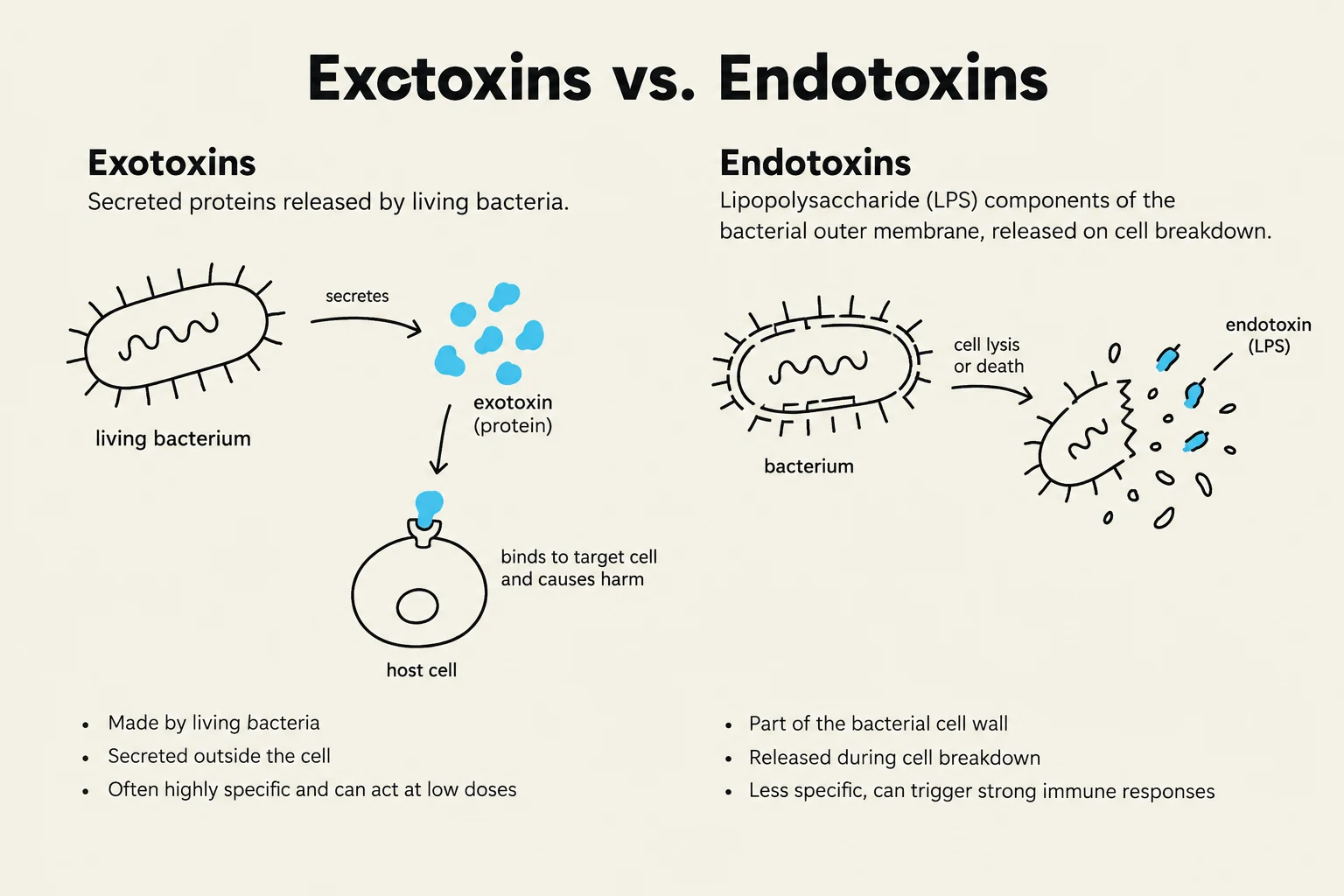
Exotoxins are proteins produced and secreted by bacteria—most commonly Gram-positive bacteria—during their growth phase. Because they are soluble in bodily fluids, they can travel easily through the host to reach target cells. Exotoxins are highly potent; even very small amounts can cause significant damage.
Keep reading for free.
Create an account to finish this reading and make it part of your study routine.
Continue reading freeAlready have an account? Log in
Updated