


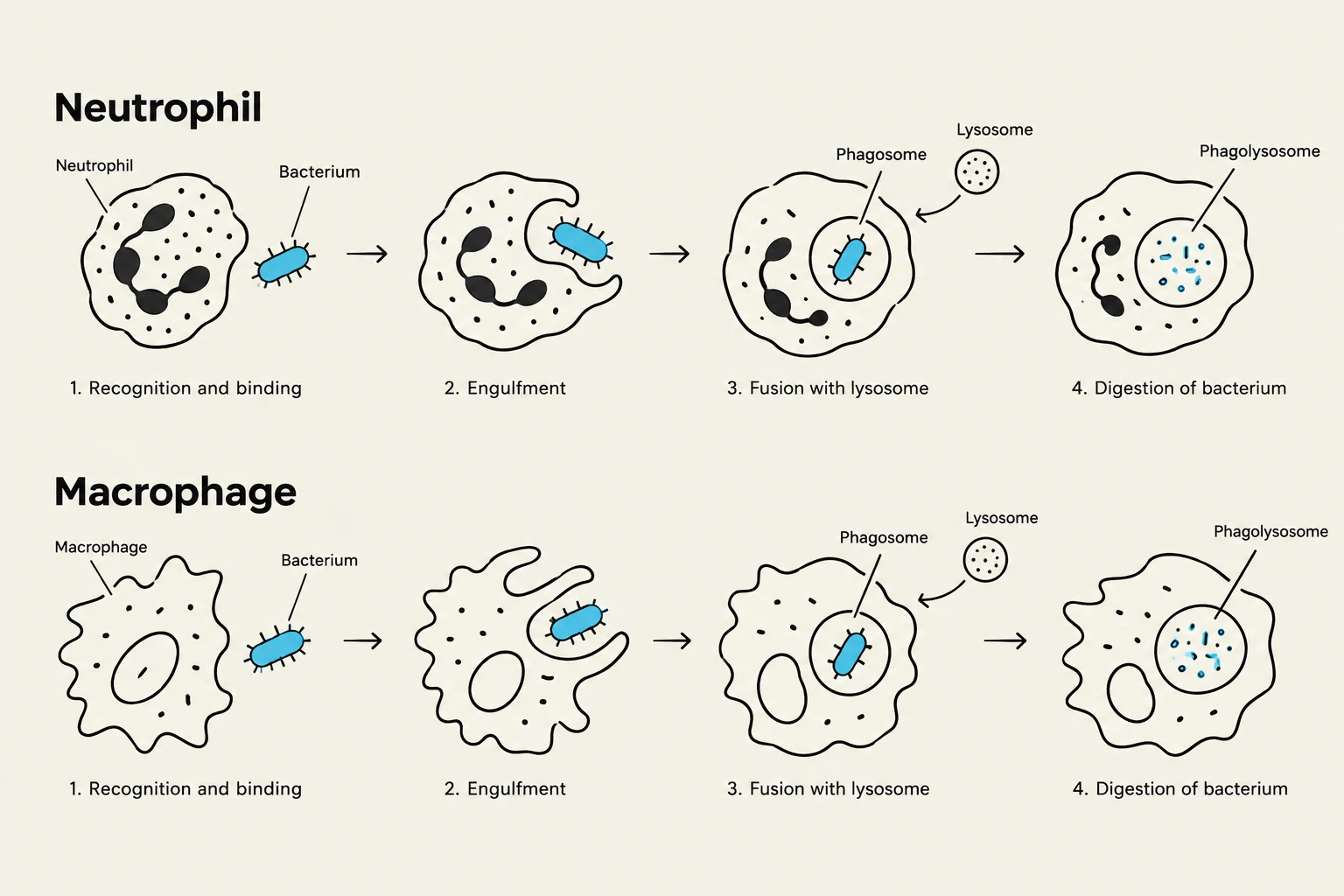
Phagocytosis is a fundamental cellular process involving the ingestion of large particles, which can include whole cells or microorganisms. While this mechanism serves different purposes depending on the organism, its core function remains the same: the internalisation and subsequent breakdown of external material. In unicellular organisms, such as amoebae, phagocytosis is a primary method of nutrition, allowing the cell to acquire food. In more complex multicellular organisms, the process is specialized, serving as a critical component of the immune system to defend against pathogens.
The Cellular Mechanics of Phagocytosis
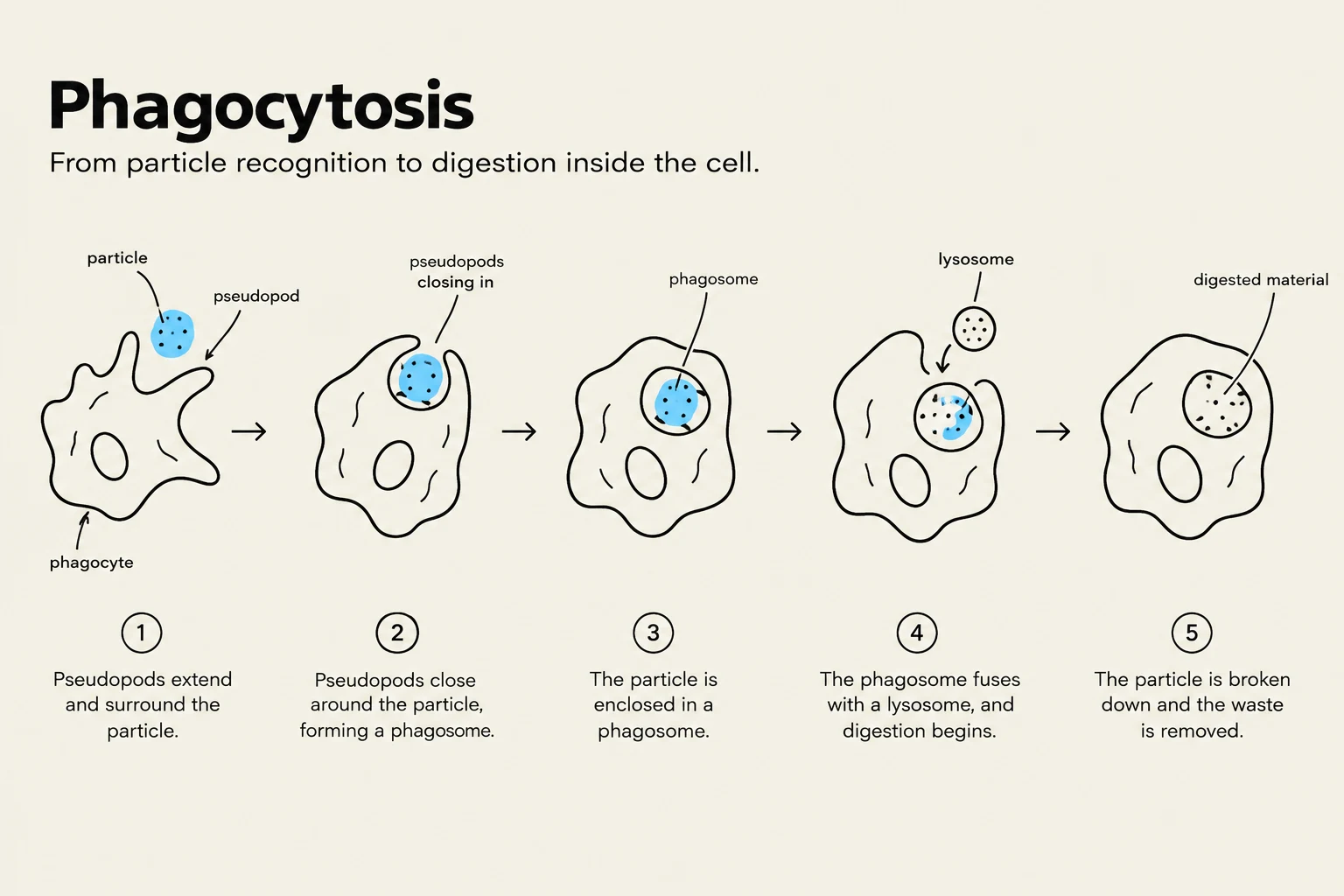
The physical process of phagocytosis requires significant remodeling of the cell membrane. In amoebae, the process is triggered when the cell comes into contact with a food particle or a specific target. This contact stimulates the formation of pseudopods, which are temporary, finger-like folds of the plasma membrane. These pseudopods extend outward, surrounding the target particle until they meet and fuse, effectively engulfing the object.
Once the particle is enclosed, it is internalized within the cell in a specialized membrane-bound compartment known as a phagosome (or phagocytic vacuole). This phagosome is a key intermediate in the endomembrane system, acting as a container that moves through the cell to meet digestive machinery.
Digestion and the Role of the Lysosome
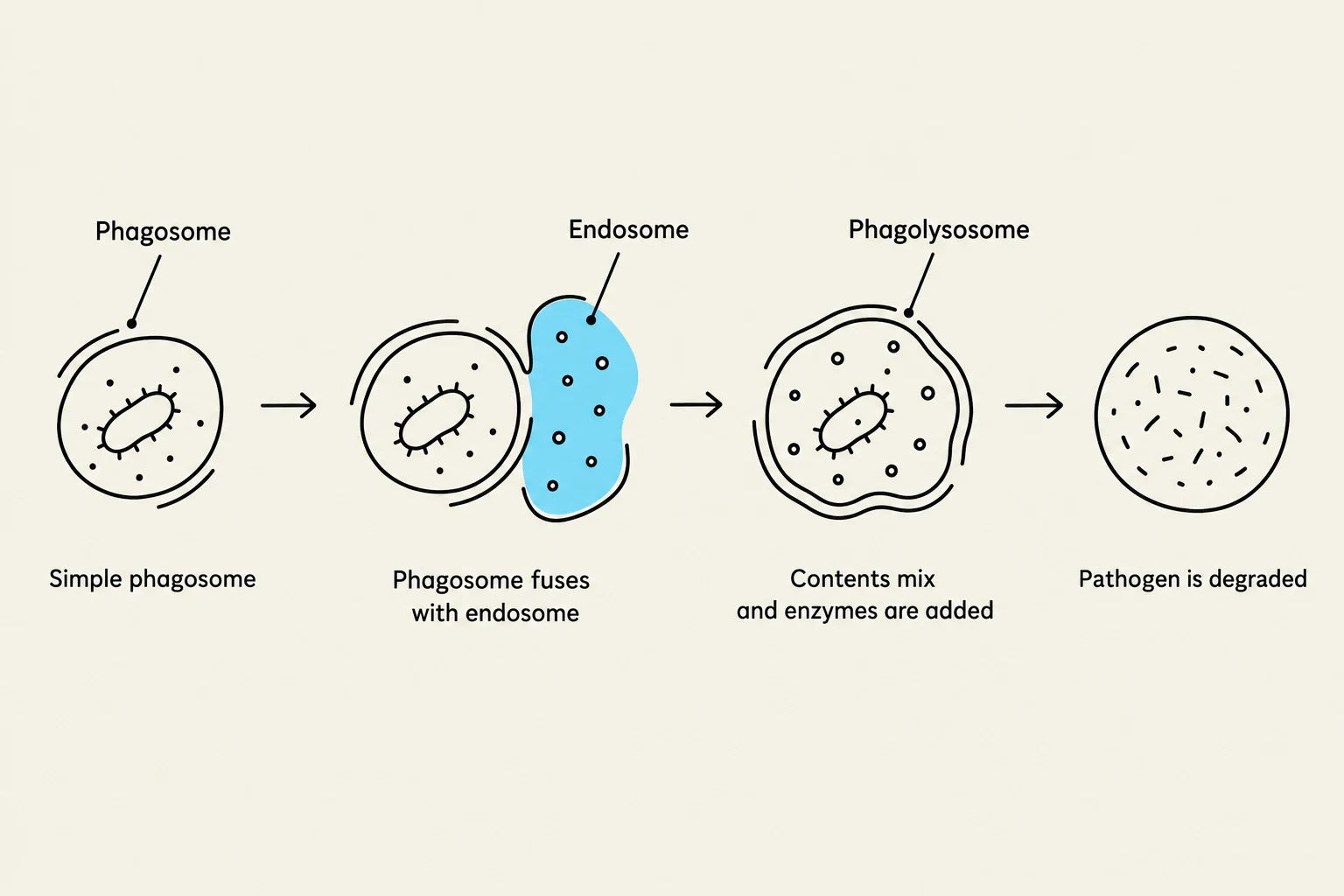
A phagosome alone cannot break down complex biological macromolecules; it must undergo a maturation process to become functional. To achieve this, the phagosome must fuse with a lysosome.
Keep reading for free.
Create an account to finish this reading and make it part of your study routine.
Continue reading freeAlready have an account? Log in
Updated