


Antimicrobial therapy is guided by the principle of selective chemotherapy: the ability to target a specific microorganism without damaging the host's cells and tissues. To evaluate how effective and safe a drug is, clinicians use the Selective Index (SI), which compares the concentration required to inhibit the pathogen () against the concentration that causes toxicity to the host ():
A higher SI indicates a better safety profile, meaning the drug is highly effective against the pathogen while remaining relatively non-toxic to the patient.
Mechanisms of Antimicrobial Action
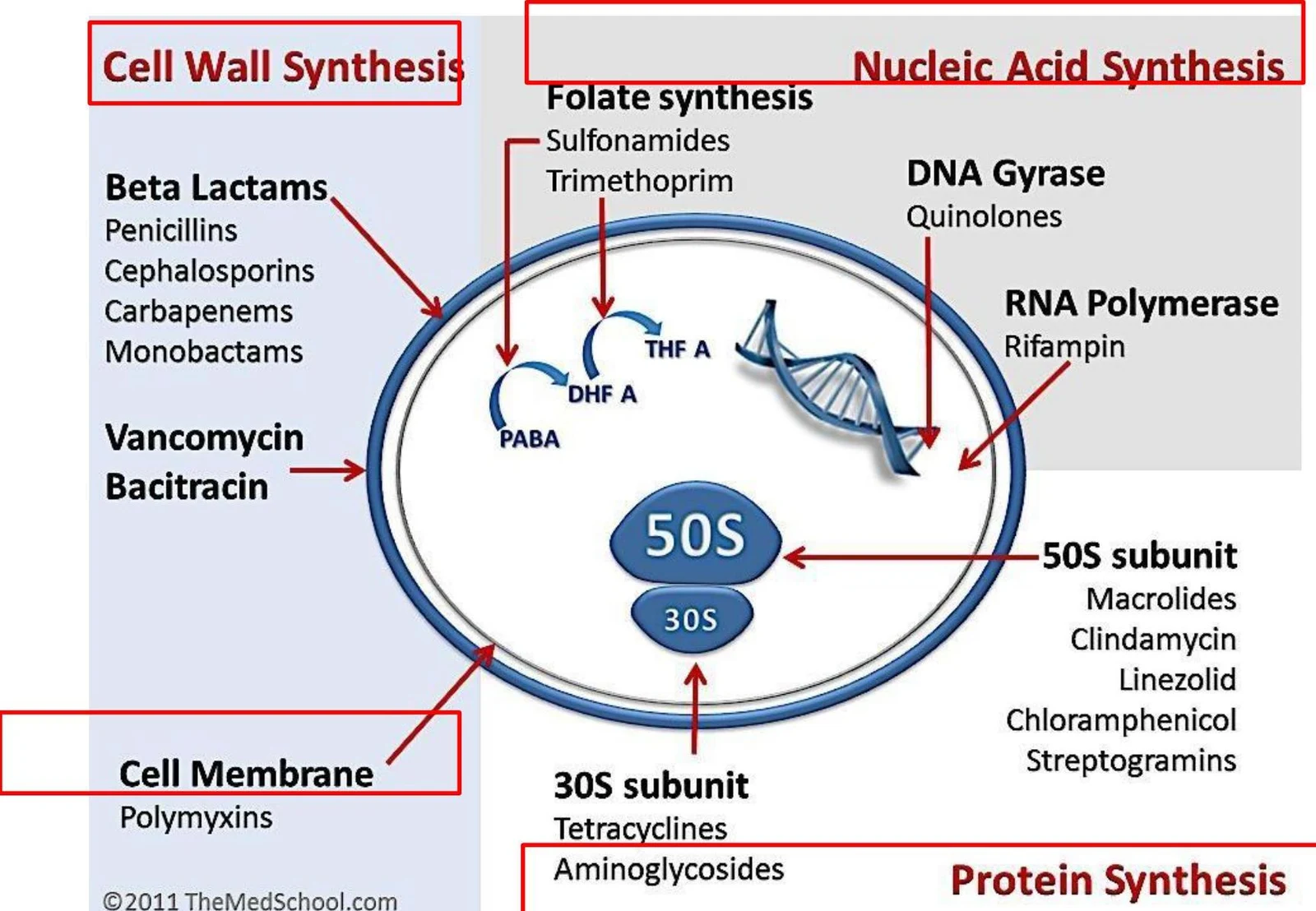
Antibiotics target specific biological processes that are unique to bacteria or significantly different from eukaryotic cells. These targets generally fall into four categories:
- Cell Wall Synthesis: Inhibiting the formation of the protective peptidoglycan layer.
- Protein Synthesis: Targeting the bacterial ribosome (30S or 50S subunits) to prevent translation.
- Nucleic Acid Synthesis: Interfering with DNA replication (e.g., DNA gyrase) or RNA transcription (e.g., RNA polymerase).
- Cell Membrane Integrity: Disrupting the bacterial cell membrane.
Beta-Lactam Antibiotics
The beta-lactam class is characterized by the presence of a four-membered beta-lactam ring. These drugs are bactericidal and work by inhibiting the final cross-linking of the peptidoglycan layer during cell wall formation.
Mechanism: Targeting Transpeptidases
The primary targets for beta-lactams are transpeptidase enzymes, which are also known as Penicillin-Binding Proteins (PBPs). Under normal conditions, these enzymes facilitate the cross-linking of peptidoglycan strands to create a strong, rigid cell wall. Beta-lactams mimic the structure of the enzyme's natural substrate, binding to the PBPs and preventing them from performing their function. This inhibition, combined with the activation of autolytic enzymes, leads to cell wall breakdown and bacterial death.
Keep reading for free.
Create an account to finish this reading and make it part of your study routine.
Continue reading freeAlready have an account? Log in
Updated