Mechanisms and Benefits of Heat Acclimation for Athletes
Explores the physiological adaptations and performance benefits of heat acclimation, including cardiovascular and thermoregulatory changes, and discusses emerging passive heating strategies.
When athletes prepare for competition, they often spend months building aerobic capacity or strength. However, one of the most rapid and effective physiological adaptations available to an athlete is heat acclimation. Unlike many other training adaptations that take months to manifest, meaningful changes in how the body handles thermal stress can occur within just a few days. This article explores the physiological mechanisms behind heat adaptation and how these changes translate into improved exercise performance.
Understanding Heat Acclimation vs. Acclimatisation
Before diving into the physiology, it is essential to distinguish between two terms often used interchangeably in research: heat acclimation and heat acclimatisation.
Heat Acclimation: Refers to adaptations gained through exposure to an artificial hot environment, such as a controlled heat chamber or a heated room.
Heat Acclimatisation: Refers to adaptations gained through exposure to a natural hot environment, such as living in a tropical climate or experiencing seasonal changes.
While the origins of the stimulus differ, the physiological outcomes—such as increased sweat rate and expanded plasma volume—are largely the same. Because of this overlap, researchers often use the collective term "heat adaptation".
Cardiovascular Adaptations: The Role of Plasma Volume
The most significant early change during heat acclimation is plasma volume expansion. Plasma is the watery component of the blood; during heat exposure, the body increases this volume by an average of 10% to 12%, though individual responses can range from 3% to as high as 27%.
This expansion is a critical adaptation because it helps resolve a conflict between two competing physiological demands during exercise in the heat:
Thermoregulation: The need to send blood to the skin to facilitate cooling.
Metabolic Demand: The need to send blood to the working muscles to deliver oxygen.
By increasing the total volume of blood available, the body can maintain sufficient blood flow to both the skin and the muscles simultaneously.
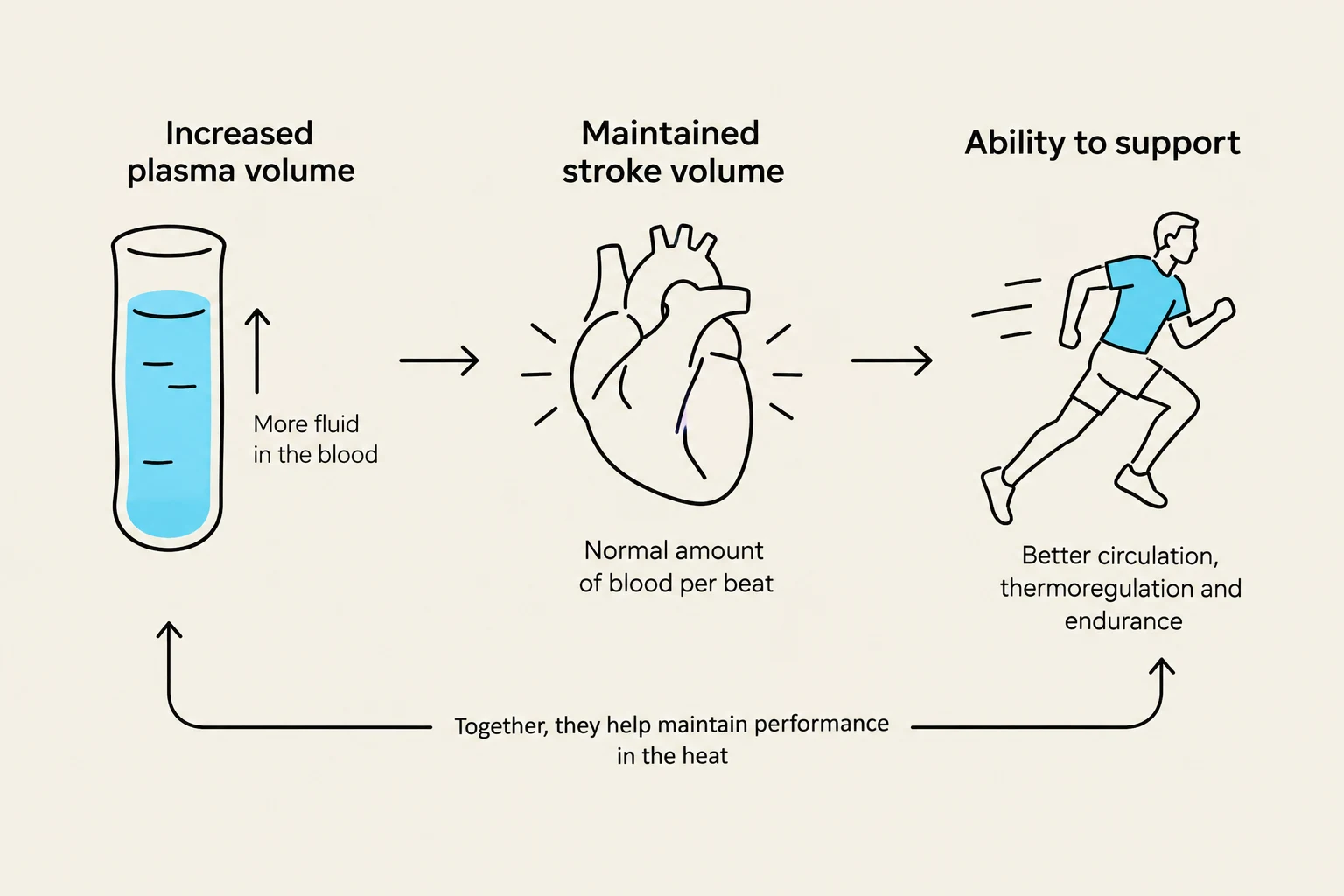
This diagram illustrates how increased plasma volume leads to maintained stroke volume, which in turn supports better circulation, thermoregulation, and endurance, ultimately helping to maintain performance in the heat.
This increase in volume leads to improved cardiovascular function. Specifically, an expanded plasma volume prevents a significant drop in stroke volume (the amount of blood pumped per beat). Consequently, the heart does not have to work as hard to maintain the necessary cardiac output. In an acclimated athlete, you will typically observe a lower exercising heart rate for the same workload compared to an unacclimated state.
Exam Tip: Remember that plasma volume expansion is a temporary adaptation. If an athlete ceases heat exposure, plasma volume typically returns to baseline within approximately 10 days.
Thermoregulatory Changes: Sweating Profiles
Alongside cardiovascular shifts, the body alters its sweating mechanisms to improve cooling efficiency. An acclimated individual will exhibit:
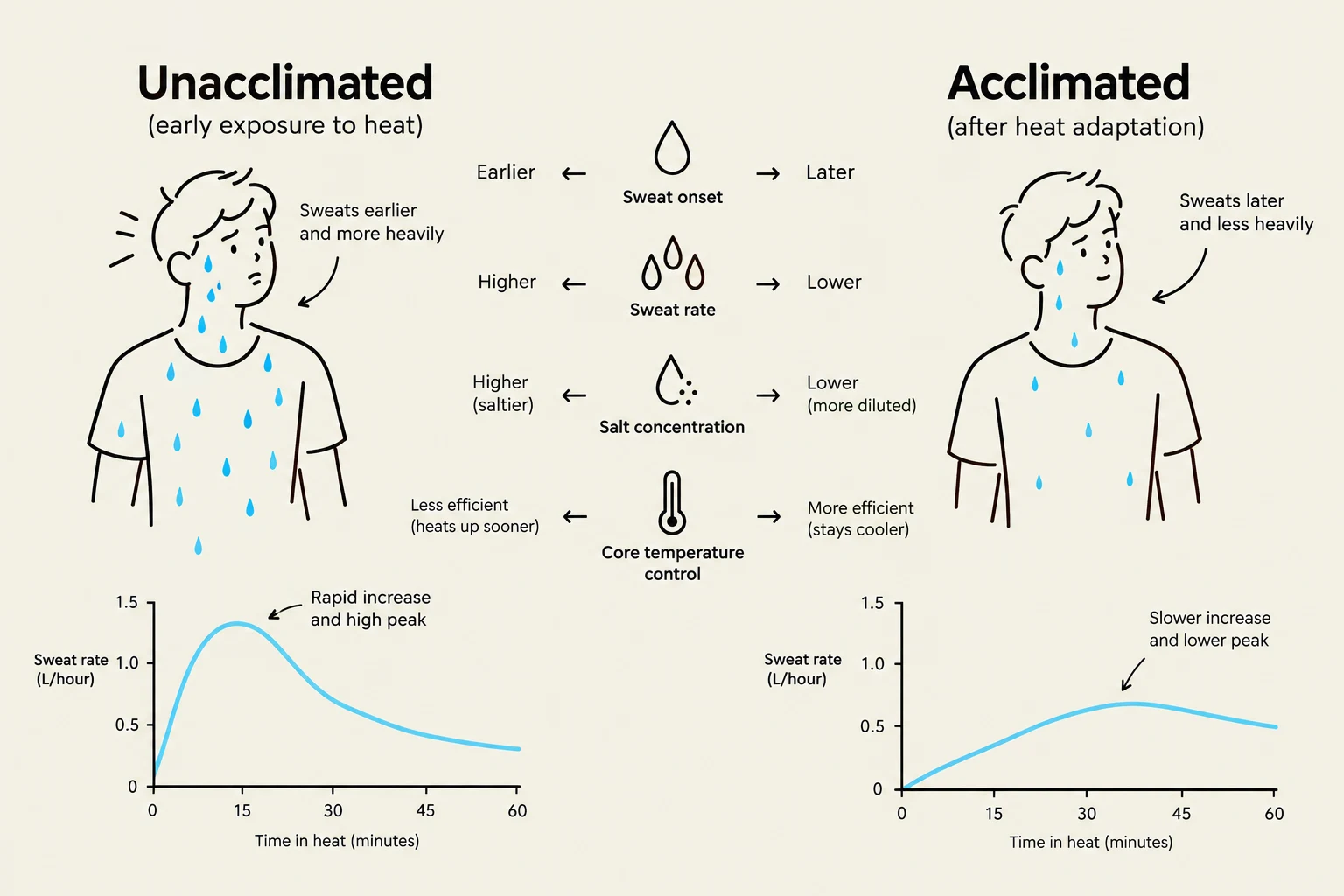
Earlier onset of sweating: The body begins cooling itself sooner, preventing core temperature from spiking too rapidly.
Increased sweat rate: A higher volume of sweat is produced to maximize evaporative cooling.
Dilute sweat: The sweat becomes more "watery," containing fewer electrolytes (like sodium).
While some might assume heavy sweating is a sign of poor fitness, it is often a sign of high heat tolerance. Dilute sweat is easier for the body to replace than electrolyte-heavy sweat, making it a more efficient cooling strategy.
This illustration compares the physiological responses to heat exposure in unacclimated and heat-acclimated individuals, detailing differences in sweat onset, sweat rate, salt concentration, and core temperature control, supported by graphs showing sweat rate over time.
Performance Benefits: Heat vs. Temperate Conditions
Does heat training actually make you faster? The answer depends heavily on the environment in which you compete.
Performance in the Heat
Research, including systematic reviews by Chalmers and colleagues, suggests that short-term heat acclimation (7 or fewer exposures) consistently improves submaximal exercise performance. This includes time trials, intermittent running, and time to exhaustion protocols.
However, the benefits are less pronounced for peak anaerobic efforts, such as maximal sprints, and do not typically result in an increase in VO2max. This makes heat acclimation particularly valuable for endurance athletes (e.g., marathoners or Ironman competitors) where the majority of the effort is performed at submaximal intensities.
Performance in Temperate Conditions
The evidence for "cross-tolerance"—the idea that heat training helps you perform better in cool or temperate conditions—is less certain. There is a plausible physiological basis for this: the expanded plasma volume and improved cardiovascular function gained from heat training do not disappear the moment you step into a cooler room. While some studies suggest a benefit, the evidence is "thinner" and less consistent than the evidence for performance in the heat itself.
Beyond Temperature: Metabolic and Perceptual Mechanisms
Heat acclimation improves exercise tolerance through several secondary mechanisms that go beyond simple cooling:
Glycogen Sparing: Acclimation can reduce the body's reliance on muscle glycogen, preserving carbohydrate stores for later in the race.
Lactate Responses: Improved metabolic efficiency may allow athletes to sustain higher intensities before lactate begins to accumulate significantly.
Reduced Perceived Thermal Stress: Perhaps most importantly, repeated exposure changes how the heat feels. Athletes report that the environment feels more tolerable, which can influence their psychological willingness to maintain high intensities.
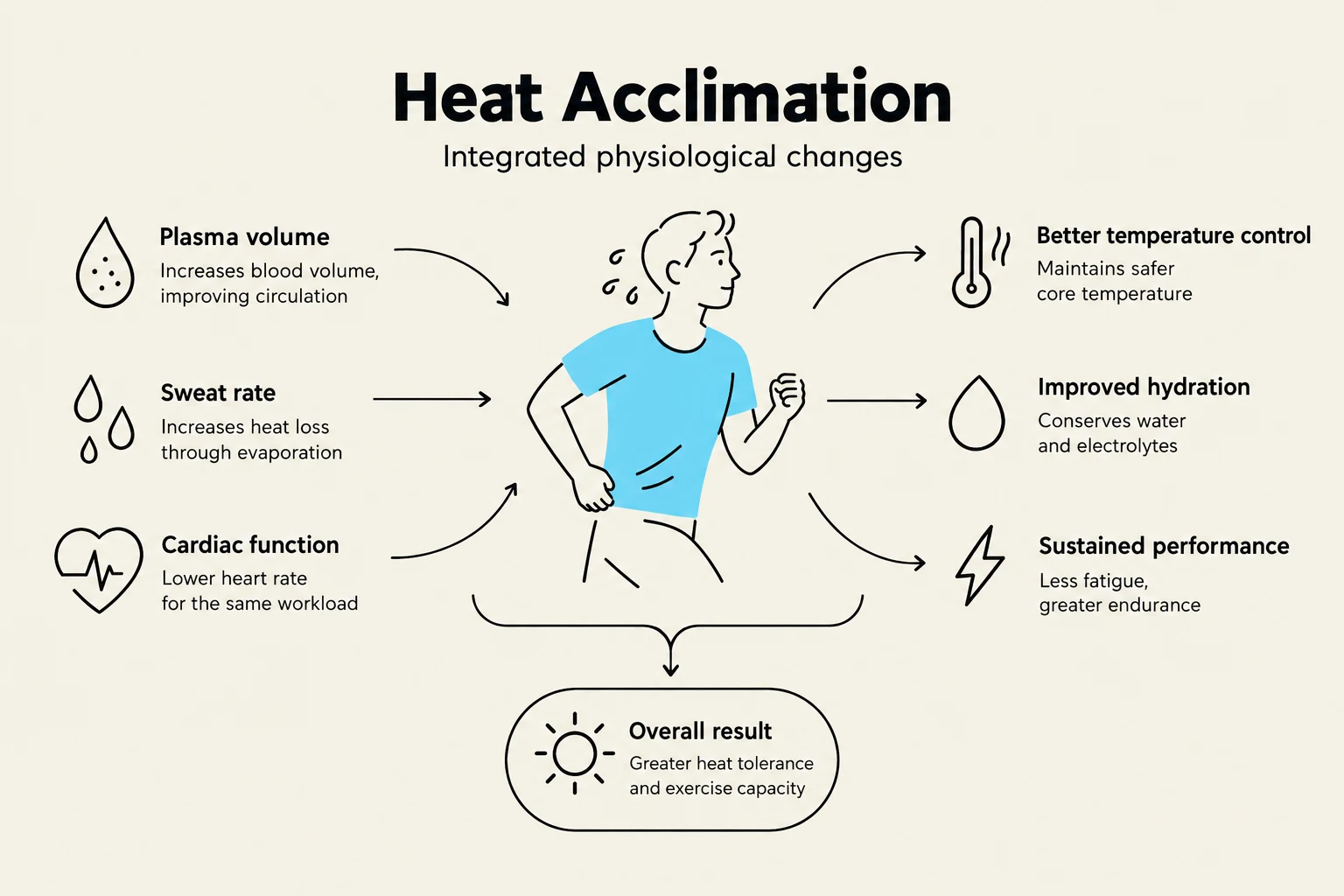
This diagram illustrates the integrated physiological changes that occur during heat acclimation, including increased plasma volume, sweat rate, and improved cardiac function, leading to better temperature control, hydration, sustained performance, and overall greater heat tolerance and exercise capacity.
Emerging Strategies: Passive Heating
While active heat training (exercising in the heat) is the gold standard, researchers are investigating "passive" methods to induce adaptation. These include:
Sauna-based training: Using a sauna immediately after high-intensity exercise.
Hot water immersion: Using heat baths instead of the traditional cold water immersion.
Overdressing: Wearing extra layers during indoor exercise to elevate body temperature.
Currently, the evidence for these passive methods is considered "very low" certainty. While they may cause small improvements in VO2max, heart rate, and sweat rate, they have not yet been proven to be as effective as active heat training for improving actual performance outcomes.
Summary for Athletes: If you have a race in a hot climate, even a short 5-day protocol can provide meaningful benefits, even if it doesn't achieve "complete" adaptation.
Keep reading for free.
Create an account to finish this reading and make it part of your study routine.