This content provides a comprehensive overview of critical maternal complications during the postpartum period, including postpartum hemorrhage (PPH), thromboembolic events, and infections. It details assessment, the "Five Ts" of PPH etiology, clinical manifestations of shock, and staged management strategies, includin
The postpartum period is a time of profound physiological and psychological transition. While often a period of joy, it also presents significant clinical risks that require vigilant nursing assessment and rapid intervention. Among the most critical complications are postpartum hemorrhage (PPH), thromboembolic events, and various infections. Understanding the etiology, clinical manifestations, and staged management of these conditions is essential for preventing maternal morbidity and mortality.
Postpartum Hemorrhage (PPH)
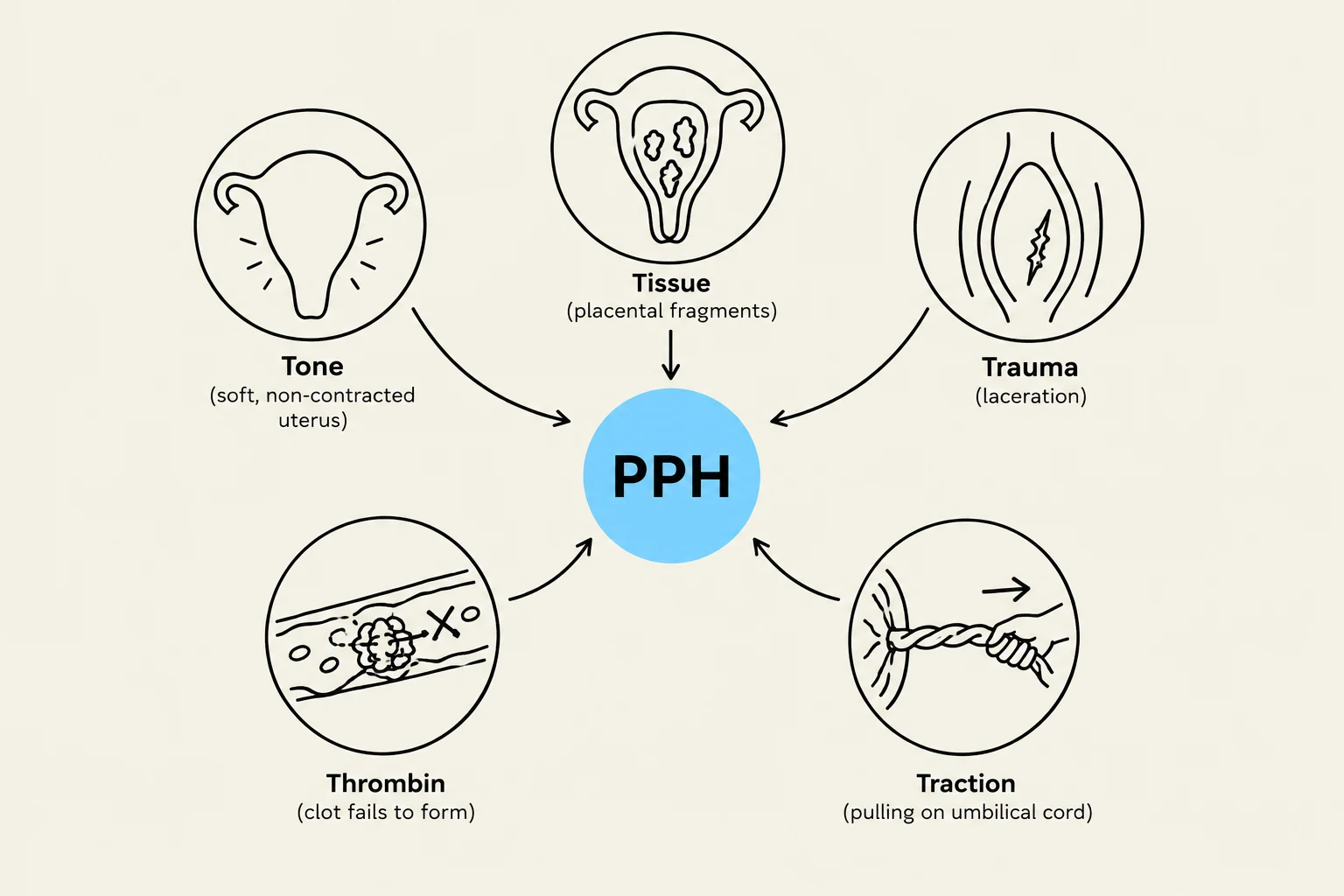
Diagram illustrating the four main causes of postpartum hemorrhage (PPH): Tone (uterine atony), Tissue (retained placental fragments), Trauma (lacerations), and Thrombin (coagulopathy).
Postpartum hemorrhage is a potentially life-threatening complication that can occur following both vaginal and cesarean deliveries. It is currently the leading cause of maternal death, and most cases occur within the first four hours after birth.
Defining Blood Loss
Clinical definitions of PPH vary slightly based on the mode of delivery, but a universal threshold for severe concern is a cumulative blood loss ≥1,000 mL accompanied by signs of hypovolemia within 24 hours of delivery.
For clinical monitoring, it is important to note:
Vaginal Delivery: Expected blood loss is 300–500 mL. Any loss >500 mL is considered abnormal and requires immediate investigation.
Cesarean Delivery: Expected blood loss is higher, ranging from 500–1,000 mL.
Assessment and the "Five Ts"
To manage PPH effectively, clinicians must identify the underlying cause. A helpful mnemonic for the etiology of hemorrhage is the "Five Ts":
Tone: Uterine atony (the most common cause), where the uterus fails to contract.
Tissue: Retained placental fragments or clots that prevent uterine contraction.
Trauma: Lacerations of the cervix, vagina, or perineum; uterine inversion or rupture.
Thrombin: Coagulation disorders (preexisting or acquired) that interfere with hemostasis.
Traction: Excessive pulling on the umbilical cord before the placenta has detached.
Clinical Presentation Guide:
Finding
Suspected Etiology
Large, painless, soft uterus with dark clots
Retained placenta or Uterine atony
Firm, contracted uterus with a trickle of blood
Lacerations or Trauma
Localized, painful, bluish bulge in the perineum
Hematoma
Bleeding from gums, IV sites, or petechiae
Coagulopathy (Thrombin)
Clinical Manifestations of Shock
As blood loss progresses, the patient will exhibit signs of hypovolemic shock. Nurses must categorize the severity to guide the escalation of care:
Mild (15–25% loss): Diaphoresis, cool extremities, and maternal anxiety.
Severe (35–50% loss): Hypotension, agitation, confusion, and hemodynamic instability.
Management Strategies for PPH
This diagram illustrates a staged escalation protocol for managing postpartum hemorrhage, progressing from conservative care to aggressive interventions.
Management follows a staged escalation protocol designed to move from conservative measures to aggressive surgical intervention.
Pharmacological Interventions (Uterotonics)
Uterotonic drugs are used to stimulate uterine contractions to achieve hemostasis.
Oxytocin (Pitocin): The first-line therapy. It must be monitored closely to avoid uterine hyperstimulation.
Methylergonovine (Methergine): An effective IM medication, but it is strictly contraindicated in patients with hypertension.
Carboprost (Hemabate): Used if other medications fail, but it is contraindicated in patients with asthma or significant cardiovascular, renal, hepatic, or pulmonary disease.
Misoprostol (Cytotec): An effective option, though it is contraindicated in patients with cardiovascular, hepatic, or pulmonary disease.
Tranexamic Acid (TXA): Often considered in Stage 2 of management to assist with clotting.
Staged Escalation Protocol
Stage 1: Focuses on fundal massage, emptying a distended bladder (as a full bladder can shift the uterus and prevent contraction), and administering first-line uterotonics.
Stage 2: Involves mobilizing additional help, establishing a second large-bore IV (16-18G), drawing STAT labs (CBC, Coags, Fibrinogen), and considering TXA.
Stage 3: If bleeding continues or vital signs become unstable, the patient should be moved to the Operating Room (OR) and a Massive Transfusion Protocol should be initiated.
Stage 4: Addresses cardiovascular collapse via ACLS and immediate surgical intervention.
Invasive Management
If pharmacological methods are insufficient, more invasive techniques are required:
Bimanual Compression: Manual pressure applied to the uterus to control bleeding.
Bakri Balloon: An intrauterine balloon used for tamponade to apply pressure against the uterine walls.
JADA System: Uses suction to manage bleeding.
Hysterectomy: The last resort to ensure maternal survival.
Exam Tip: Always check a patient's blood pressure before administering Methergine. If the patient is hypertensive, Methergine is contraindicated.
Thromboembolic Conditions
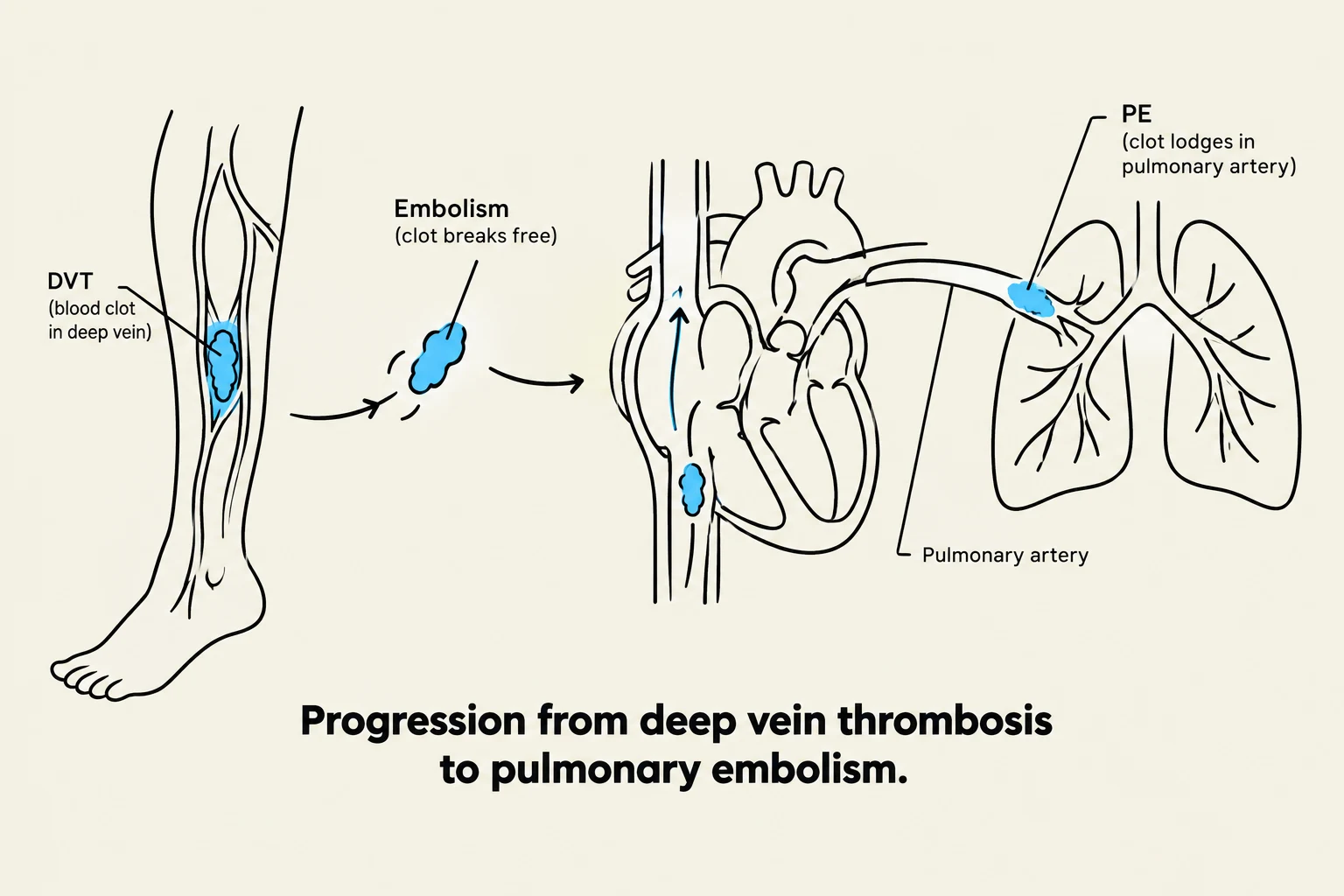
This diagram illustrates the progression from deep vein thrombosis (DVT) to pulmonary embolism (PE), showing how a blood clot can break free from a deep vein, travel through the bloodstream, and lodge in the pulmonary artery of the lungs.
The postpartum period is a state of hypercoagulability, meaning the blood clots more easily than usual. This significantly increases the risk of thromboembolic conditions, particularly in the first three weeks postpartum.
Deep Vein Thrombosis (DVT) and Pulmonary Embolism (PE)
A thrombus is a blood clot within a vessel. If it breaks free, it becomes an embolism.
DVT Symptoms: Unilateral leg swelling, calf tenderness, erythema (redness), warmth, and difference in leg circumference.
PE Symptoms: A pulmonary embolism is a medical emergency. Symptoms include sudden shortness of breath (SOB), chest pain, apprehension, diaphoresis, fever, and hemoptysis (coughing up blood).
Prevention and Management:
Prevention includes patient ambulation, use of Sequential Compression Devices (SCDs), and smoking cessation. High-risk patients may receive prophylactic anticoagulants like Heparin or Lovenox (note: Warfarin is not used in this context).
Postpartum Infections
Postpartum infection is clinically defined as a fever of ≥100.4∘F (38∘C) occurring after the first 24 hours of birth.
Common Types of Infection
Organisms typically originate from the vaginal tract or the bowel:
Endometritis: Infection of the endometrium, decidua, and adjacent myometrium.
Urinary Tract Infections (UTIs): Often result from frequent vaginal examinations, catheterization, or trauma during birth.
Surgical Site Infections: Often related to Cesarean deliveries; these may not be identified until after discharge.
Mastitis: An infection of the breast tissue, often caused by Staphylococcus aureus. It presents as a tender, hot, red, and painful area on one breast.
Nursing Assessment: Nurses should monitor for elevated temperature, chills, increased pulse rate, abdominal pain, and malodorous (foul-smelling) lochia.
This article is intended for educational purposes for nursing and medical students and should not replace clinical judgment or institutional protocols.
Keep reading for free.
Create an account to finish this reading and make it part of your study routine.