


Reflection is more than just thinking about the past; it is a deliberate process of turning experiences into actionable knowledge. For students and professionals in demanding fields like healthcare, education, or management, simply "having an experience" is not enough to ensure growth. To truly learn, one must dissect the experience, understand the emotions involved, and create a roadmap for future improvement.
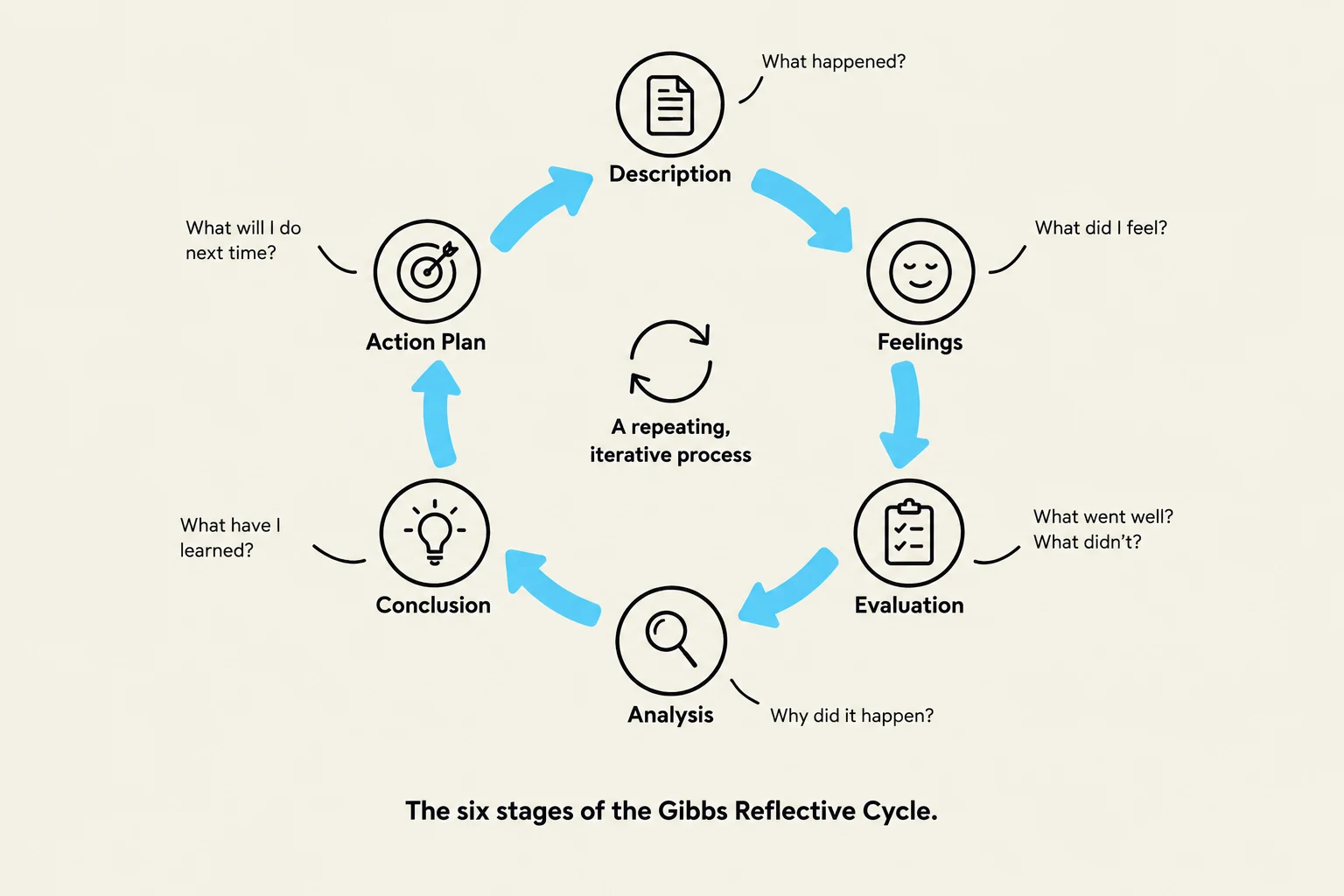
The Gibbs Reflective Cycle is a structured six-stage framework designed to facilitate this deep learning. By following this cyclical model, you move from a simple description of an event to a sophisticated analysis and a concrete plan for action.
1. Description: Setting the Scene
The first step in the cycle is to provide a detailed account of the event without jumping to conclusions. Think of this as a "reconstruction" phase where you lay out the facts so that anyone reading it—or you, upon re-reading it later—can understand exactly what occurred.
To complete this stage effectively, you should address the following questions:
- Who was present?
- What happened, and what did you and others do?
- When and where did the situation take place?
- Why were you there, and what was your intended outcome?
Student Tip: Avoid being vague. Instead of saying "The meeting went poorly," say "During the 10:00 AM team briefing in Conference Room B, I attempted to present the new budget, but the discussion was interrupted by three conflicting questions from senior staff".
2. Feelings: Exploring the Emotional Dimension
Once the facts are established, you must turn your attention inward. The second stage focuses on the emotional dimension of the experience. Emotions are not "distractions" from learning; they are vital data points that can explain why certain decisions were made or why communication broke down.

Keep reading for free.
Create an account to finish this reading and make it part of your study routine.
Continue reading freeAlready have an account? Log in
Updated