


Preparing for a digital written exam in "Organisation & Change" requires more than just memorizing definitions; it demands the ability to apply theoretical frameworks to practical business scenarios. Based on recent examination patterns, students are expected to demonstrate a deep understanding of how internal systems, such as performance management, align with corporate strategy, and how external or foundational factors shape the very essence of an organisation's culture.
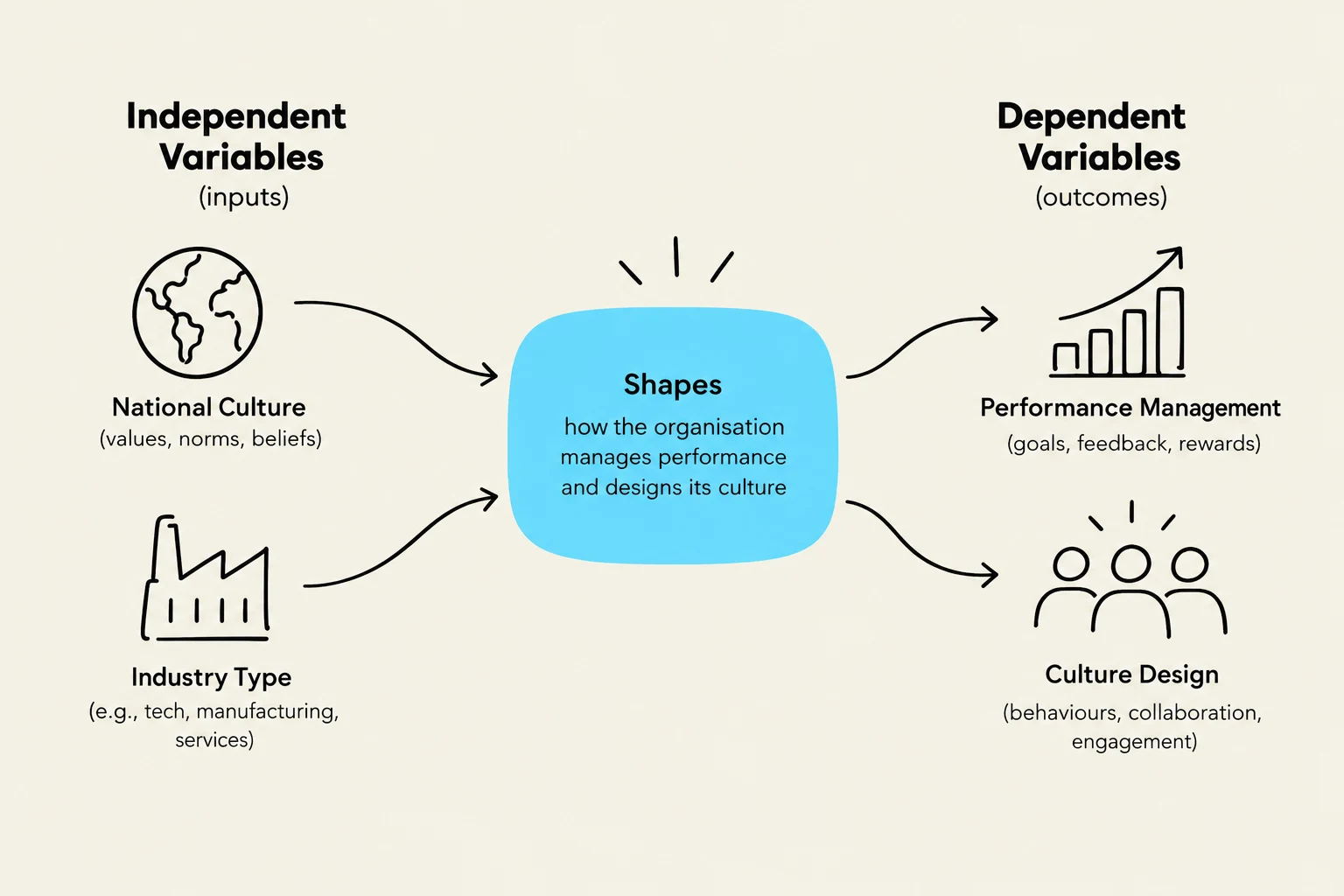
This study guide breaks down two critical exam pillars: the strategic alignment of performance management systems and the independent variables that dictate organisational culture.
Strategic Alignment of Performance Management Systems
A performance management system is not merely a tool for annual reviews; it is a structured process designed to ensure that employee activities and outputs are aligned with the organisation's strategic goals. In an exam setting, you may be asked to justify why a specific system "fits" a company's strategy.
To answer such questions effectively, you must move beyond simple descriptions. You are often required to process specific characteristics of the system—such as its frequency, feedback mechanisms, or reward structures—and link them directly to the strategic direction of the firm.
Exam Tip: The "Substantiation" Requirement When an exam asks you to "substantiate your answer," it is looking for a logical bridge. Do not just state that a system is "good." Instead, explain how a specific characteristic (e.g., real-time digital feedback) supports a specific strategic goal (e.g., rapid innovation in a high-tech market).

Keep reading for free.
Create an account to finish this reading and make it part of your study routine.
Continue reading freeAlready have an account? Log in
Updated