


Have you ever spent hours reading a textbook, only to close the cover and realize you can't remember a single thing you just read? This common frustration isn't a sign of low intelligence; rather, it is often a sign of inefficient learning mechanics. Effective academic success is not about how many hours you spend sitting at a desk, but about how well you understand the relationship between how your brain processes information, how you practice that information, and how you perform under pressure.
By understanding the science of memory, implementing disciplined study habits, and utilizing systematic test-taking techniques, you can transform your academic performance from rote memorization to true mastery.
The Mechanics of Memory
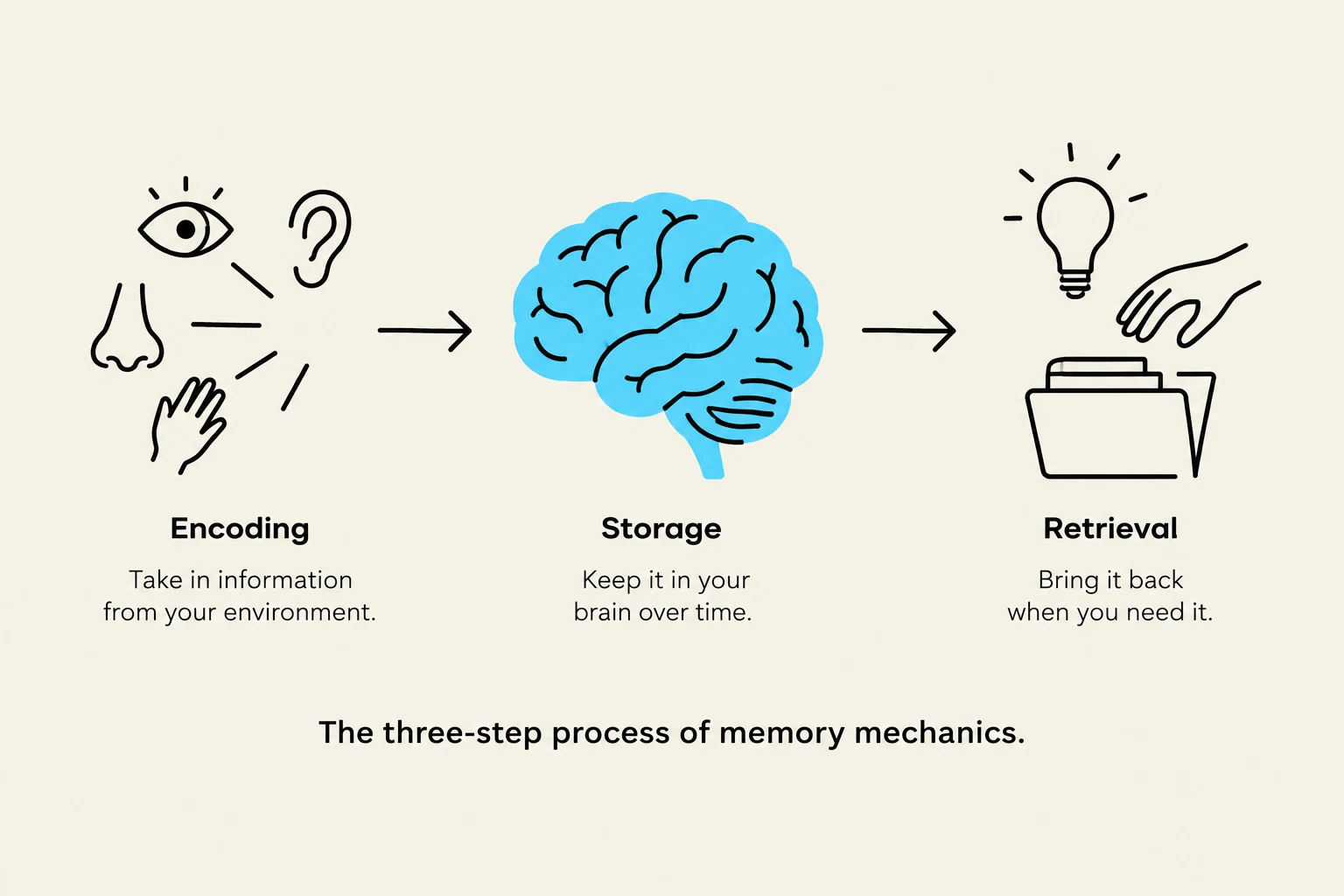
- Encoding: This is the initial stage where you take in information through your senses and process it into a form the brain can use.
- Storage: Once encoded, the information must be maintained over time.
- Retrieval: This is the ability to reach back into your storage and pull that information out when you need it, such as during an exam.
Understanding Memory Types
Not all memories are created equal. Your brain categorizes information based on how long it needs to stay active:
- Working Memory: This is your "mental workspace." It involves information you are actively using for an immediate task, such as following a set of instructions while completing a math problem.
- Short-term Memory: This acts as a temporary holding area for information held briefly, like a short shopping list or a phone number you just heard.
- Long-term Memory: This is the permanent archive. It stores information for extended periods, such as major life events, complex skills, or core academic concepts.

Keep reading for free.
Create an account to finish this reading and make it part of your study routine.
Continue reading freeAlready have an account? Log in
Updated