


In the field of medical terminology, words are rarely arbitrary collections of letters. Instead, they are complex structures built from specific building blocks: word roots, prefixes, and suffixes. To make these blocks pronounceable and to ensure structural accuracy, we use a critical tool known as the combining vowel. Understanding the rules of how to join these parts is the difference between reading a medical term fluently and stumbling through a string of incomprehensible consonants.
The Building Blocks: Roots and Combining Forms
Before we can master the rules of combination, we must distinguish between a simple word root and a combining form.
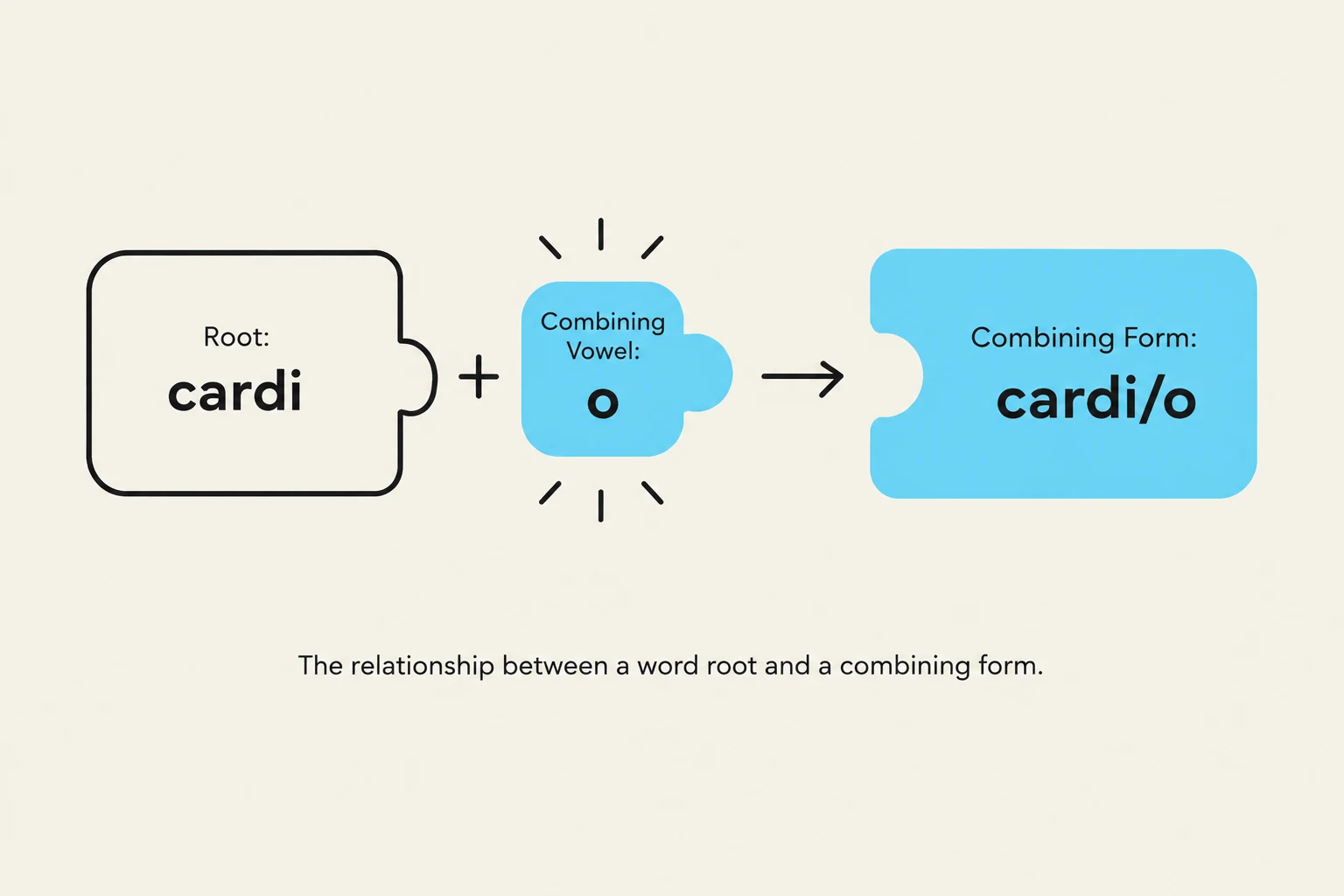
A word root is the core meaning of the term. It represents the fundamental concept, such as an organ or a body system. However, word roots are often difficult to pronounce when they are immediately followed by another word part.
To solve this, we use a combining form. A combining form is simply a word root plus a combining vowel (usually the letter "o").
For example:
- Root:
cardi(heart) - Combining Form:
cardi/o
By using the combining form, we create a "bridge" that allows us to connect the root to other parts of the word without creating awkward phonetic transitions.
The Golden Rules of Combination
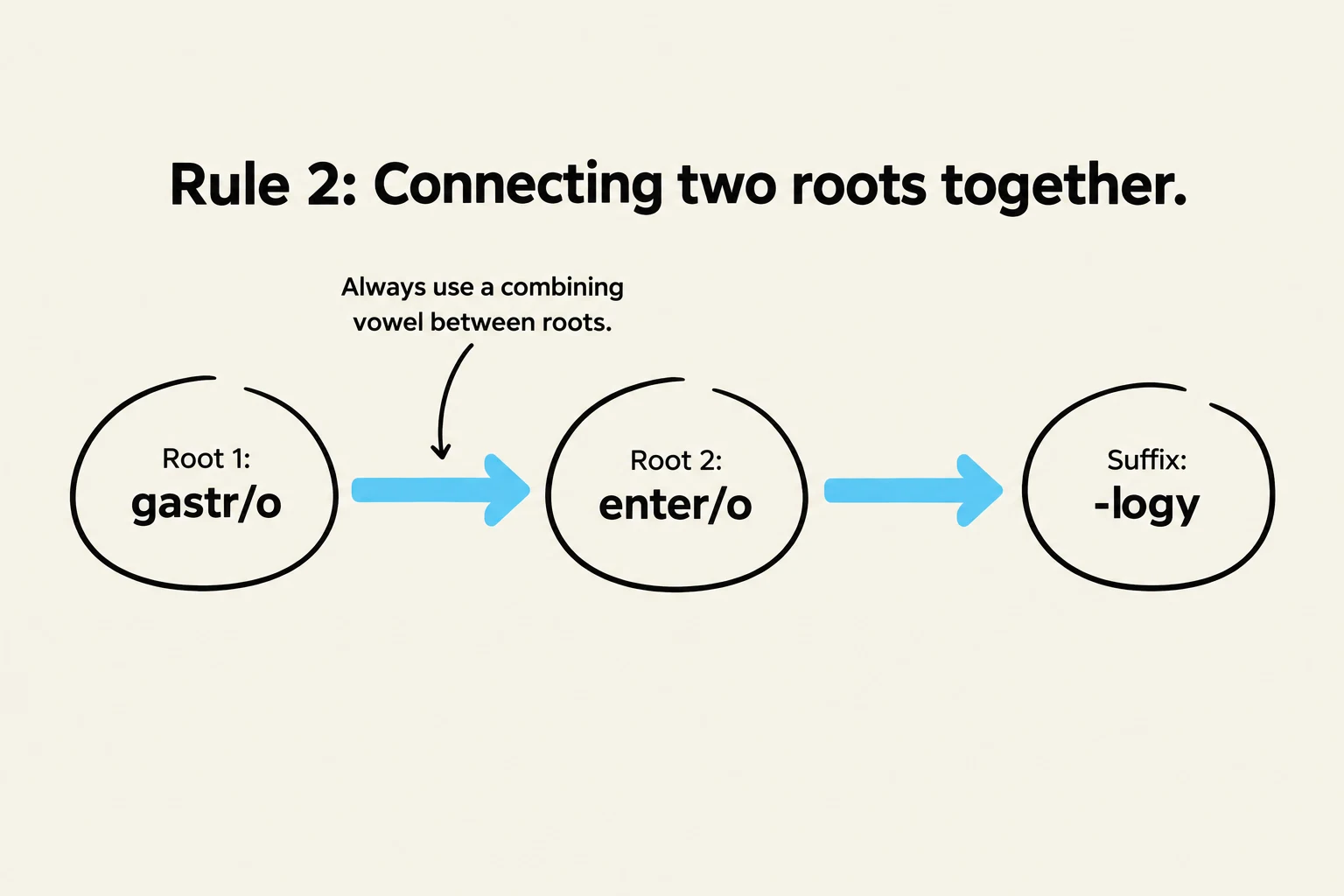
The use of combining vowels is not random; it follows two primary rules based on whether you are connecting a root to a suffix or a root to another root.
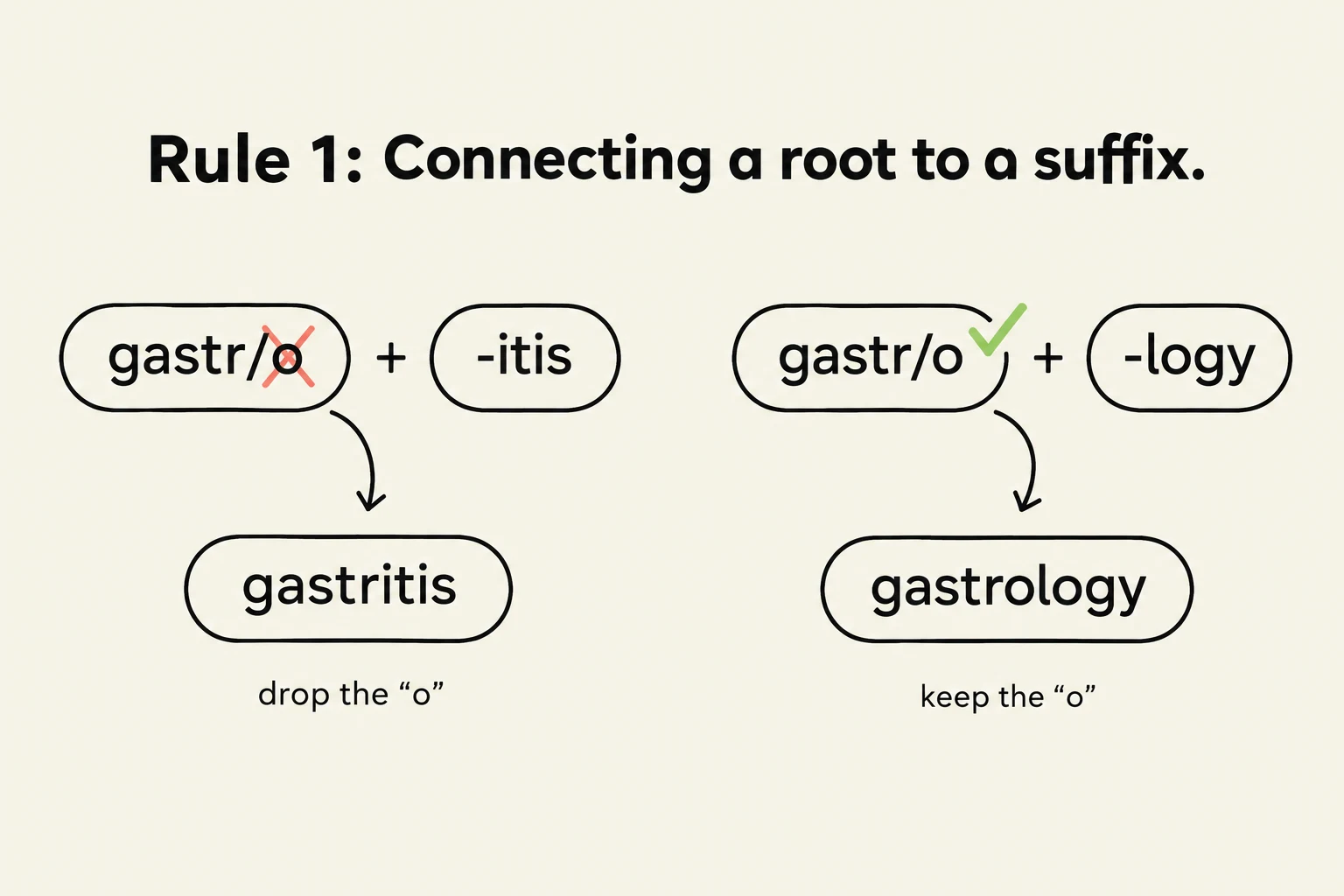
Rule 1: Connecting a Root to a Suffix
When you attach a suffix to a word root, the decision to use a combining vowel depends entirely on the first letter of the suffix.
Keep reading for free.
Create an account to finish this reading and make it part of your study routine.
Continue reading freeAlready have an account? Log in
Updated