


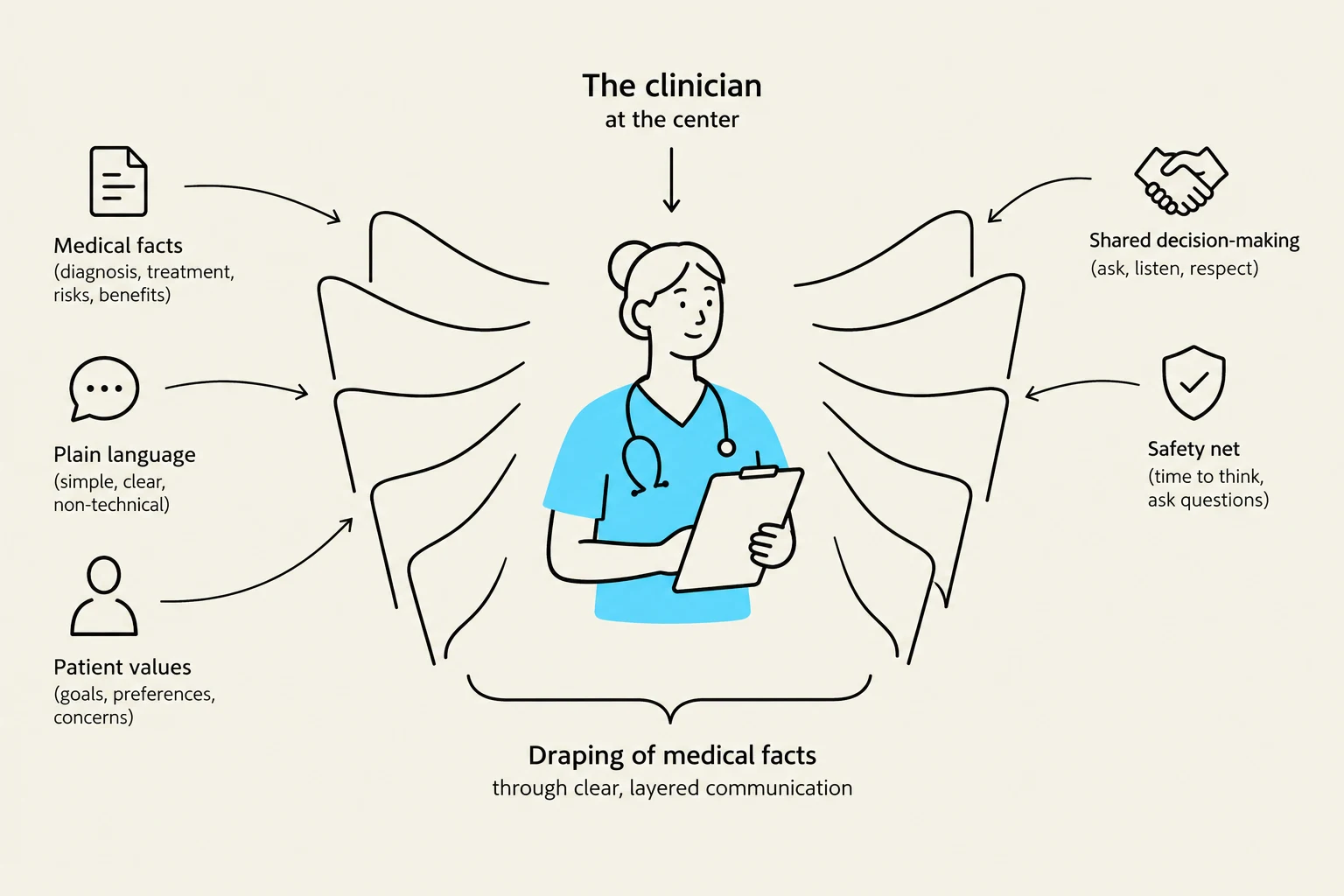
In the clinical setting, informed consent is far more than a signature on a piece of paper; it is a fundamental ethical and legal process that ensures a patient understands their medical options and participates in their own care. While many practitioners view consent as a bureaucratic hurdle, mastering a structured approach can transform it into a powerful tool for building trust and reducing litigation risk. One of the most effective ways to ensure a comprehensive discussion is through the ABCDE mnemonic: Areas, Benefits, Cautions, Draping, and Empowering the patient.
The Foundation of Informed Consent
Informed consent is rooted in the principle of patient autonomy—the right of a competent individual to make decisions about their own body. For consent to be considered "informed," the clinician must provide enough information for the patient to make a reasoned decision. This involves explaining the nature of the procedure, the risks involved, and the alternatives available, including the consequences of doing nothing at all.
Exam Tip: If a question asks whether a patient has provided valid informed consent, look for evidence that the patient understood the risks and the alternatives. A signature alone does not prove understanding.
A: Areas of Discussion
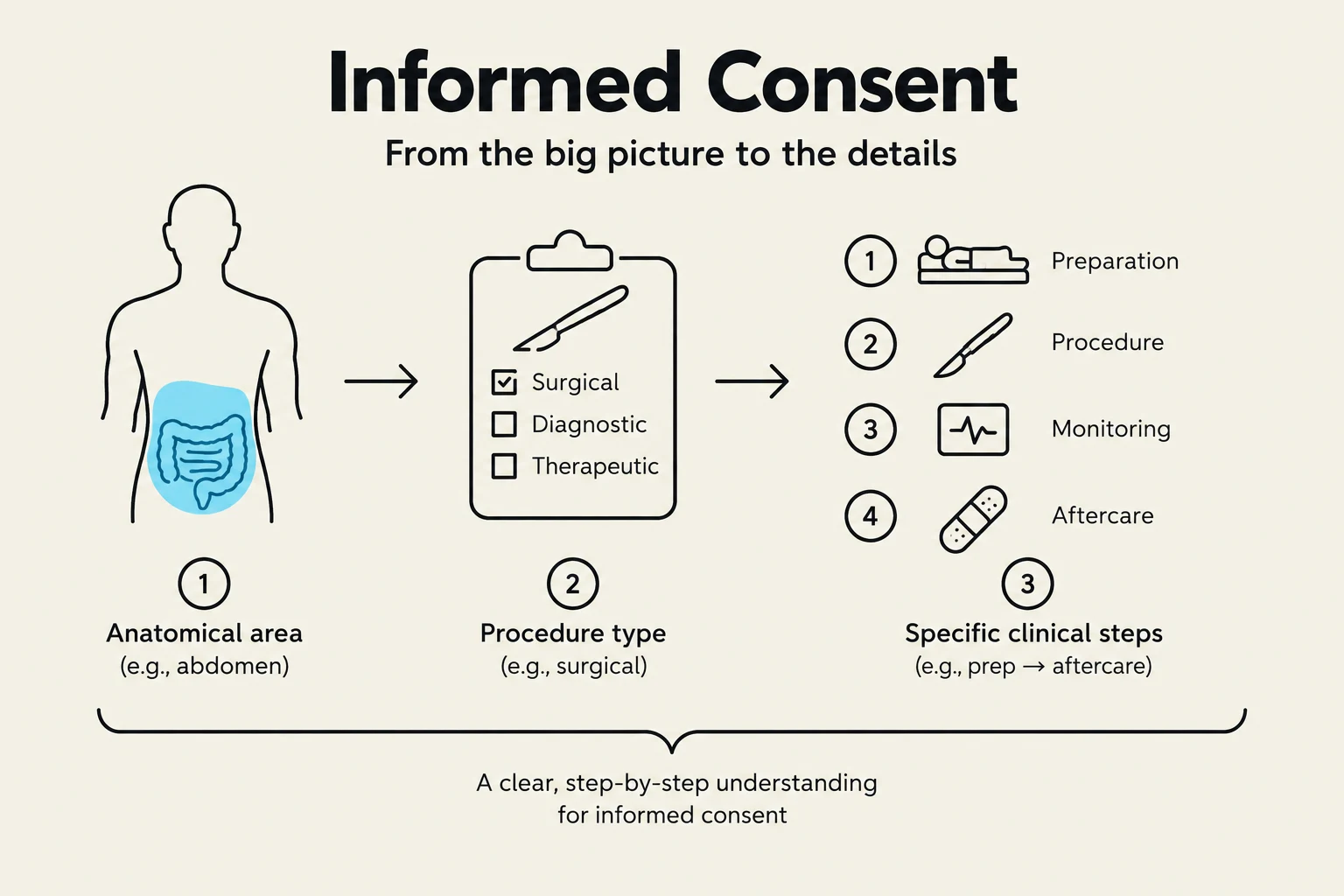
The first step in the mnemonic is defining the Areas of the procedure or treatment. This involves a clear, jargon-free explanation of what is actually going to happen. You must define the anatomical location, the specific technique to be used, and the scope of the intervention.
For example, if a patient is undergoing a biopsy, the "Area" discussion should specify whether it is a needle biopsy or an excisional biopsy, which specific site is being targeted, and how long the procedure will take. This sets the stage for the patient to visualize the event, reducing anxiety through clarity.

Keep reading for free.
Create an account to finish this reading and make it part of your study routine.
Continue reading freeAlready have an account? Log in
Updated