


In professional communication, success is not measured by what you say, but by what your audience understands. Effective communication is "audience-centred," meaning the sender crafts messages specifically to meet the needs, expectations, and knowledge levels of the receiver. To achieve this, you must master the art of preparing your purpose, analyzing your audience, and selecting the most appropriate communication channel.
The Foundation: The Writing Process
Before you type a single word, you must engage in the first stage of the professional writing process: Preparing. While many people jump straight into drafting, high-quality communication requires a structured approach:
- Preparing: Defining your purpose, analyzing your audience, and selecting your channel.
- Researching: Gathering, selecting, and verifying information.
- Drafting: Organizing your thoughts, writing, and designing the layout.
- Editing: Evaluating, revising, and proofreading your work.
Study Tip: Focus your energy on Stage 1. If your purpose is unclear or your audience analysis is flawed, no amount of perfect grammar in the "Editing" stage can save a message that misses its mark.
Defining Your Purpose
Every message you send has a reason for existing. In a professional context, we categorize these into primary and secondary goals.
- General Purpose: This is your primary driver. Are you trying to inform, persuade, motivate, or entertain?
- Secondary and Tertiary Purposes: These are often referred to as "ulterior motives". For example, while the general purpose of a meeting might be to inform staff about a new policy, a secondary purpose might be to build rapport or persuade them of the policy's benefits.
Analyzing the Audience
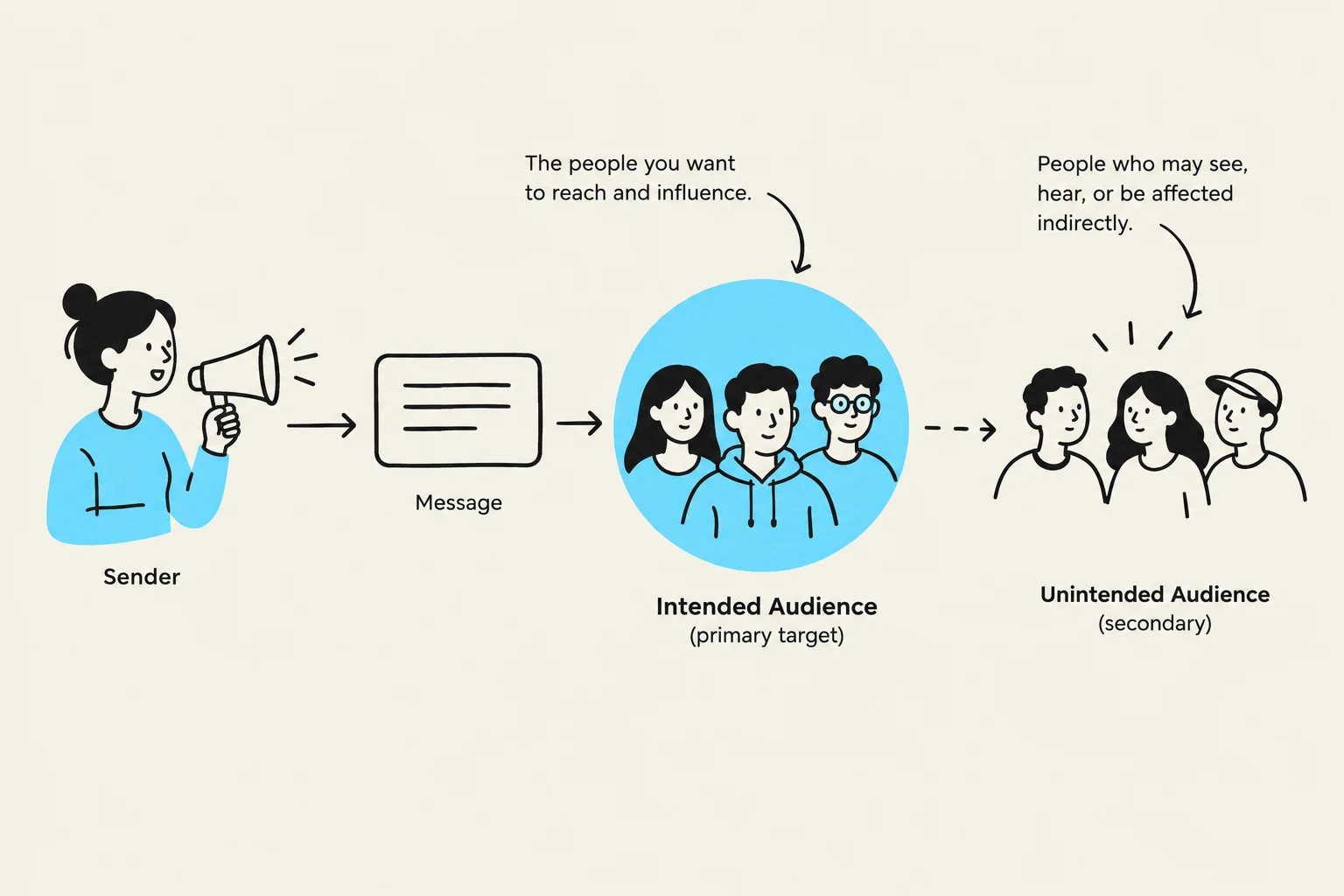
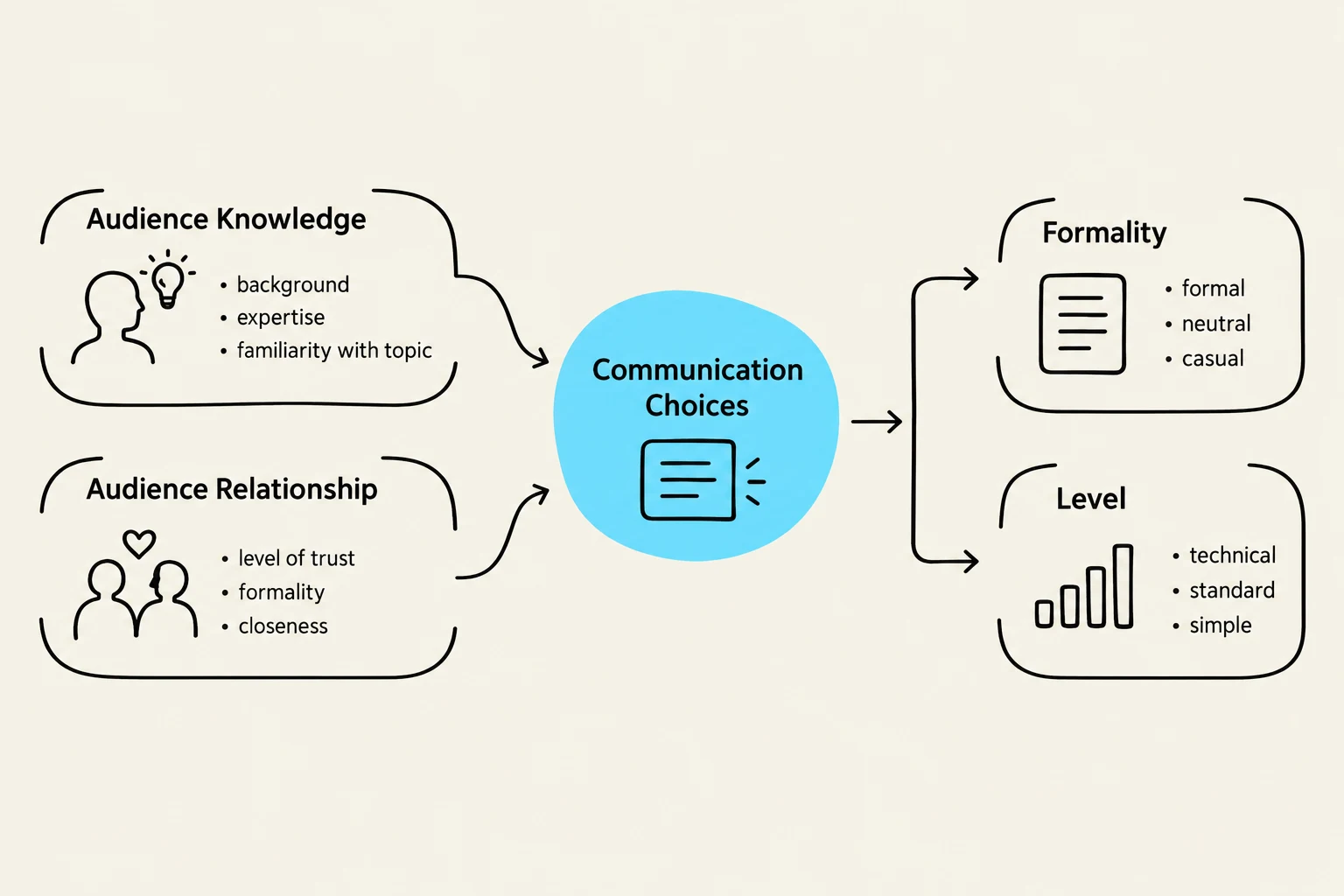
Understanding who is on the receiving end of your message is the most critical step in audience-centred communication. You must distinguish between your intended and unintended audiences to avoid professional pitfalls.

Keep reading for free.
Create an account to finish this reading and make it part of your study routine.
Continue reading freeAlready have an account? Log in
Updated