Mastering Administrative Responsibilities in the Medical Office
This guide covers essential administrative tasks in a healthcare setting, including patient registration, data integrity, scheduling, workflow management, and handling patient correspondence, ensuring smooth and efficient practice operations.
In a healthcare setting, the front office serves as the gateway to patient care. While clinical tasks focus on the physical well-being of the patient, administrative responsibilities ensure that the practice operates smoothly, legally, and efficiently. For a medical assistant or administrative professional, mastering these tasks is essential for maintaining patient satisfaction and ensuring that the provider can focus entirely on clinical decision-making.
Administrative duties involve a complex blend of organization, communication, and data management. From the moment a patient calls to schedule an appointment to the moment they depart after their visit, the administrative staff manages the flow of information and people.
Patient Registration and Data Integrity
The first point of contact in the administrative cycle is registration. This process is much more than simply asking for a name and a phone number; it is the foundation of the patient's medical record and the basis for all future billing and legal documentation.
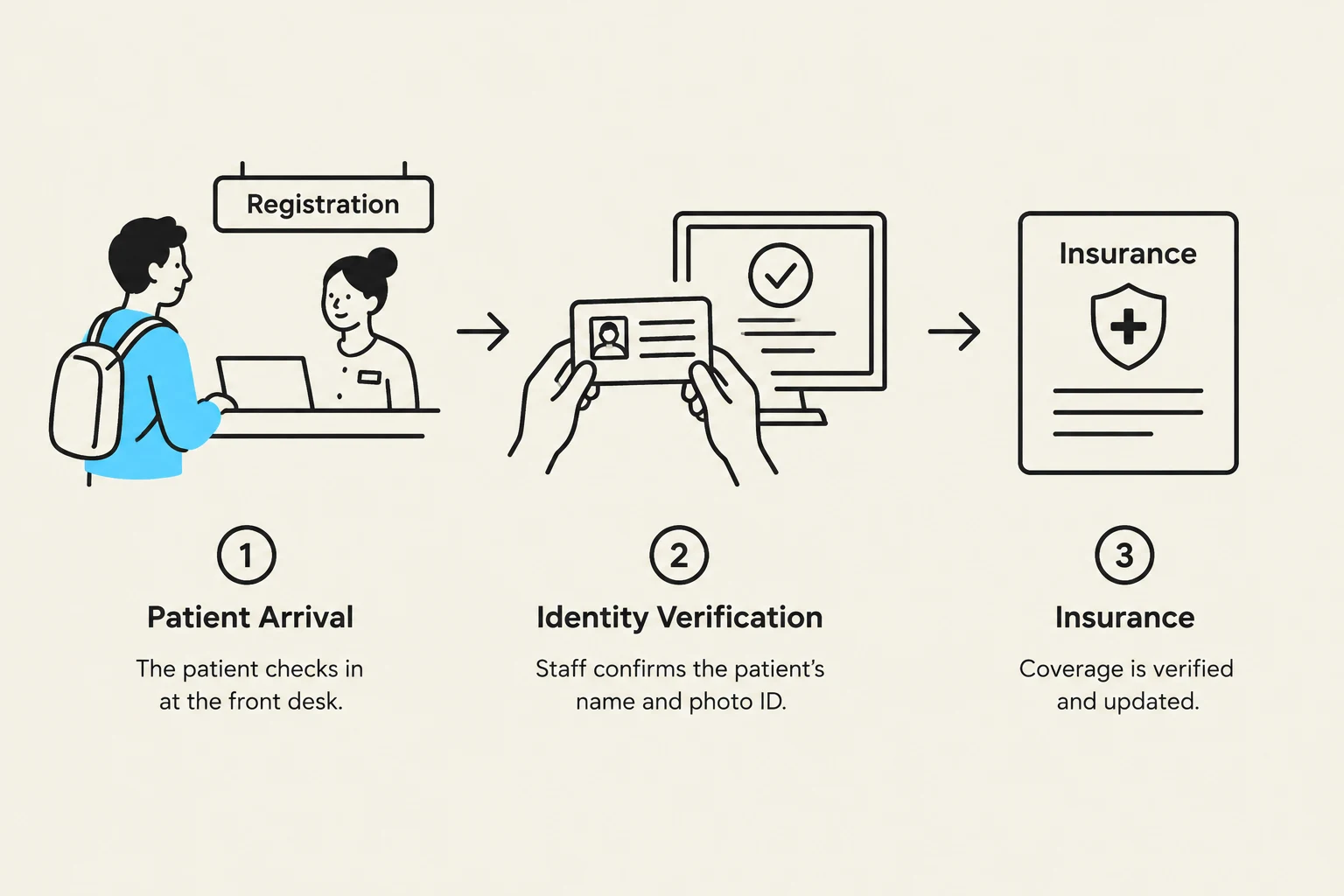
During registration, staff must collect accurate demographic information, including full legal names, dates of birth, addresses, and contact details. Equally important is the collection of insurance information and the verification of coverage. Errors made during this stage can lead to denied insurance claims, delayed treatments, and significant frustration for both the patient and the provider.
Exam Tip: Always verify that the patient's identity matches their government-issued photo ID and that the insurance card is current. Discrepancies in spelling or birthdates are common sources of billing errors.
This illustration depicts the typical steps involved in a patient's interaction with a healthcare facility, from arrival and registration to identity verification and insurance confirmation.
Effective registration also involves obtaining necessary legal consents, such as HIPAA privacy notices and consent to treat forms. These documents ensure that the practice is compliant with federal regulations regarding patient privacy and autonomy.
Scheduling and Workflow Management
Scheduling is the "engine" of the medical office. A well-managed schedule maximizes the provider's time while minimizing patient wait times. Administrative professionals must balance several different scheduling methods to meet the needs of the practice.
Common scheduling types include:
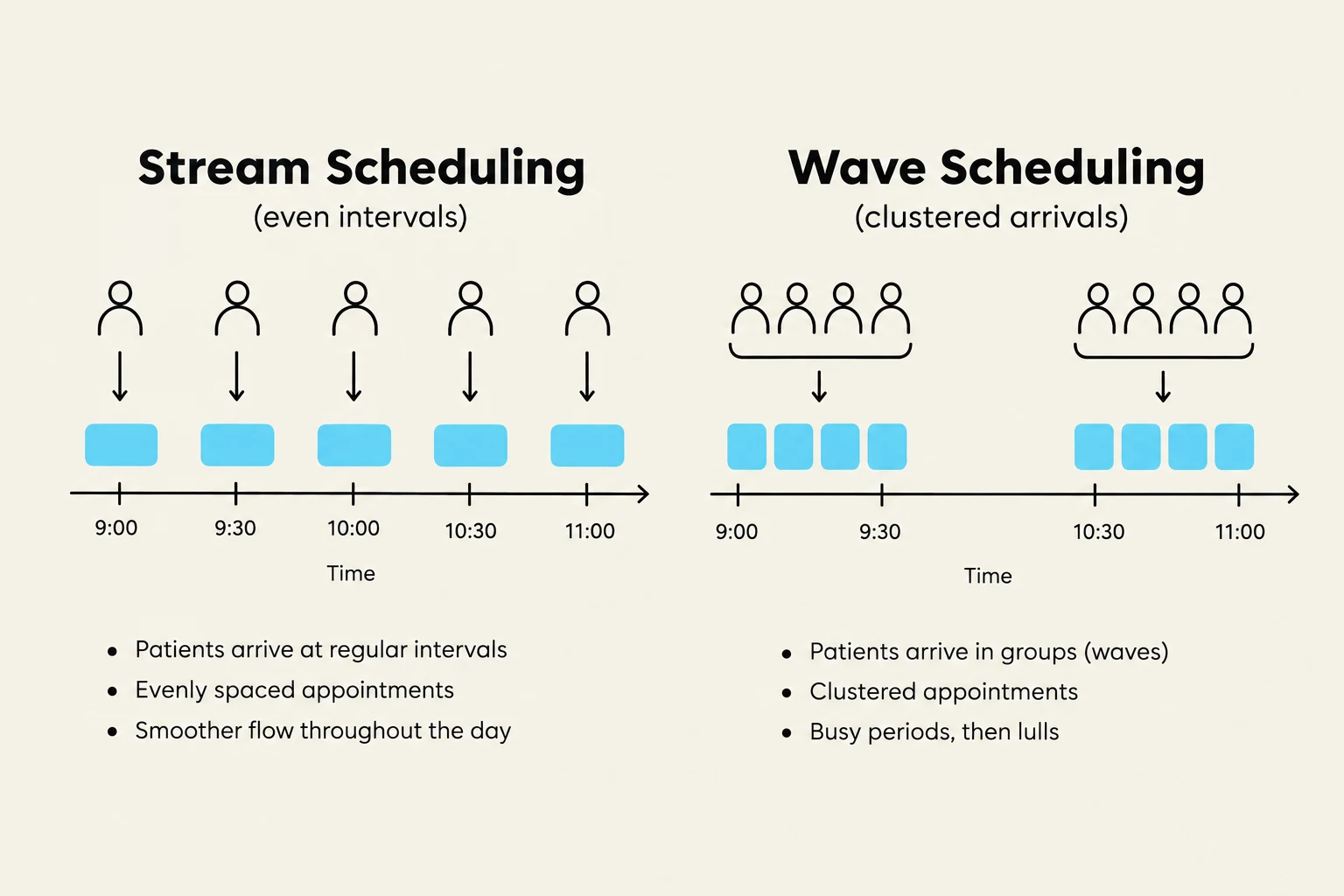
Stream Scheduling: Patients are scheduled at specific intervals (e.g., every 15 or 20 minutes).
Wave Scheduling: Multiple patients are scheduled at the top of the hour, and they are seen in the order they arrive.
Modified Wave Scheduling: A variation where patients are scheduled in groups, but with slight offsets to prevent a "bottleneck" at the front desk.
Open Hours/Triage Scheduling: Patients are seen on a first-come, first-served basis, often used in urgent care settings.
Choosing the right method depends on the type of practice and the complexity of the appointments. For example, a surgical specialist may require longer, fixed blocks of time, whereas a pediatric clinic might use wave scheduling to accommodate the unpredictable nature of child visits.
This diagram illustrates two patient scheduling methods: Stream Scheduling, where patients arrive at regular, evenly spaced intervals for a smoother daily flow, and Wave Scheduling, where patients arrive in groups or waves, leading to busy periods followed by lulls.
Handling Patient Correspondence
Communication is a core administrative responsibility. This includes managing phone calls, emails, and physical mail. Because much of this correspondence involves Protected Health Information (PHI), it must be handled with extreme caution to maintain HIPAA compliance.
Telephone Etiquette and Triage
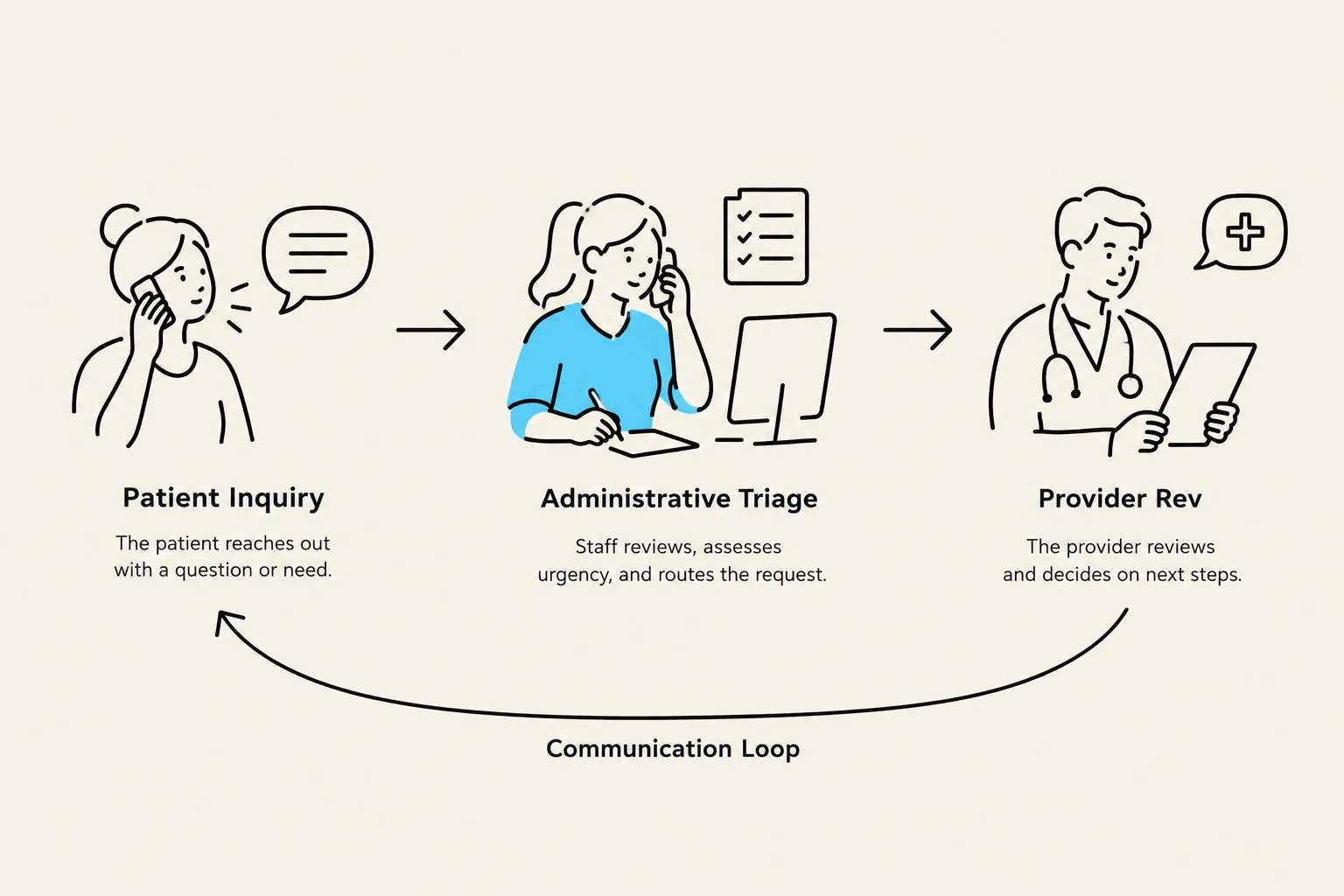
When answering phones, the administrative professional must be professional, empathetic, and efficient. A critical component of phone management is "triage"—the process of determining the urgency of a patient's request.
For instance, if a patient calls complaining of mild seasonal allergies, the staff may schedule a routine appointment. However, if a patient reports chest pain or difficulty breathing, the administrative staff must follow emergency protocols immediately, often directing the patient to call 911 or instructing them to go to the nearest emergency room.
Written Correspondence
Managing written communication requires attention to detail and professional tone. This includes:
Patient Letters: Sending appointment reminders, follow-up instructions, or lab results.
Provider Correspondence: Managing referrals to specialists or communicating with insurance companies regarding prior authorizations.
Electronic Health Record (EHR) Messaging: Using secure portals to communicate with patients, which provides a documented trail of the interaction.
This diagram illustrates a communication loop in a healthcare setting, starting with a patient inquiry, followed by administrative triage, and concluding with provider review.
Summary of Administrative Workflow
To visualize how these tasks interconnect, consider the following relationship between the administrative and clinical domains:
If administrative accuracy is low (e.g., incorrect insurance or poor scheduling), the clinical efficiency decreases because providers must deal with billing issues or overcrowded waiting rooms. Conversely, high administrative accuracy allows the clinical team to focus entirely on patient care, creating a seamless experience for the patient.
Final Thought: While administrative tasks may seem repetitive, they are the structural framework of the medical practice. Without organized registration, scheduling, and correspondence, even the best clinical care can be undermined by operational chaos.
Keep reading for free.
Create an account to finish this reading and make it part of your study routine.