


Understanding how specific traits or diseases are linked to particular locations on our chromosomes is a cornerstone of modern genetics. While classical genetics often focuses on tracking inheritance through generations of controlled crosses, modern genomic science utilizes the natural patterns of variation within human populations to map genes. This article explores the mechanisms of genetic variation, the role of recombination, and how Genome-Wide Association Studies (GWAS) leverage these principles to identify disease-linked alleles.
Genetic Variation and SNPs
At the most fundamental level, the human genome is remarkably similar across individuals, yet subtle differences drive our unique phenotypes. One of the most common forms of this variation is the Single Nucleotide Polymorphism (SNP). A SNP occurs when a single base pair in the DNA sequence is altered.
For example, if we compare four different DNA sequences, we might see variations at specific positions:
- Sequence 1a:
AACACGCCA...TTCGGGGTC...AGTCGACCG... - Sequence 1b:
AACACGCCA...TTCGAGGTC...AGTCAACCG... - Sequence 1c:
AACATGCCA...TTCGGGGTC...AGTCAACCG... - Sequence 1d:
AACACGCCA...TTCGGGGTC...AGTCAACCG...
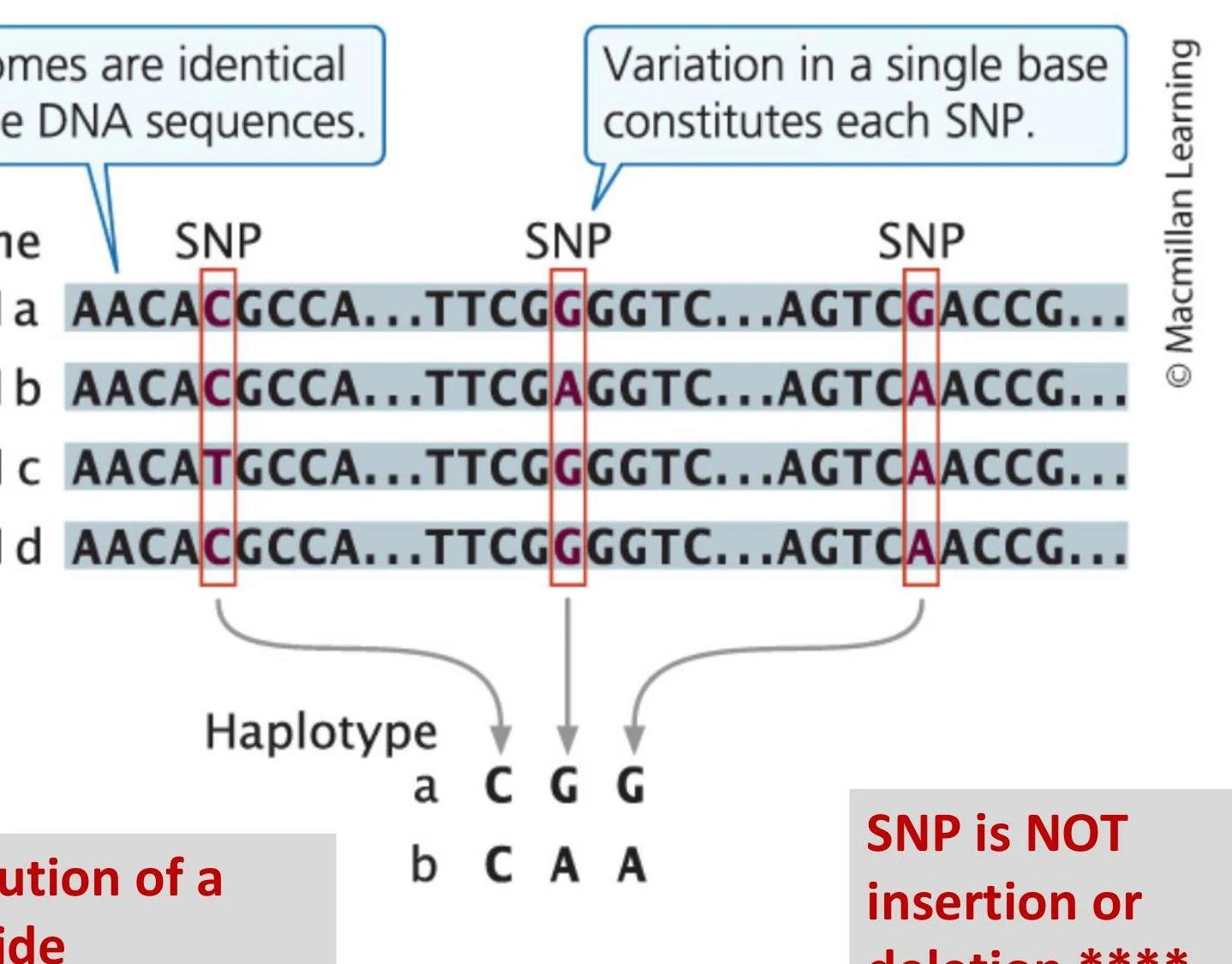
These individual variations are the building blocks of genetic variation. When we look at a specific set of SNPs that are inherited together on a single chromosome or part of a chromosome, we call this a haplotype.
Recombination and Crossover
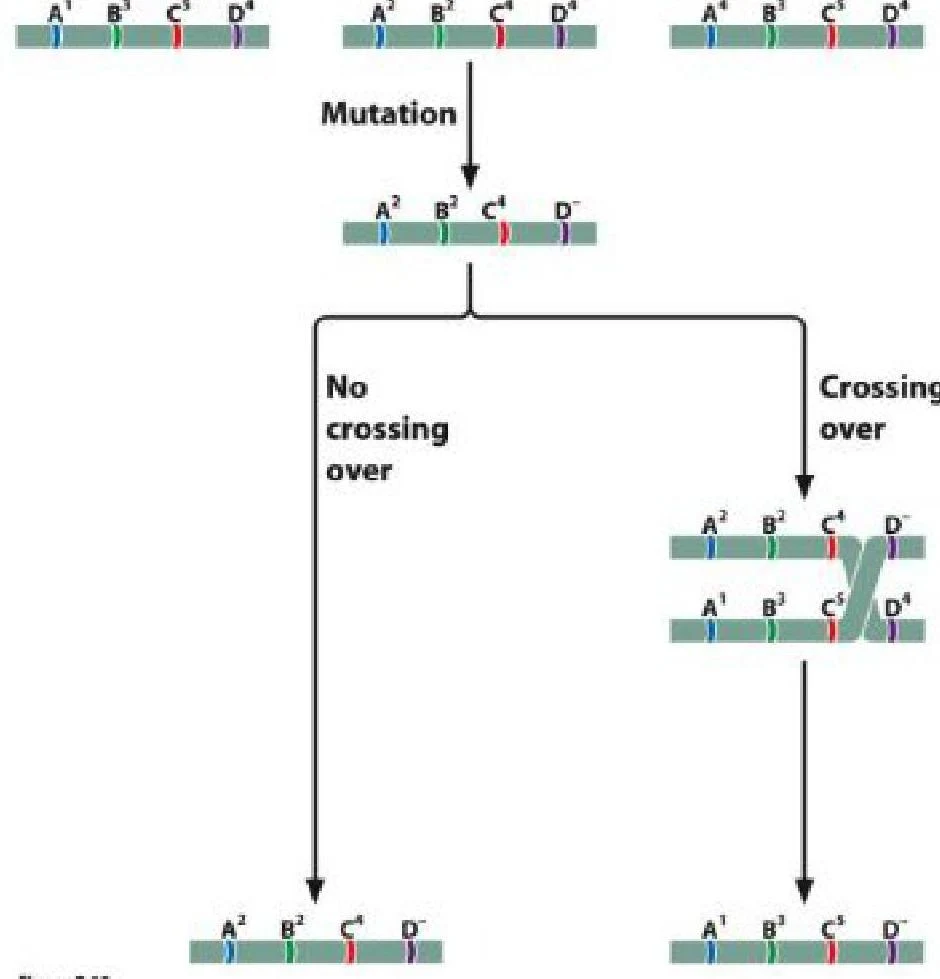
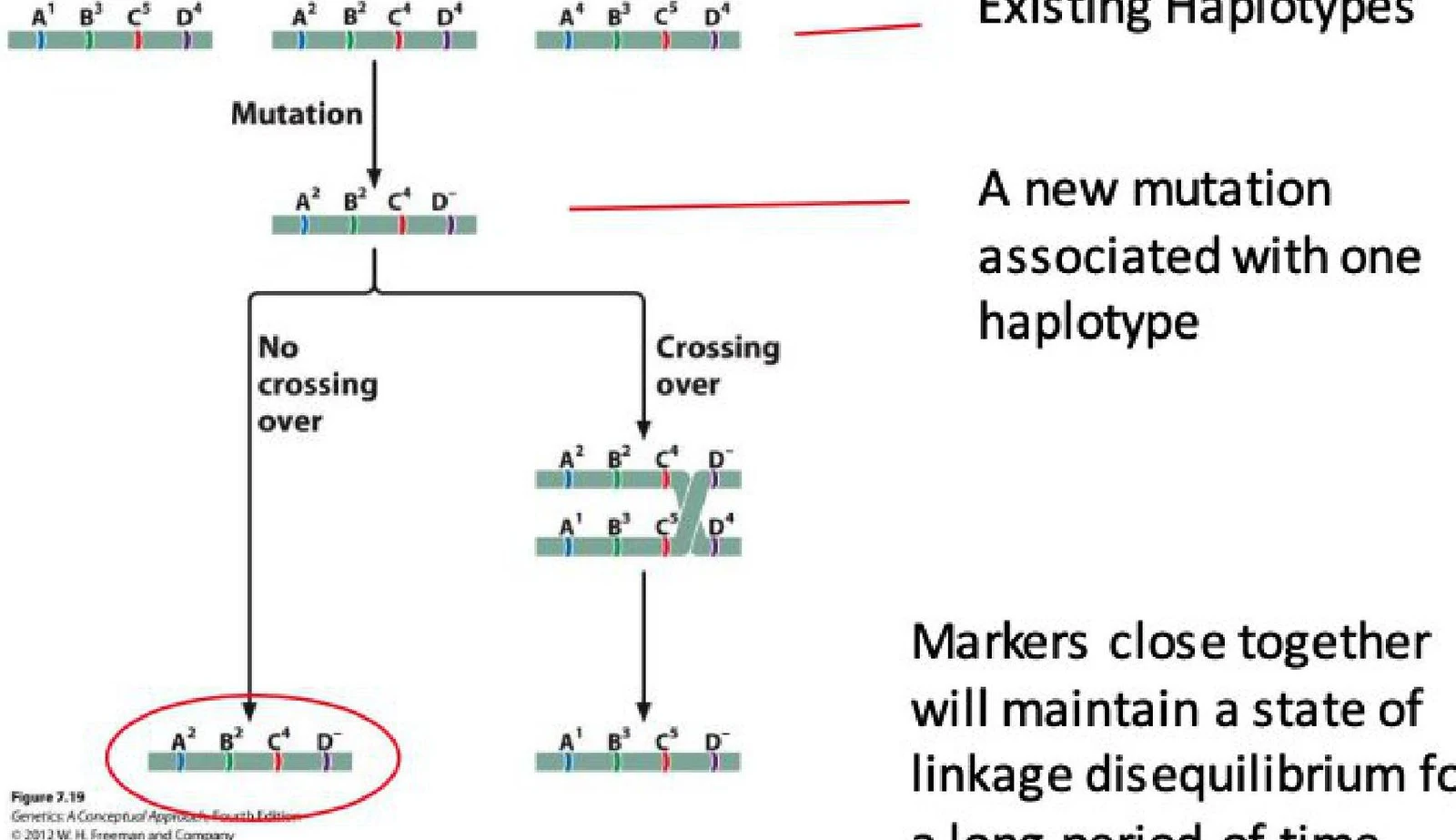
To map genes, scientists must understand how these haplotypes change over time. During meiosis, homologous chromosomes undergo genetic recombination through a process called crossover.
Keep reading for free.
Create an account to finish this reading and make it part of your study routine.
Continue reading freeAlready have an account? Log in
Updated