MAO Inhibitors and Tricyclics: Mechanisms and Clinical Considerations
An overview of Monoamine Oxidase Inhibitors (MAOIs) and Tricyclic Antidepressants (TCAs), detailing their mechanisms of action, key risks like hypertensive crisis and side effects, and their historical significance in treating depression.
In the history of psychopharmacology, the development of antidepressants marked a turning point in the biological understanding of mood disorders. Before the advent of modern Selective Serotonin Reuptake Inhibitors (SSRIs), clinicians relied on two primary classes of medication: Monoamine Oxidase Inhibitors (MAOIs) and Tricyclic Antidepressants (TCAs). While these older classes are often considered second- or third-line treatments today due to their side effect profiles, they remain vital tools in treating unipolar depression, particularly when patients are resistant to newer medications.
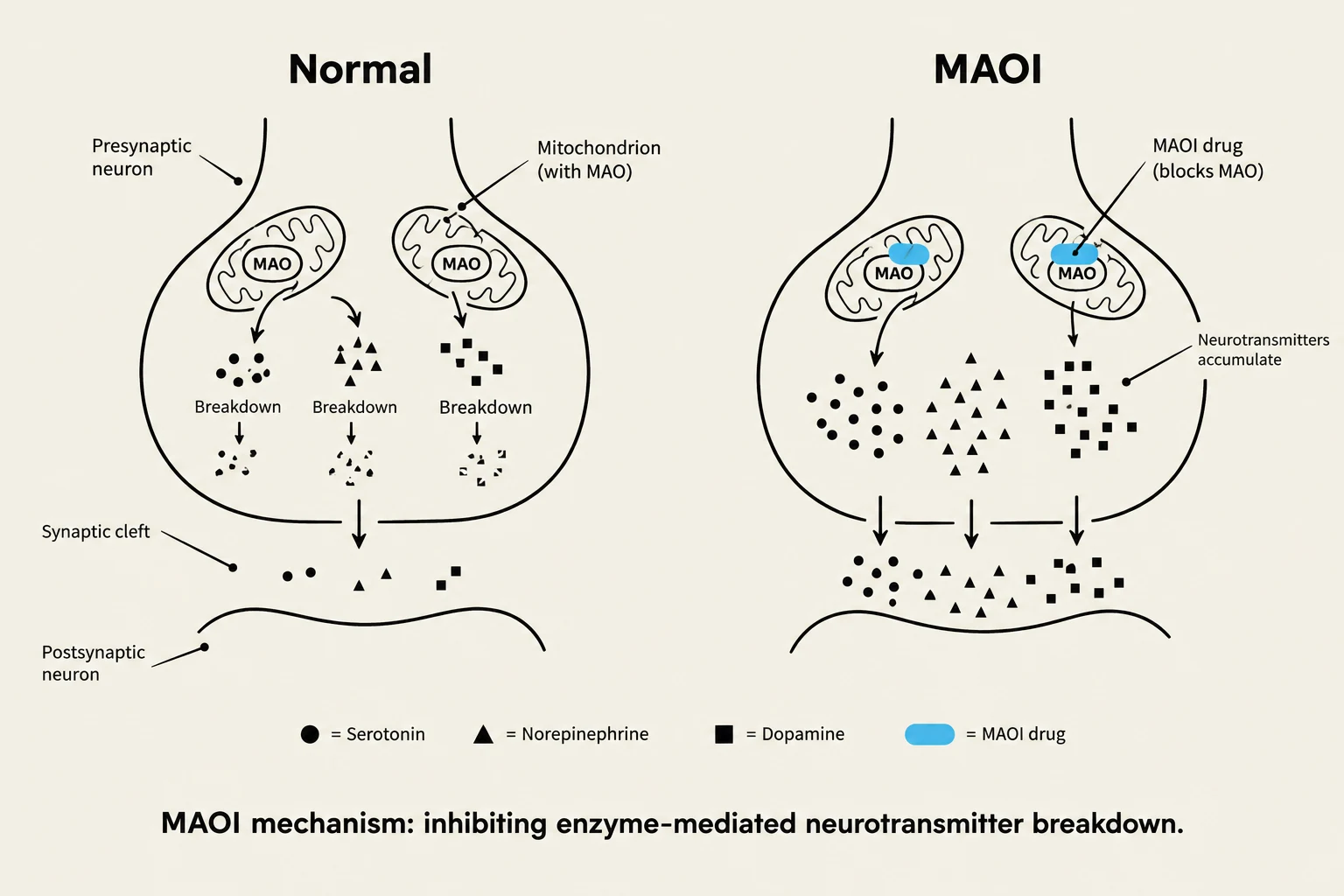
Diagram illustrating the mechanism of MAOI drugs in inhibiting enzyme-mediated neurotransmitter breakdown. The left side shows a normal synapse where neurotransmitters are broken down by MAO. The right side shows a synapse where an MAOI drug blocks MAO, leading to neurotransmitter accumulation.
Understanding these drugs requires a deep dive into the "Monoamine Hypothesis," which suggests that depression is linked to a deficiency in neurotransmitters such as serotonin, norepinephrine, and dopamine.
Monoamine Oxidase Inhibitors (MAOIs)
MAOIs were among the first antidepressants discovered. Their primary mechanism of action involves the inhibition of the enzyme Monoamine Oxidase (MAO).
Mechanism of Action
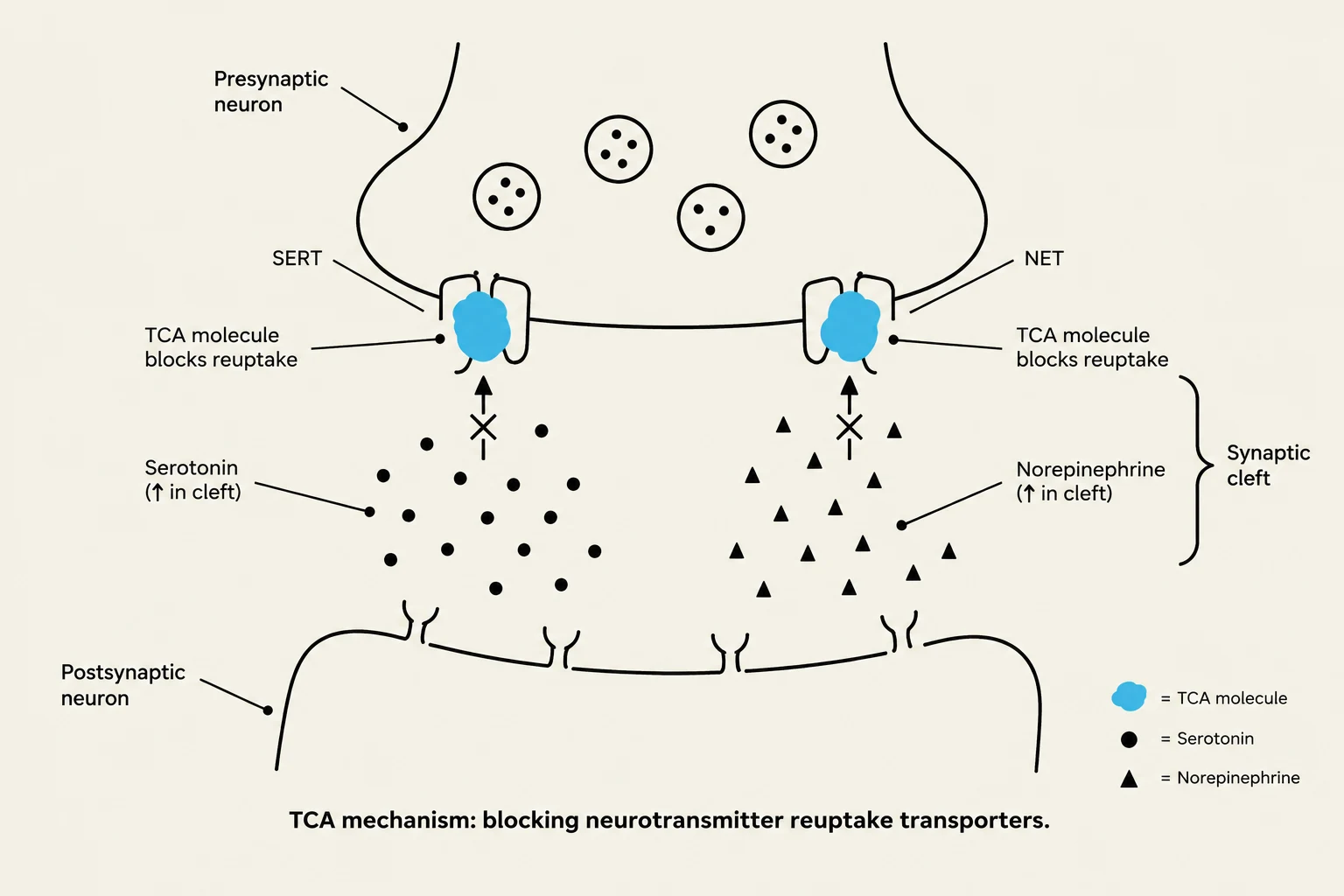
Diagram illustrating the mechanism of Tricyclic Antidepressants (TCAs) blocking neurotransmitter reuptake transporters, specifically SERT for serotonin and NET for norepinephrine, leading to increased neurotransmitter levels in the synaptic cleft.
In a healthy brain, the MAO enzyme acts as a "cleanup crew." It resides in the mitochondria of neurons and breaks down excess monoamine neurotransmitters (serotonin, norepinephrine, and dopamine) to prevent them from accumulating to toxic levels.
When a patient takes an MAOI, this enzyme is blocked. Because the "cleanup crew" is sidelined, the concentration of these neurotransmitters in the synaptic cleft increases, thereby enhancing signal transmission and improving mood.
The Tyramine Challenge: Dietary Restrictions
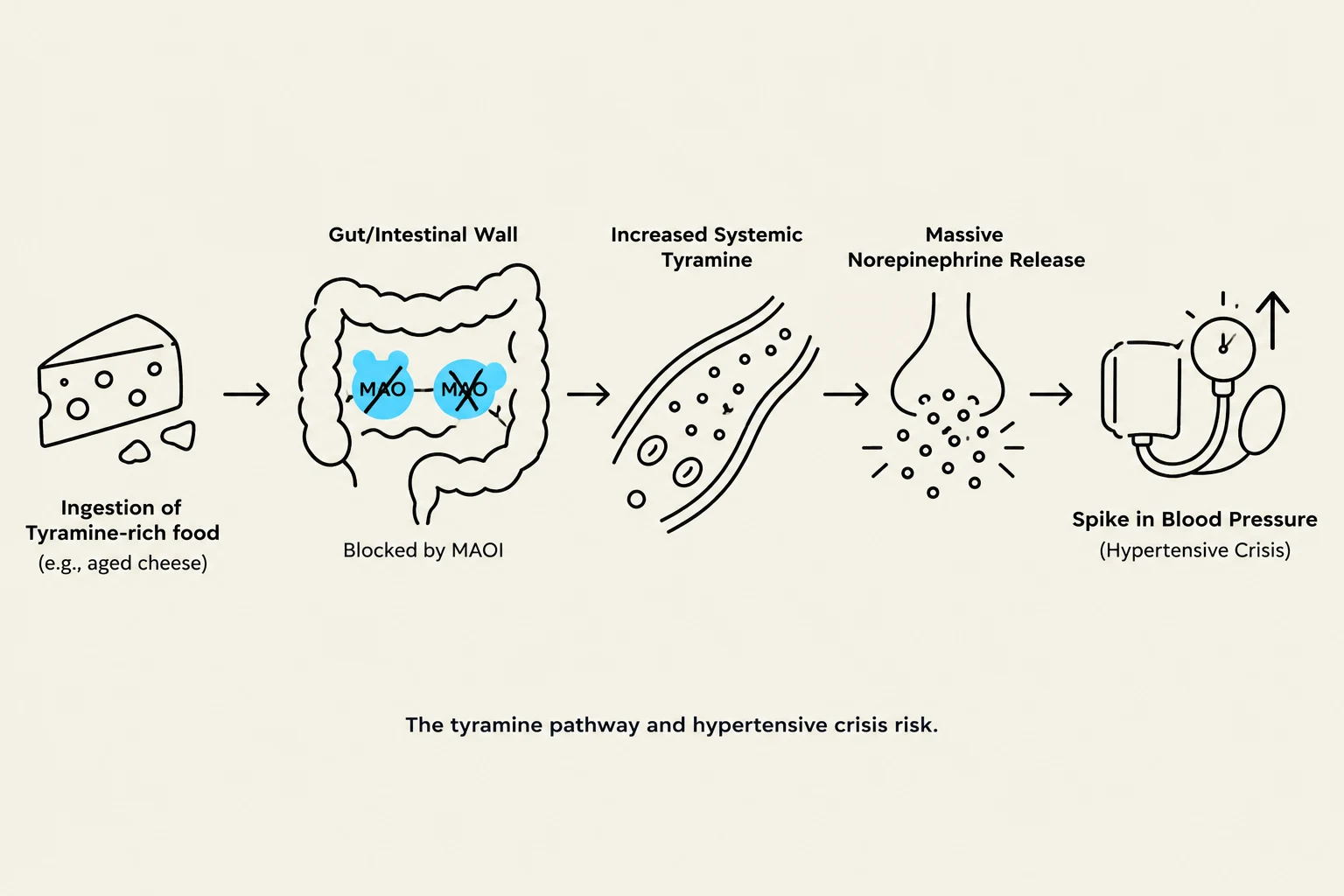
This diagram illustrates the tyramine pathway and its link to hypertensive crisis. Ingestion of tyramine-rich foods, such as aged cheese, can lead to increased systemic tyramine levels. When MAOIs block the breakdown of tyramine in the gut/intestinal wall, it can result in massive norepinephrine release, causing a spike in blood pressure and potentially a hypertensive crisis.
The most significant clinical concern with MAOIs is the risk of a hypertensive crisis. This is not caused by the drug itself, but by how the drug interacts with certain foods.
Many foods—particularly aged cheeses, cured meats, fermented products, and certain wines—contain high levels of tyramine, an amino acid. Normally, when you eat tyramine, the MAO enzymes in your gut break it down before it ever reaches your bloodstream. However, because MAOIs inhibit these enzymes, tyramine enters the systemic circulation in large amounts.
Once in the blood, tyramine triggers a massive release of norepinephrine, which can cause a sudden, dangerous spike in blood pressure.
Exam Tip: If a clinical vignette describes a patient on an antidepressant who suddenly develops a severe headache and extremely high blood pressure after eating aged cheese, think MAOI-induced hypertensive crisis.
Tricyclic Antidepressants (TCAs)
Tricyclic antidepressants are named for their unique three-ring chemical structure. While they are highly effective, they are often less "selective" than modern drugs, meaning they interact with many different receptors in the body.
Mechanism of Action
The primary therapeutic effect of TCAs comes from their ability to block the reuptake of neurotransmitters.
In a standard synapse, once a neurotransmitter has delivered its message, it is often pumped back into the sending neuron via a transporter protein. This process is called reuptake. TCAs inhibit these transporters, specifically:
Serotonin Transporters (SERT)
Norepinephrine Transporters (NET)
By blocking these "pumps," TCAs ensure that serotonin and norepinephrine remain in the synaptic cleft for a longer duration, increasing their availability to the receiving neuron.
The "Dirty Drug" Problem: Side Effects
In pharmacology, a "dirty drug" is a term used for a medication that hits many different targets, not just the intended one. TCAs are classic examples of this. Because they also block other receptors, they frequently cause side effects, including:
Anticholinergic effects: Blocking acetylcholine receptors can lead to dry mouth, blurred vision, constipation, and urinary retention.
Antihistaminic effects: Blocking histamine receptors often leads to significant sedation and weight gain.
Alpha-adrenergic blockade: This can cause orthostatic hypotension (dizziness when standing up).
Comparison Summary
To help differentiate these two classes for clinical practice, consider the following comparison:
Feature
MAO Inhibitors (MAOIs)
Tricyclic Antidepressants (TCAs)
Primary Target
Enzyme (Monoamine Oxidase)
Reuptake Transporters (SERT/NET)
Main Risk
Hypertensive crisis (Dietary)
Cardiotoxicity and Sedation
Key Interaction
Tyramine-rich foods
Many other medications
Clinical Use
Treatment-resistant depression
Depression, sometimes chronic pain
Clinical Note: While TCAs are effective, their high toxicity in overdose (specifically regarding cardiac conduction) is a major reason why SSRIs have largely replaced them in primary care.
Conclusion
Both MAOIs and TCAs represent foundational pillars of antidepressant therapy. While they carry higher risks—MAOIs requiring strict dietary management and TCAs requiring careful monitoring of side effects—their ability to modulate monoamine levels remains a cornerstone of treating complex unipolar depression.
Keep reading for free.
Create an account to finish this reading and make it part of your study routine.