


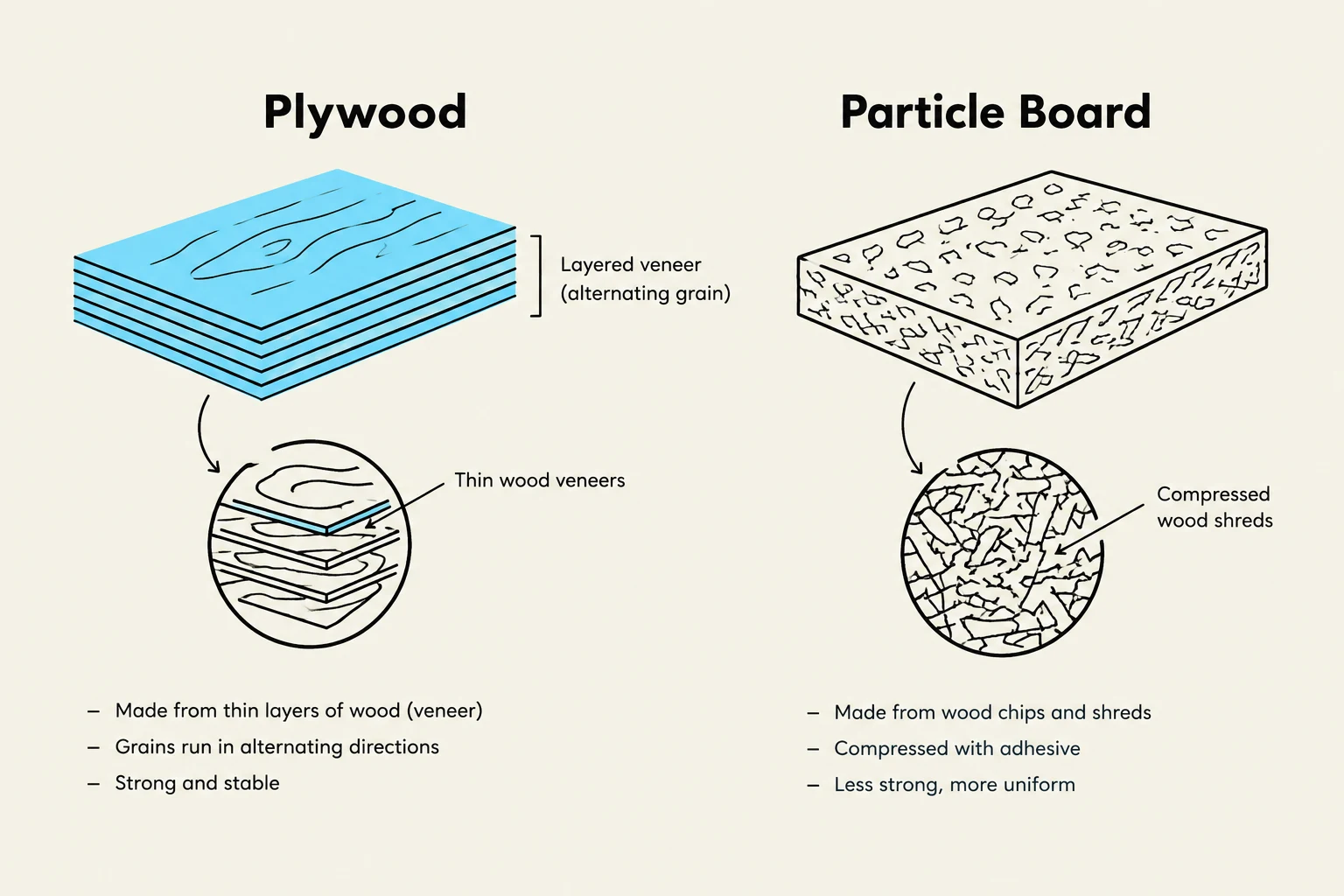
In modern construction, wood is no longer limited to the solid timber harvested directly from trees. To meet the demands of large-scale architecture, engineers and builders utilize manufactured wood products—engineered materials created by bonding wood strands, veneers, or fibers with adhesives. These products offer enhanced strength, dimensional stability, and versatility, allowing for applications ranging from massive structural beams to thin wall sheathing.
Glue-Laminated Wood (Glulam)
Glue-laminated wood, commonly known as Glulam, is a primary example of how lamination increases structural capacity. By bonding multiple layers of wood together, manufacturers can create massive members that far exceed the dimensions of standard lumber, such as moving from a to an section. This process significantly increases the strength of the member and allows for the creation of curved shapes.
Glulam is frequently used in exposed architectural settings where both structural support and aesthetic appeal are required. The lamination process helps mitigate the natural weaknesses of solid timber by distributing stresses more evenly across the bonded layers.
Structural Composite Lumber
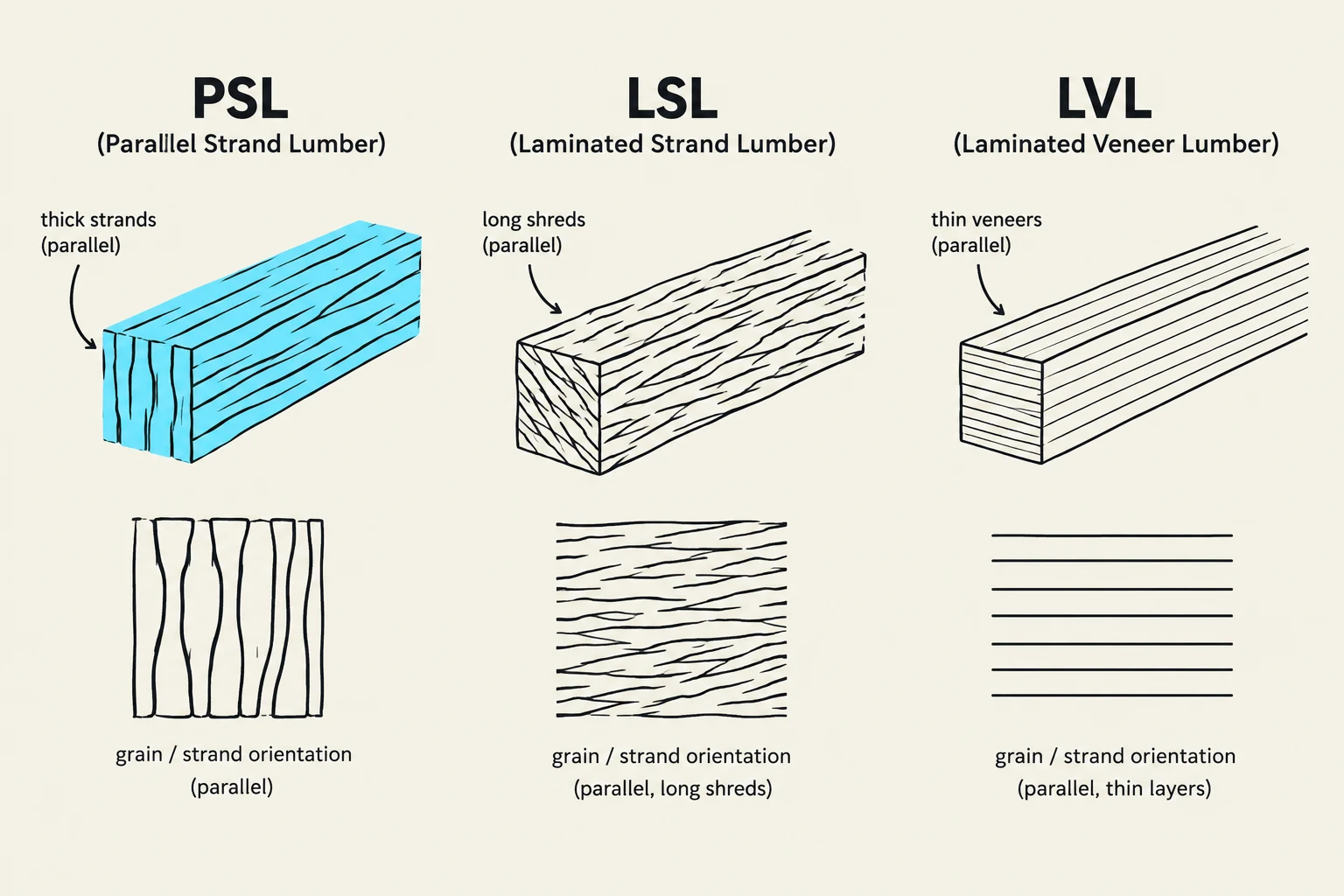
Structural composite lumber refers to a category of engineered wood products made from smaller wood pieces (strands, veneers, or shreds) that are pressed together under high pressure with adhesives. This category is divided into three distinct types: Parallel Strand Lumber (PSL), Laminated Strand Lumber (LSL), and Laminated Veneer Lumber (LVL).
Parallel Strand Lumber (PSL)
PSL is manufactured by compressing long, thick strands of wood into rectangular sections. Because of its high strength, it is commonly used for heavy-duty structural components such as beams and columns.
Keep reading for free.
Create an account to finish this reading and make it part of your study routine.
Continue reading freeAlready have an account? Log in
Updated