


When the natural pathways for waste elimination are damaged, obstructed, or non-functional due to disease or injury, surgical interventions known as diversions are required. These procedures reroute urine or feces to an opening on the abdominal wall, called a stoma, allowing for controlled elimination. Diversions can be temporary—to allow a healing organ to rest—or permanent, depending on the underlying pathology, such as cancer, trauma, or congenital disorders.
Urinary Diversions
Urinary diversions are implemented when the bladder cannot function properly or when the flow of urine is interrupted by tumors, stones, or injury.
Temporary Measures
In some clinical scenarios, more conservative or temporary measures are used before or instead of permanent surgery:
- Urinary Catheterization: Used to manage urinary retention or to drain the bladder when the patient cannot void effectively.
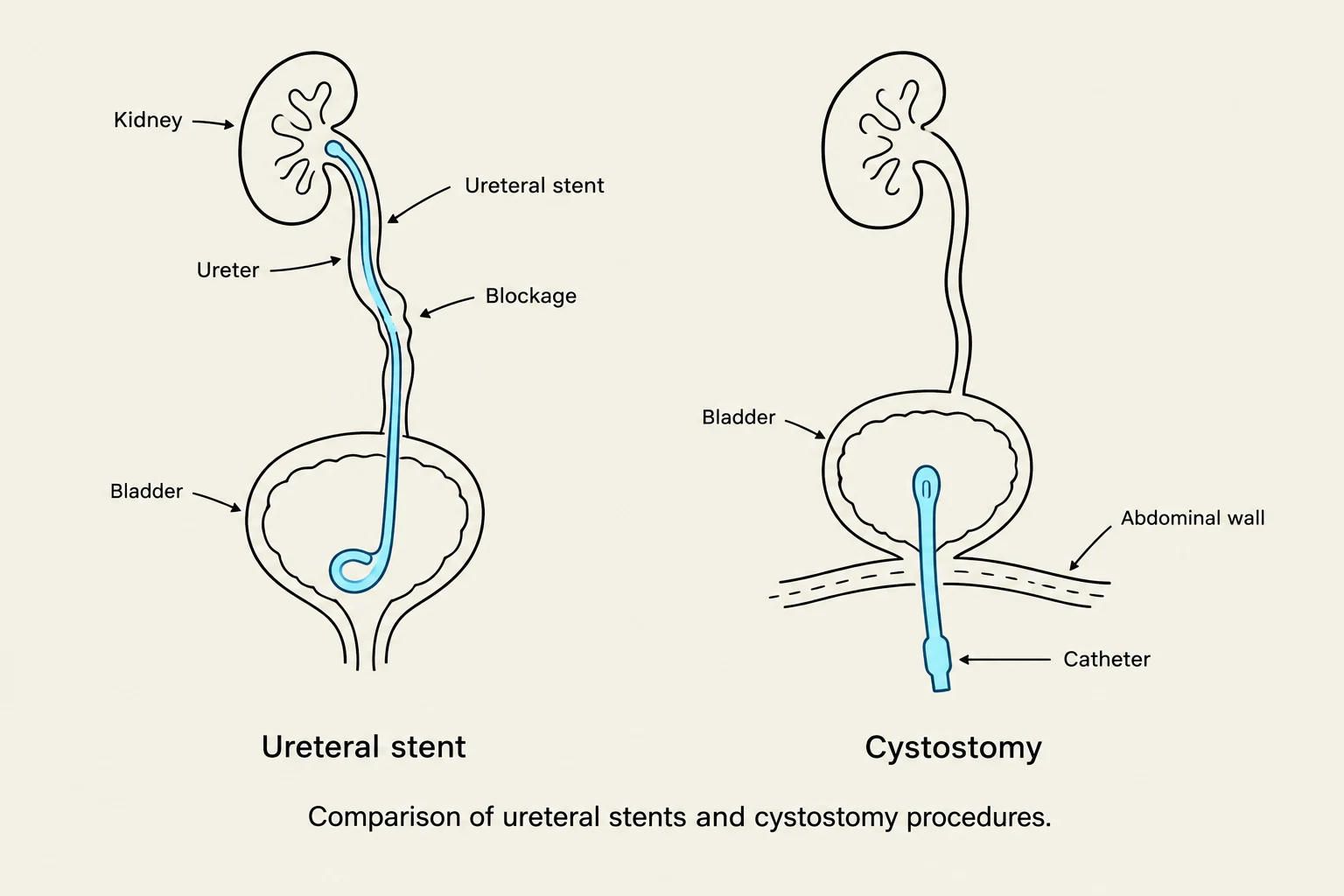
- Ureteral Stents: These are tubes placed within the ureter to bypass a blockage, such as a kidney stone or a tumor, ensuring urine can reach the bladder.
- Cystostomy: An invasive procedure where a catheter is inserted directly through the lower abdominal wall into the bladder.
Permanent and Surgical Diversions
- Urostomy (Ileal Conduit): This is a common permanent diversion where a segment of the small intestine is used to create a stoma on the abdominal wall. Urine drains continuously from this stoma into an external collection pouch.
- Nephrostomy: A tube is inserted through the back into the renal pelvis to drain urine directly from the kidney.
- Continent Diversions: These allow for more "normal" elimination patterns but require specialized management.
- Neobladder: A reservoir created from bowel tissue placed in the pelvis.
- Continent Cutaneous Reservoir: A reservoir located in the abdomen that requires intermittent catheterization for emptying.
Keep reading for free.
Create an account to finish this reading and make it part of your study routine.
Continue reading freeAlready have an account? Log in
Updated