


In the modern marketplace, companies no longer rely on guesswork to understand what consumers want. Instead, they strive to uncover deep, actionable understandings of their customers and the environment in which they operate. These understandings are known as customer insights. Customer insights are fresh, marketing information-based understandings that serve as the foundation for creating customer value, engagement, and long-term relationships. To achieve this, organizations must master the art of managing information through structured systems and advanced technologies.
The Marketing Information System (MIS)
To transform raw data into meaningful insights, companies utilize a Marketing Information System (MIS). An MIS is not just a database; it consists of people and procedures designed to perform three critical functions:
- Assess information needs: Determining what information is required to make better decisions.
- Develop information: Gathering the necessary data through various channels.
- Help decision makers: Ensuring that the information is used to generate and validate actionable insights.
A successful MIS must find a balance between what managers want to know and what they really need to know, while also considering the feasibility and cost of obtaining that data.
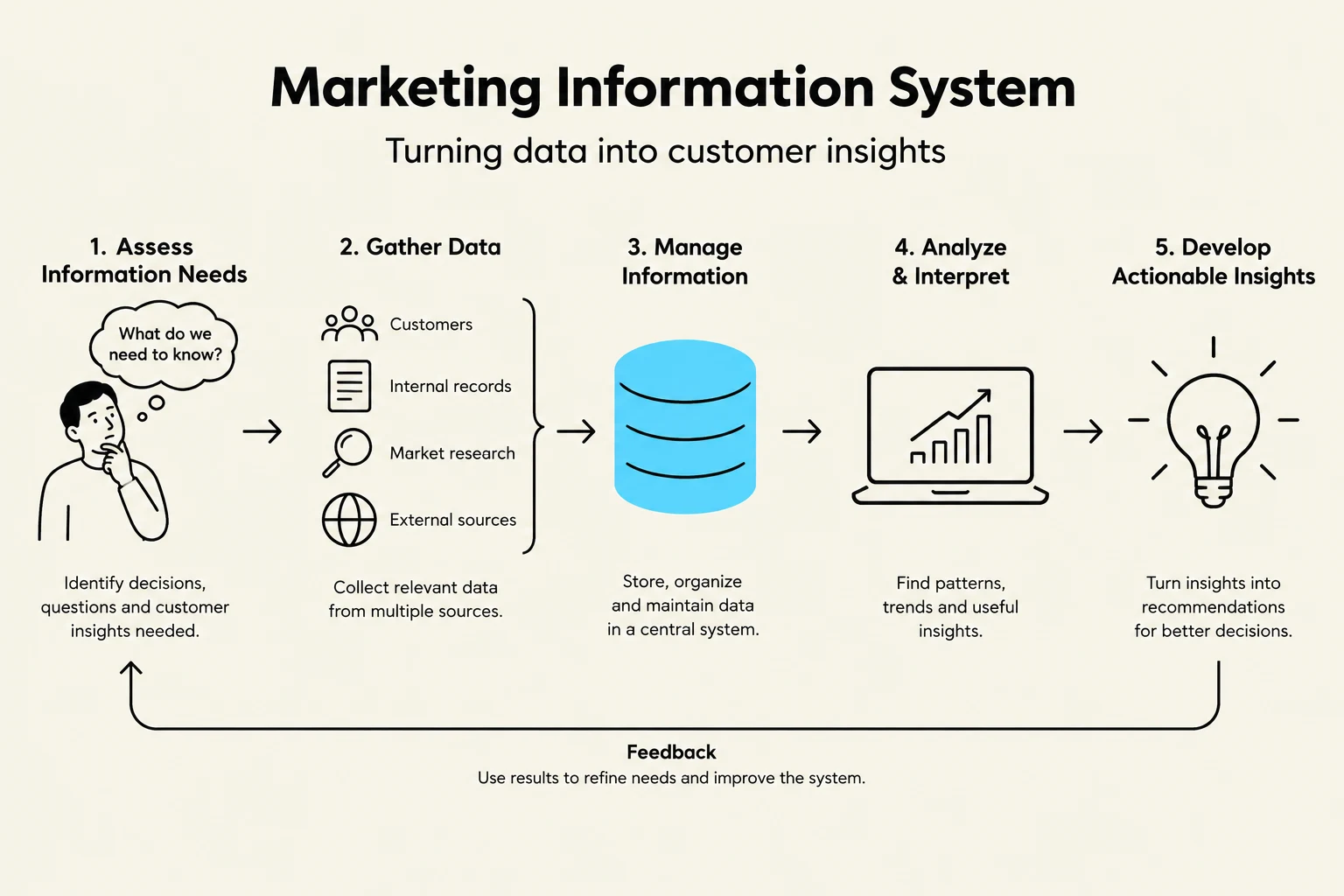
Developing Marketing Information
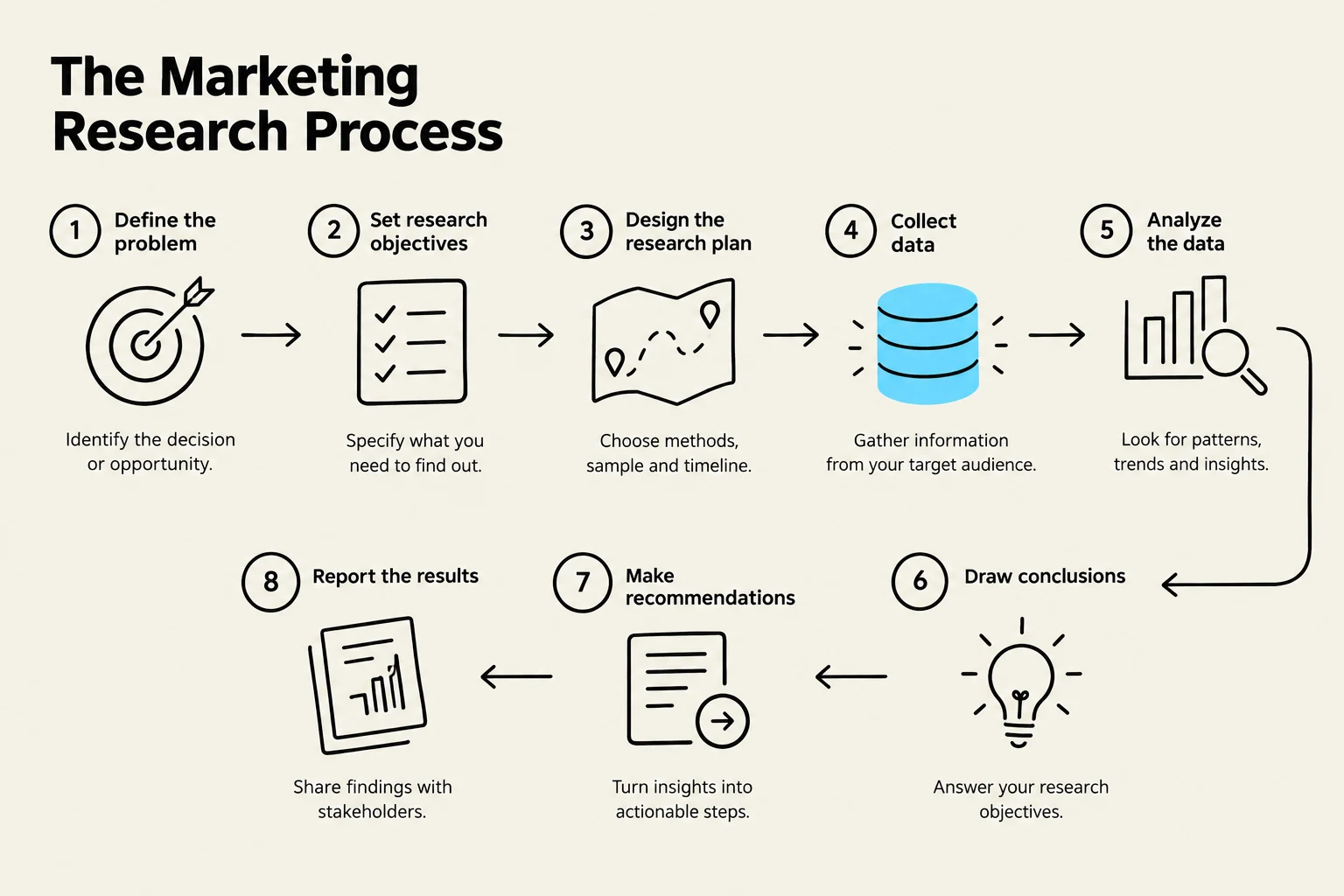
Information can be sourced from three primary pillars: internal databases, competitive marketing intelligence, and marketing research.
Internal Databases
Internal databases are collections of consumer and market information obtained from sources within the company's own network. For example, companies like Stitch Fix use skillful customer database development to build high levels of satisfaction and loyalty. While internal data is readily available, it must be managed effectively to be useful.
Keep reading for free.
Create an account to finish this reading and make it part of your study routine.
Continue reading freeAlready have an account? Log in
Updated