


In the construction industry, "design" is far more than just drawing a building; it is a complex, multi-dimensional creative and technical process. Whether it is a simple shelter or a complex nuclear power station, no product can reach reality without a preceding design process that integrates science, technology, economics, and sociology. For a project to succeed, it is not enough to have great ideas; one must have a rigorous system for managing design information and the processes that generate it.
The Fundamentals of Design Management
Design management involves the integration of various elements to ensure a project is properly coordinated. This includes bridging the gap between the physical aspects of design and the practicalities of construction, such as material dimensions, system installations, and suitability for purpose.
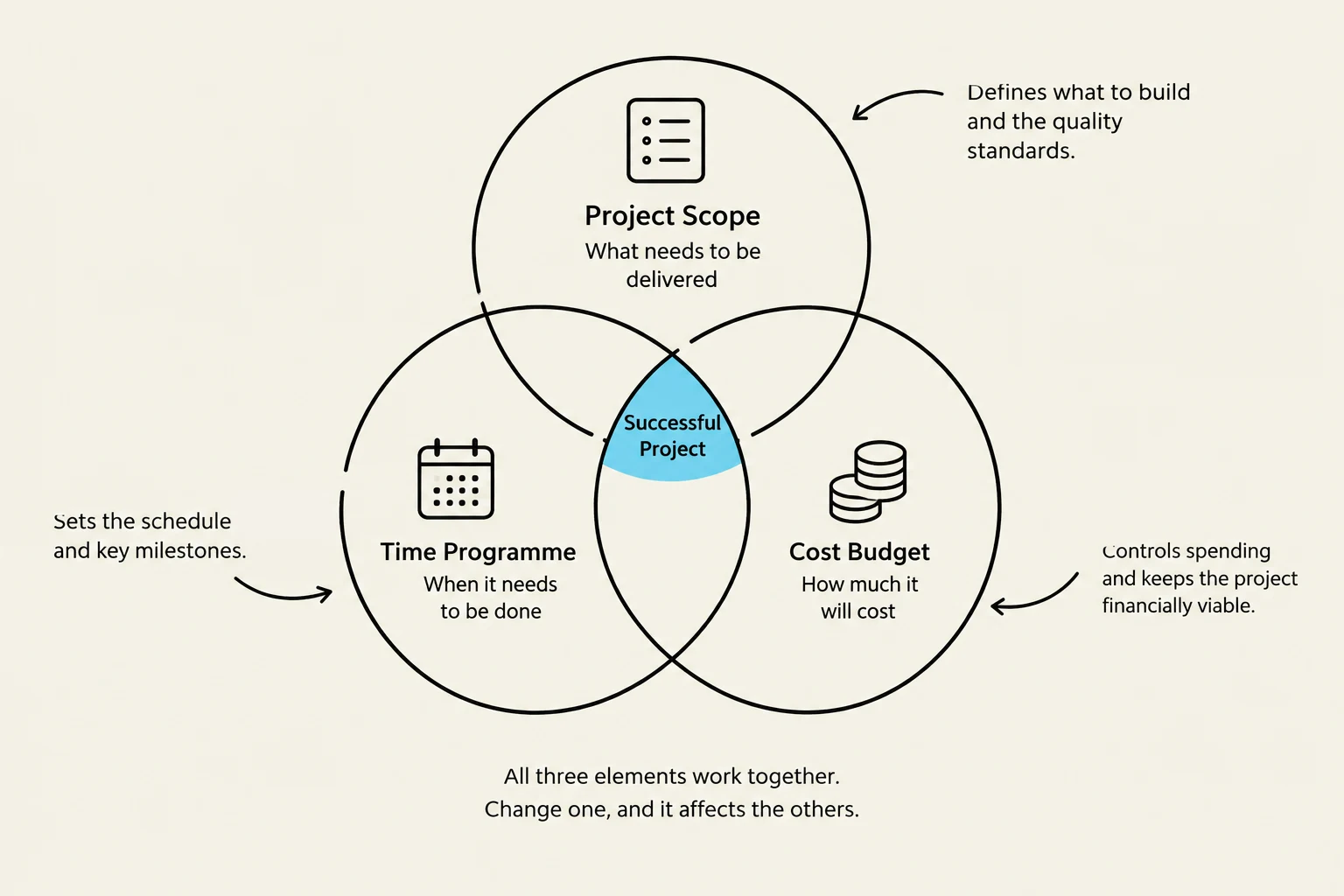
Effective design management requires a core competency in integration. A manager must align the project scope, objectives, and constraints with the preliminary design, the time programme, and the cost budget. Without this integration, the project risks "divergence"—a gap between what the client expects and what is actually built.
Exam Tip: Remember that design management is not just about technical drawings. It is about managing the integration of three critical pillars: Scope, Time, and Cost.
The Project Life Cycle and Design Stages
Every project follows a life cycle, which can be divided into four primary phases: Concept and Initiation, Design and Development, Implementation (Construction), and Commissioning and Handover. While these phases often overlap in "fast-track" projects, they represent a logical progression of information density.


Keep reading for free.
Create an account to finish this reading and make it part of your study routine.
Continue reading freeAlready have an account? Log in
Updated