


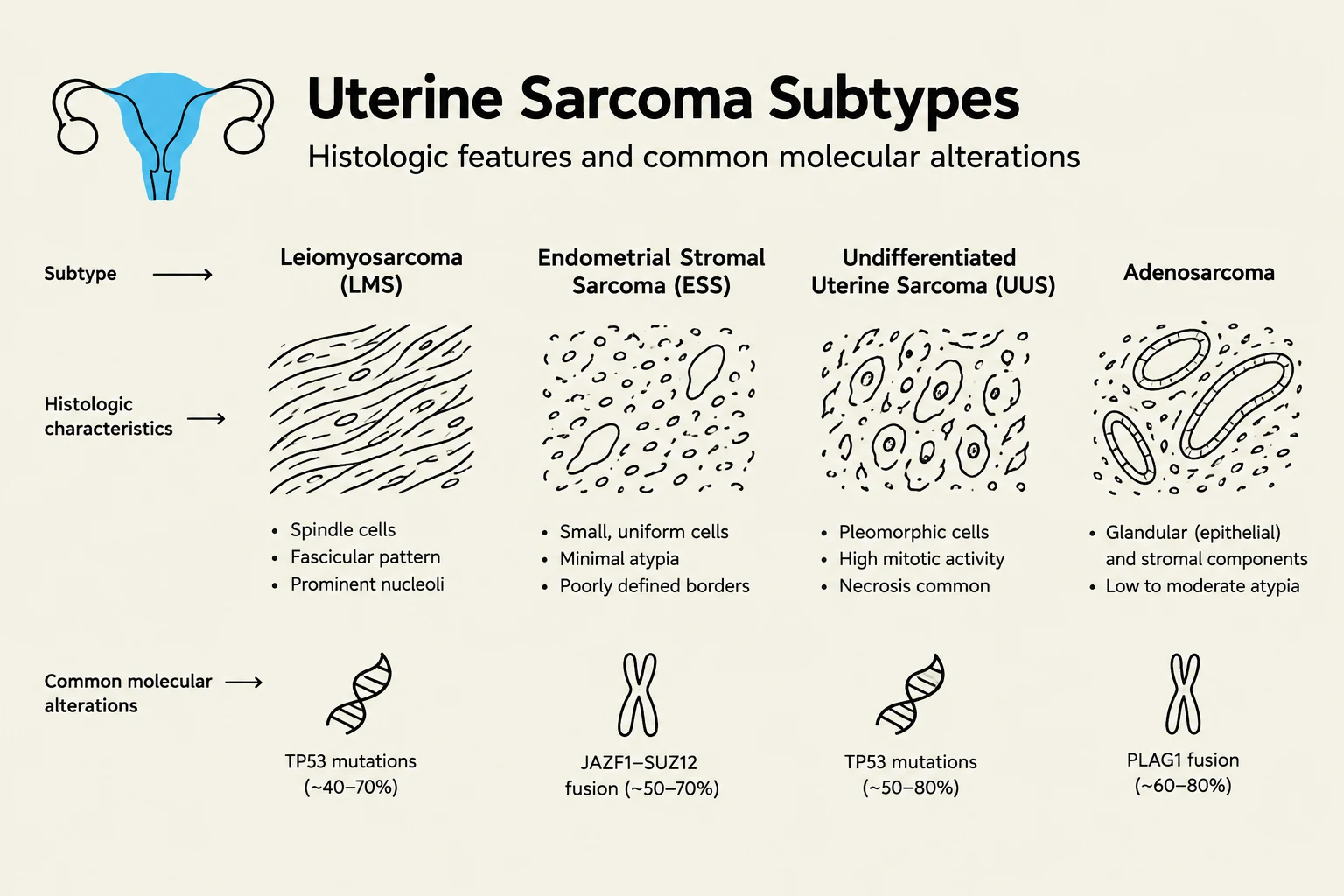
The management of uterine neoplasms requires a highly nuanced approach, distinguishing between epithelial malignancies (carcinomas) and mesenchymal malignancies (sarcomas). While endometrial adenocarcinoma is the most common uterine malignancy, uterine sarcomas represent a rare but highly aggressive group of tumors, accounting for approximately 3% of all uterine cancers. Accurate diagnosis relies heavily on expert pathology review, immunohistochemistry (IHC), and molecular analysis to guide staging and treatment decisions.
Endometrial Carcinoma
Endometrial adenocarcinoma is primarily categorized by its histological type and molecular profile. High-grade carcinomas include serous, clear cell, and undifferentiated/dedifferentiated types.
Molecular Analysis and Genetic Signatures
Modern management of endometrial cancer is increasingly driven by molecular profiling. Key biomarkers include:
- Mismatch Repair (MMR) status: Used to identify dMMR (deficient) or MSI-H (microsatellite instability-high) tumors, which may respond to immunotherapy.
- p53 status: Essential for identifying high-grade serous-like carcinomas.
- POLE mutations: Associated with a favorable prognosis.
- HER2 status: Recommended for all p53 aberrant carcinomas and metastatic disease.
- Other targets: Testing for and gene fusions is considered for recurrent or metastatic disease.
Clinical Note: For premenopausal patients with early-stage (Stage IA, Grade 1) endometrioid cancer and normal-appearing ovaries, ovarian preservation may be a safe option, provided there is no family history of Lynch syndrome or ovarian cancer and an absence of p53 abnormalities or LVSI.
Management and Adjuvant Therapy
The primary treatment for medically operable patients is hysterectomy with or without bilateral salpingo-oophorectomy (BSO).
- Hormone Therapy: In cases of endometrial adenocarcinoma, hormone therapy may be used for uterine-limited disease in patients desiring fertility preservation. For patients experiencing hypoestrogenism after BSO, the use of estrogen therapy is controversial but may be considered for low-risk patients after a 6–12 month waiting period. Estrogen-receptor modulators (SERMs) and progestational agents are also utilized in specific clinical contexts.
- Radiation Therapy: External beam radiation therapy (EBRT) may be added for stages II, III, or IVA.
Keep reading for free.
Create an account to finish this reading and make it part of your study routine.
Continue reading freeAlready have an account? Log in
Updated