Management of Schizophrenia Spectrum and Psychotic Disorders
An overview of the schizophrenia spectrum and psychotic disorders, covering differential diagnosis, pharmacological and non-pharmacological management, side effect monitoring, and comprehensive patient care.
The schizophrenia spectrum encompasses a group of severe, brain-based mental illnesses characterized by an inability to test reality. While each disorder within this spectrum has a unique etiology, they are unified by common psychotic symptoms, such as hallucinations, delusions, disorganized thinking, and abnormal motor behavior. Because these conditions are often chronic and debilitating, clinical management requires a multi-dimensional approach that integrates pharmacological therapy, nonpharmacological interventions, and rigorous physical health monitoring.
Understanding the Spectrum and Differential Diagnosis
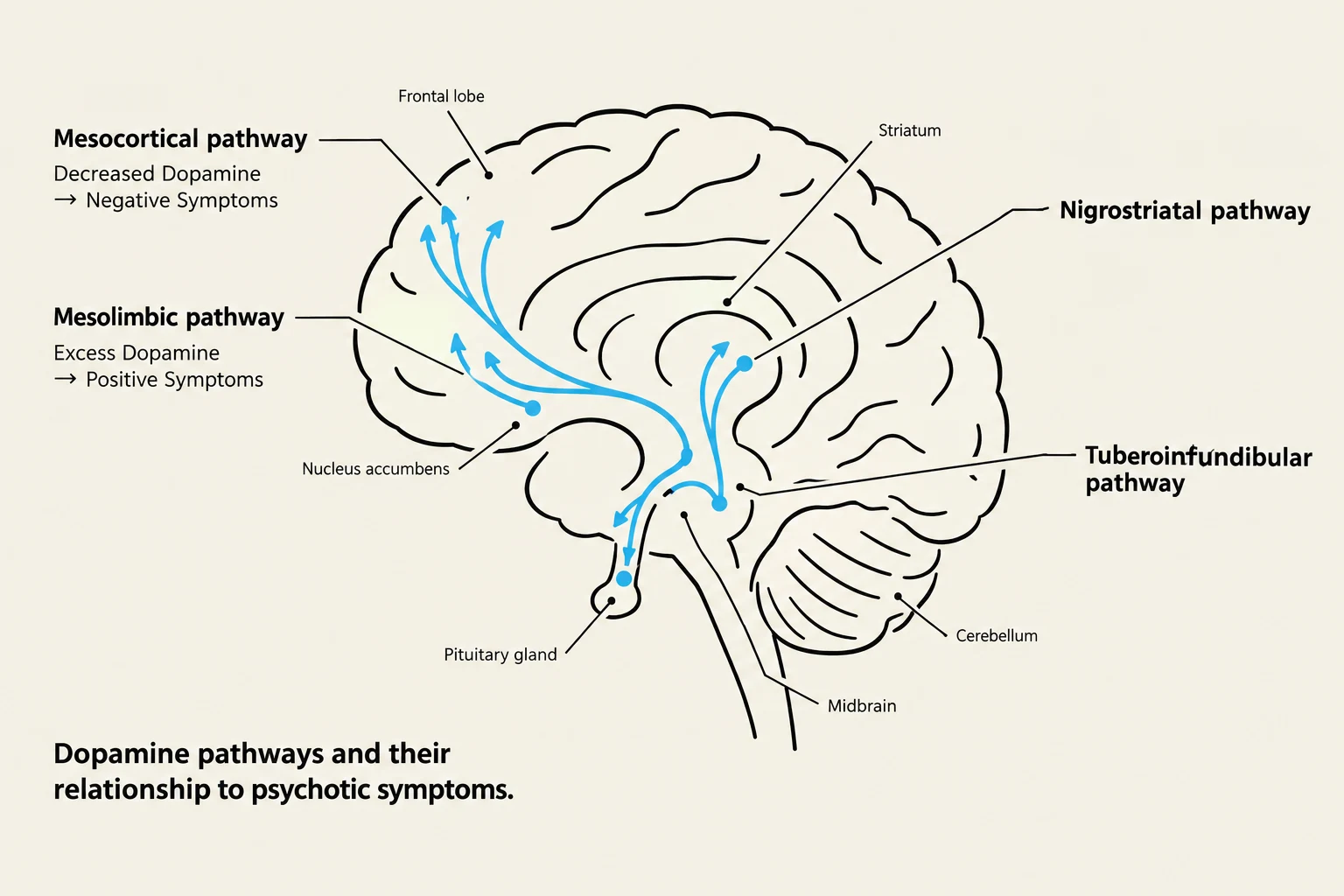
Diagram illustrating dopamine pathways in the brain and their association with psychotic symptoms.
Schizophrenia is the prototypical disorder of this category. It is a multifactorial illness involving strong genetic components—with a 50% risk in monozygotic twins—neurodevelopmental defects like excessive synaptic pruning, and neurobiological abnormalities such as enlarged ventricles. Chemically, the disorder is linked to excess dopamine in the mesolimbic pathway (contributing to positive symptoms) and decreased dopamine in the mesocortical pathway (contributing to negative symptoms).
To provide effective care, clinicians must distinguish between psychiatric and nonpsychiatric causes of psychosis.
Differential Diagnosis
Nonpsychiatric disorders that can mimic psychosis include:
Epilepsy, CNS neoplasms, or AIDS.
Metabolic or nutritional deficiencies (e.g., B12 deficiency, Wilson’s disease).
Psychiatric disorders that must be differentiated include:
Substance-induced psychotic disorders (e.g., amphetamines, cocaine, or alcohol withdrawal).
Mood disorders with psychotic features.
Other spectrum disorders: Schizophreniform Disorder (symptoms last 1–6 months), Schizoaffective Disorder (psychosis combined with mood symptoms), Delusional Disorder (non-bizarre delusions without other psychotic symptoms), and Brief Psychotic Disorder (sudden onset lasting <1 month).
Pharmacological Management
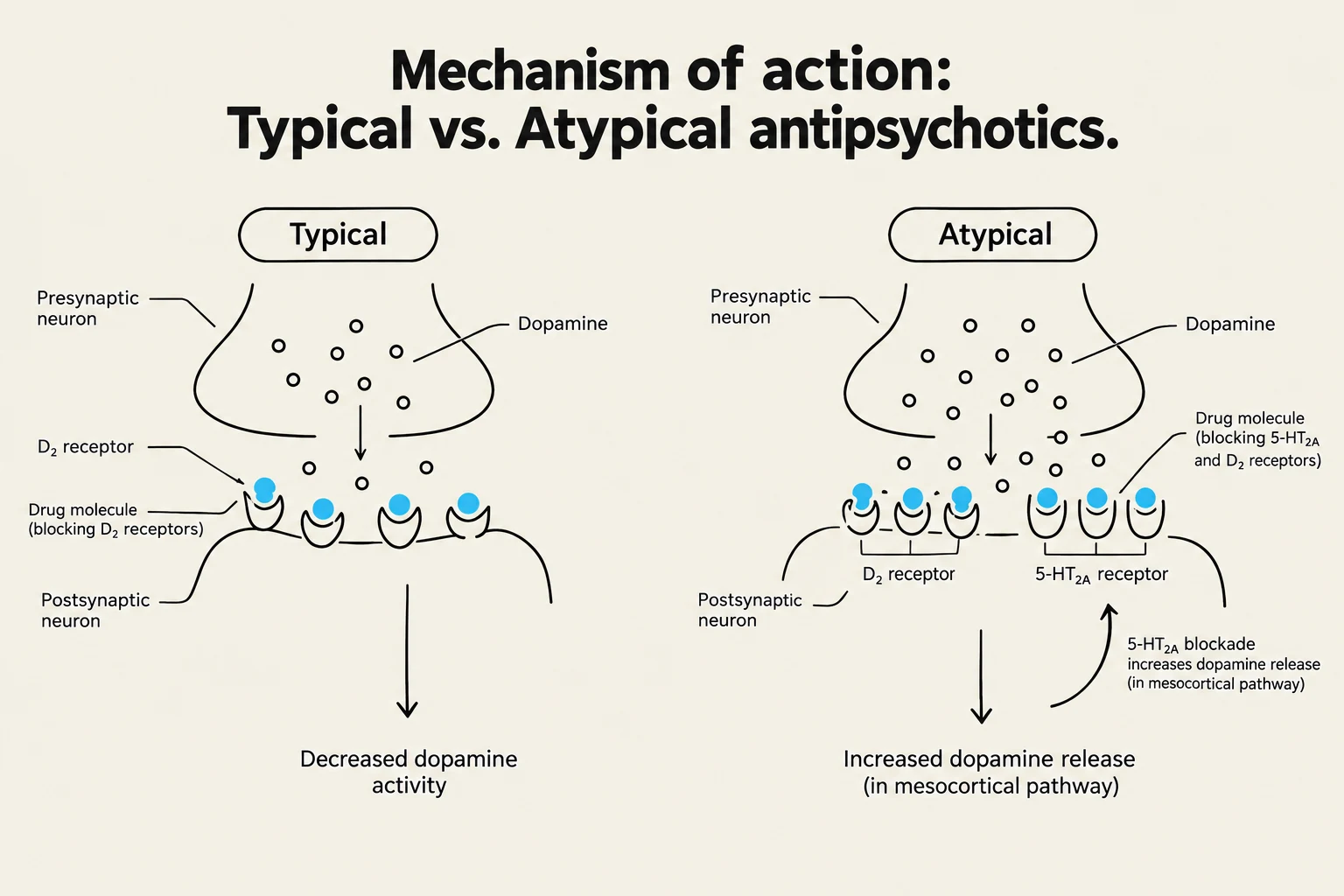
Diagram illustrating the mechanism of action of typical versus atypical antipsychotics, showing their effects on dopamine receptors in the synapse.
Pharmacotherapy is the primary treatment modality, and most clients will require lifelong medication.
Typical Antipsychotics (First-Generation)
These agents, introduced in the 1950s, work primarily through D2 receptor blockade. While effective at treating positive symptoms by blocking dopamine in the mesolimbic pathway, they can worsen negative symptoms by blocking dopamine in the mesocortical pathway. They are often considered second-line due to a high risk of neurological side effects.
Atypical Antipsychotics (Second-Generation)
Atypical antipsychotics are the first-line treatment. They function as serotonin-dopamine antagonists (SDAs), providing D2 and 5-HT2A blockade. This dual action is beneficial because blocking 5-HT2A receptors on dopamine neurons enhances dopamine release in the mesocortical and nigrostriatal pathways, which helps mitigate side effects.
Feature
Typical Antipsychotics
Atypical Antipsychotics
Mechanism
Primary D2 blockade
Serotonin-Dopamine Antagonism (SDA)
Primary Use
Positive symptoms
Positive and Negative symptoms
EPSE Risk
High
Lower
Metabolic Risk
Lower
Higher (Weight gain, Diabetes)
Exam Tip: If a question asks for the first-line treatment for schizophrenia that addresses both positive and negative symptoms with a lower risk of extrapyramidal symptoms, the answer is Atypical Antipsychotics.
Managing Side Effects and Emergencies
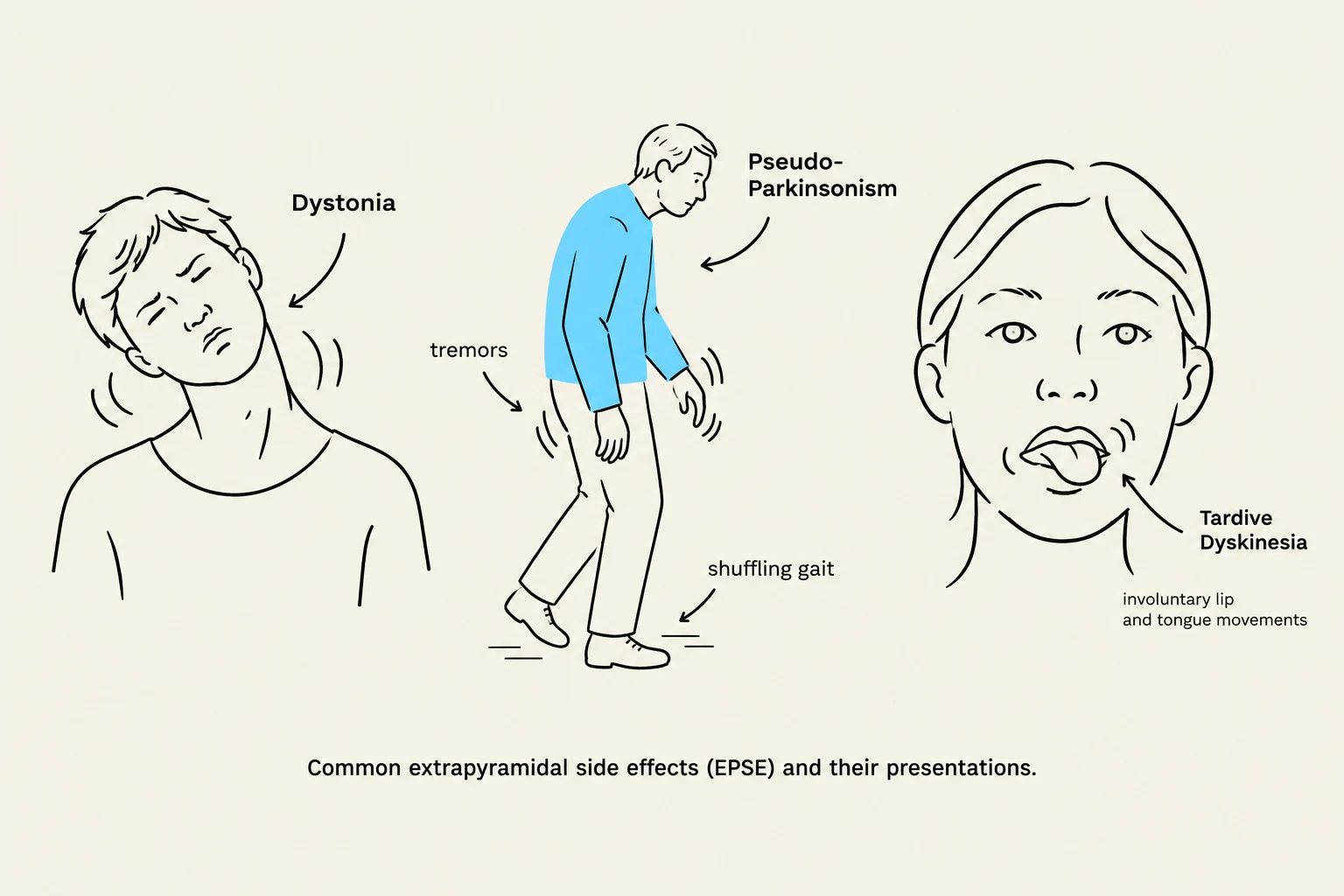
Common extrapyramidal side effects (EPSE) and their presentations, including Dystonia, Pseudo-Parkinsonism, and Tardive Dyskinesia.
The management of psychotic disorders is often a balancing act between symptom control and side effect mitigation.
Extrapyramidal Side Effects (EPSE)
EPSEs are caused by D2 receptor antagonism in the nigrostriatal pathway. Common types include:
Akathisia: Motor restlessness; the patient feels an inability to stay still.
Dystonia: Acute muscle spasms, often in the neck or back.
Pseudo-Parkinsonism: Shuffling gait, tremors, and a "mask-like" facial expression.
Tardive Dyskinesia (TD) is a particularly serious concern. It involves involuntary, potentially irreversible movements of the mouth, tongue, and face. Clients on typical antipsychotics should undergo screening using scales like the Abnormal Involuntary Movement Scale (AIMS) every 6 months.
Neuroleptic Malignant Syndrome (NMS)
NMS is a rare but life-threatening emergency associated with antipsychotic use.
Management: Immediate discontinuation of the drug, intravenous hydration, and medical intervention (e.g., Dantrolene).
Endocrine and Metabolic Effects
Hyperprolactinemia: Blockade of dopamine in the tuberoinfundibular pathway leads to increased prolactin, causing galactorrhea, gynecomastia, or amenorrhea.
Metabolic Syndrome: Atypical antipsychotics carry a significant risk of weight gain, dyslipidemia, and diabetes.
Nonpharmacological Management and Holistic Care
Medication is most effective when augmented by psychosocial interventions.
Individual Therapy: Focuses on reality testing, building daily life skills, and using Cognitive Behavioral Therapy (CBT) to manage hallucinations and delusions.
Group Therapy: Focuses on problem-solving, medication education, and social skills.
Assertive Community Treatment (ACT): An evidence-based multidisciplinary team approach for community-based care.
Milieu Therapy: Provides a structured, safe environment to encourage socialization and independence.
Relapse Prevention and Comorbidities
Relapse prevention planning is critical. This involves identifying symptom triggers, recognizing early warning signs of relapse, and establishing a support network.
Clinicians must also address high rates of comorbidities:
Substance Use: 20% to 40% of clients have comorbid substance use disorders.
Nicotine Dependence: Extremely high (80% to 90%), which can interact with antipsychotic metabolism.
Suicide Risk: Suicide rates are high (10% mortality rate). Risk factors include male sex, younger age, hopelessness, and recent hospitalization.
Comprehensive Monitoring
Because schizophrenia is associated with a significantly shortened lifespan (10–25 years less than the general population), routine physical health monitoring is mandatory.
Metabolic Monitoring Requirements:
Weight and BMI: To monitor for obesity and associated risks.
Lipid Panels and Glucose/A1c: To screen for diabetes and hyperlipidemia.
Blood Counts: Specifically monitoring the Absolute Neutrophil Count (ANC) for clients on Clozapine due to the risk of agranulocytosis.
Keep reading for free.
Create an account to finish this reading and make it part of your study routine.