Management of Postpartum Hemorrhage and Related Complications
This content provides a comprehensive overview of postpartum hemorrhage (PPH), including its definition, causes (Four Ts: Tone, Trauma, Tissue, Thrombin), and management strategies. It details pharmacological interventions such as oxytocin, carboprost tromethamine, methylergonovine, dinoprostone, and tranexamic acid. T
The postpartum period is a critical transition phase where the body recovers from the physiological demands of pregnancy and birth. While many clients recover without incident, others face life-threatening complications, most notably Postpartum Hemorrhage (PPH). Effective management of these complications requires a deep understanding of pharmacological interventions, rapid assessment of risk factors, and the ability to implement both medical and nursing-led physical interventions.
Understanding Postpartum Hemorrhage (PPH)
Postpartum hemorrhage is defined by the American College of Obstetricians and Gynecologists (ACOG) as a cumulative blood loss of 1,000 mL or more, or any amount of blood loss associated with manifestations of hypovolemia. PPH is categorized into two types:
Early (Primary) PPH: Occurs within the first 24 hours after birth.
Secondary (Late) PPH: Occurs from 24 hours postbirth up to 12 weeks postpartum.
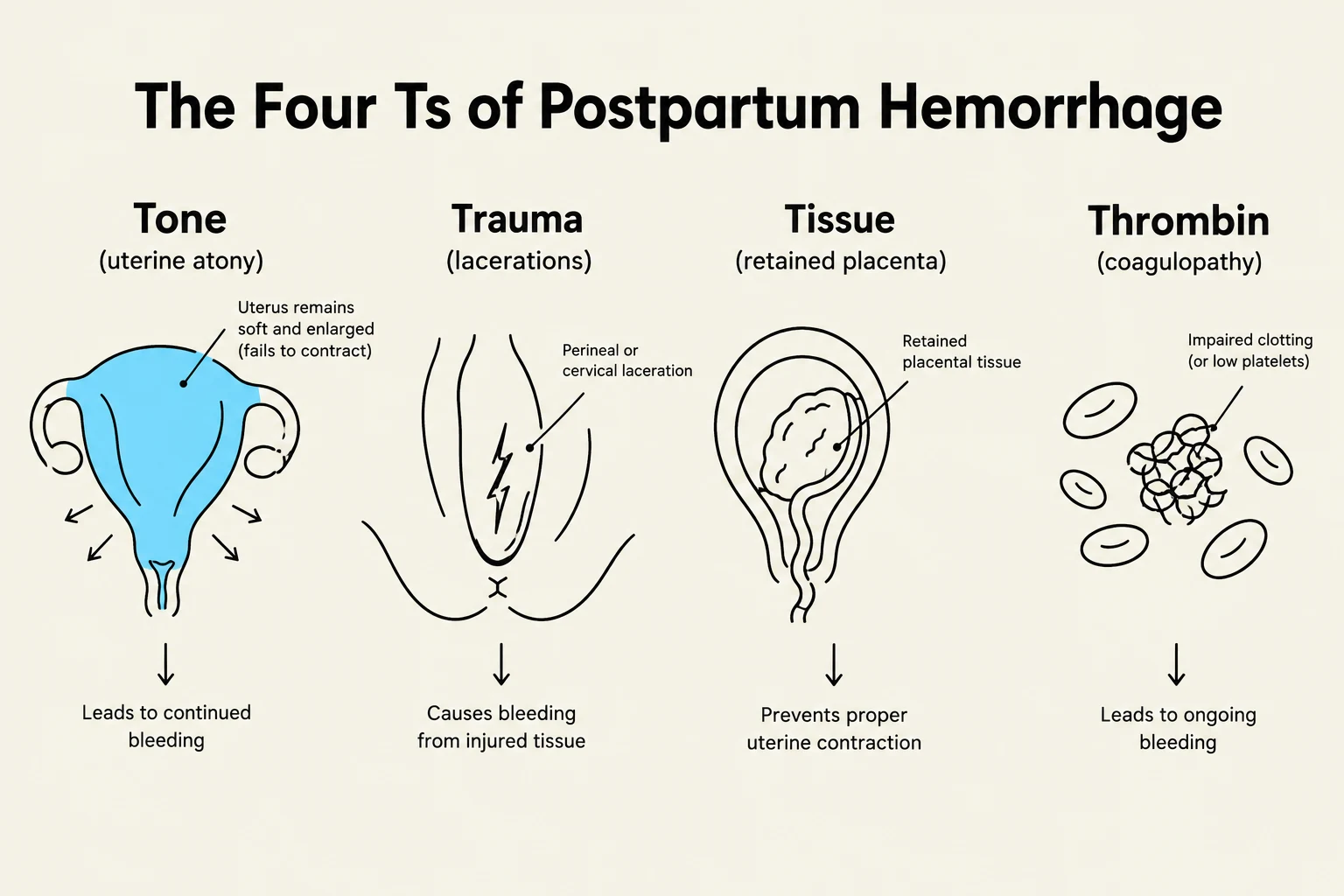
The primary cause of PPH is uterine atony, which occurs when the uterine myometrium fails to contract effectively after birth. Normally, the release of endogenous oxytocin causes the myometrium to contract, compressing the spiral arteries to ensure hemostasis. When the uterus remains "boggy" or uncontracted, these vessels bleed freely.
To remember the causes of PPH, clinicians often use the "Four Ts" framework:
Trauma: Lacerations (perineal, vaginal, or cervical), cesarean birth, or episiotomy.
Tissue: Retained placenta, placenta accreta, or retained products of conception.
Thrombin: Coagulation disorders, preeclampsia, or placental abruption.
The Four Ts of Postpartum Hemorrhage: Tone, Trauma, Tissue, and Thrombin.
Pharmacological Management: Oxytocics and Uterotonics
When uterine atony is identified, the immediate goal is to restore uterine contractility.
Oxytocin
Oxytocin is considered the most effective medication for preventing and treating PPH caused by uterine atony. It works by stimulating the smooth muscles of the uterus to produce contractions. In many facilities, prophylactic oxytocin is administered during the active management of the third stage of labor to reduce PPH risk by up to 66%.
Carboprost Tromethamine
This is a potent oxytocic used specifically for the management of PPH. While highly effective, it carries significant side effects, including diarrhea, vomiting, and increased body temperature.
Nursing Alert: Carboprost tromethamine is contraindicated in clients with asthma, active cardiac disease, or hepatic/renal disease.
Methylergonovine (Ergot Alkaloids)
Ergot alkaloids stimulate uterine smooth muscle to treat or prevent bleeding. However, because they can cause significant increases in blood pressure, they are strictly contraindicated in clients with hypertension. Common adverse effects include headache, dizziness, and hypertension.
Dinoprostone (Prostaglandin E2)
Unlike the medications above which focus on hemorrhage, Dinoprostone is primarily used for cervical ripening and labor induction. It works by softening the cervix and stimulating the myometrium. Nurses must monitor for adverse effects such as uterine rupture, fever, and dyspnea.
Antifibrinolytics and Specialized Interventions
Tranexamic Acid
In cases of significant bleeding, Tranexamic Acid may be administered. This medication acts as an antifibrinolytic by stabilizing the fibrin matrix; it binds to the lysine plasminogen receptor, which prevents plasmin from breaking down blood clots.
Exam Tip: Remember that Tranexamic Acid is contraindicated in clients with active thromboembolic disease, intracranial bleeding, or colorblindness.
Tocolytics for Surgical Management
While uterotonics are used to increase contraction, tocolytics are used to relax the uterus. This is essential during specific surgical interventions, such as the replacement of an inverted uterus.
Nitroglycerin: A nitrate used to dilate coronary arteries; it can cause hypotension and headache.
Terbutaline: An adrenergic bronchodilator used specifically for uterine relaxation.
Nursing Implications and Physical Interventions
Bimanual Uterine Massage
If the uterus is found to be boggy, the nurse must perform uterine massage immediately to improve tone. Bimanual uterine massage is a critical technique where the nurse places one hand externally over the uterine fundus to provide counterpressure, while the other hand is inserted into the vaginal canal to compress the uterus internally.
Monitoring and Quantification
Accurate quantification of blood loss (QBL) is vital. Visual estimation often grossly underestimates actual loss. Nurses should use weight-based measurements:
Weight of blood-soaked item (g)−Dry weight of item (g)=Blood loss (mL)
Since 1 g=1 mL, this provides a more precise measurement for the interprofessional team.
Hyperbilirubinemia Risk Factors
While managing the mother, the nurse must also monitor the newborn. A critical assessment involves identifying risks for hyperbilirubinemia (a hemolytic disorder). Significant risk factors include:
Maternal blood type O with a newborn blood type A.
Maternal Rh-negative status with a positive indirect Coombs test.
Presence of a prominent cephalohematoma following a vacuum-assisted birth.
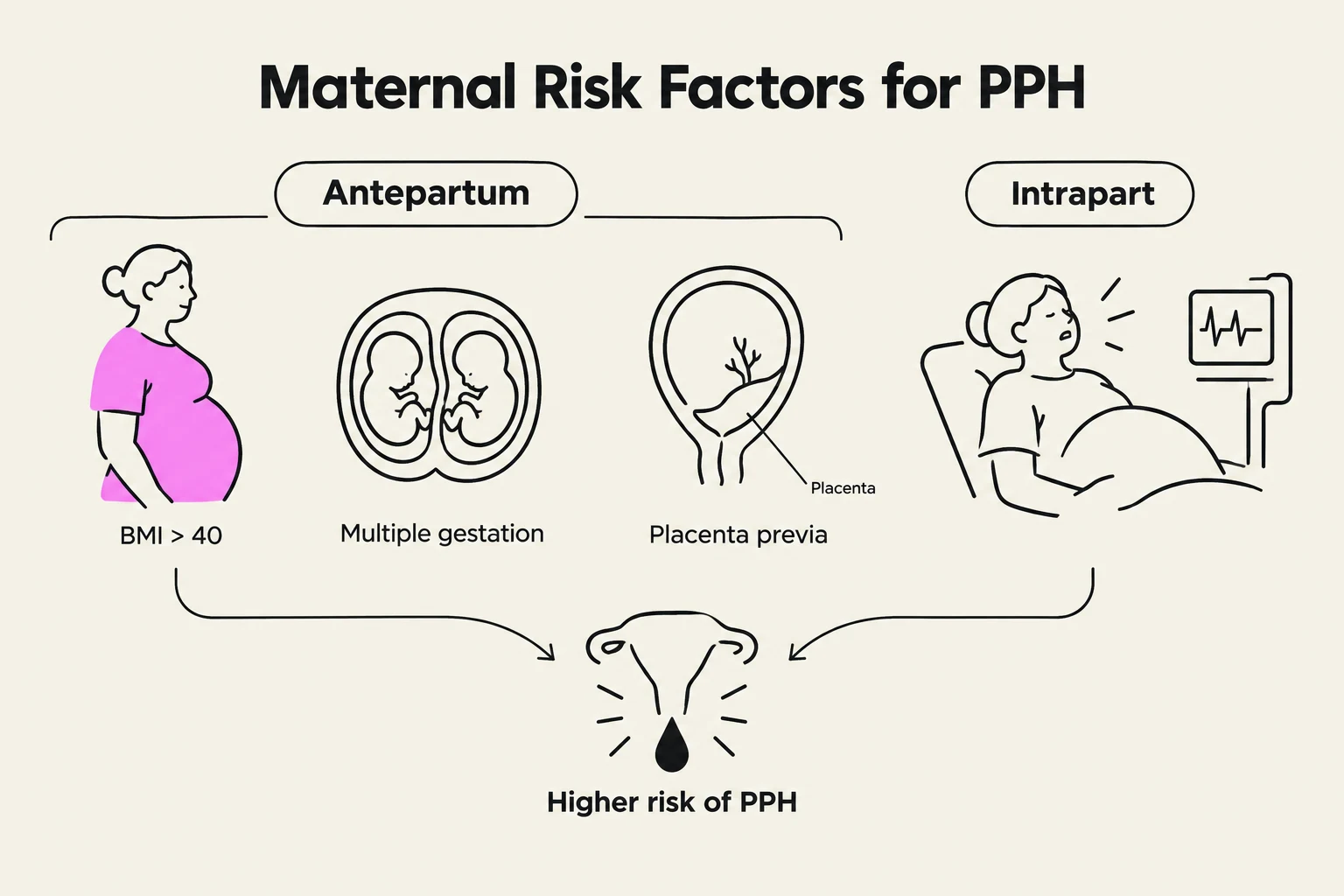
This diagram illustrates maternal risk factors for postpartum hemorrhage (PPH), categorized into antepartum and intrapartum factors. Antepartum risks include a BMI greater than 40, multiple gestations, and placenta previa. An intrapartum risk shown is a woman in labor with monitoring equipment. Both categories contribute to a higher risk of PPH.
Summary of Nursing Care
Effective PPH management requires continuous monitoring of hemodynamic status, vital signs, and uterine activity. The nurse must be prepared to act quickly—implementing the "EMOTIVE" protocol (Early detection, Massage, Oxytocin, Tranexamic acid, IV fluids, Examination, and Escalation) to improve maternal outcomes.
Keep reading for free.
Create an account to finish this reading and make it part of your study routine.