


Coronary Artery Disease (CAD) is a progressive condition characterized by the narrowing or occlusion of the coronary arteries, primarily due to atherosclerosis. As the leading cause of death in the United States, CAD requires a proactive, multi-faceted management strategy. Effective treatment aims to reduce the risk of myocardial ischemia—a state where the heart muscle's demand for oxygen exceeds the supply provided by the blood vessels. Management is categorized into three main pillars: lifestyle and dietary modifications, lipid-lowering pharmacotherapy, and antiplatelet therapy.
Understanding the Pathophysiology: From Plaque to Ischemia
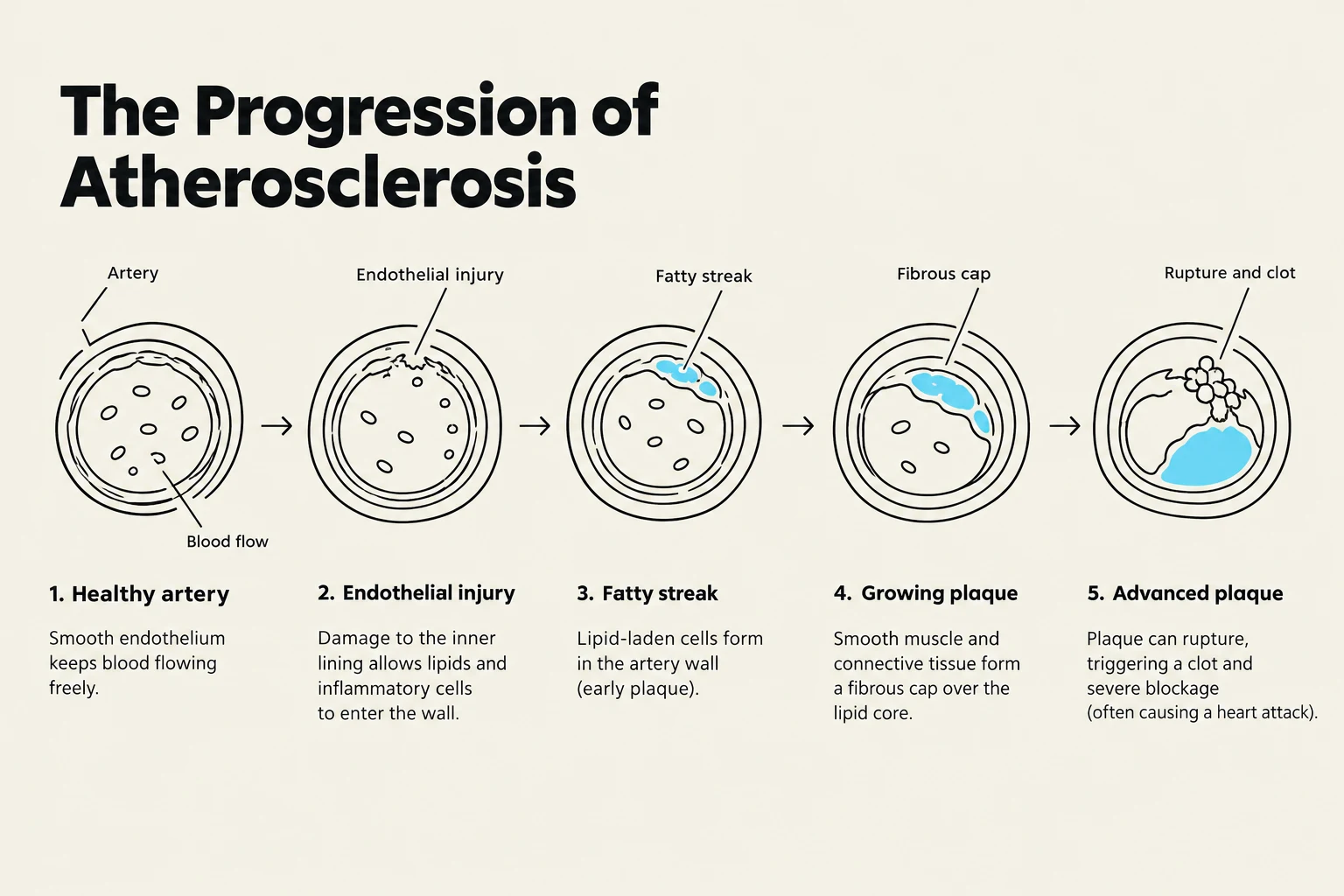
The progression of CAD begins with endothelial injury, which can be caused by smoking, high cholesterol, hypertension, or diabetes. This injury leads to the formation of fatty streaks, which eventually develop into fibrous plaques. A "complicated lesion" occurs when a plaque becomes unstable and ruptures, leading to thrombus (clot) formation that can cause total occlusion of the artery.
When these blockages restrict blood flow, patients experience angina—chest pain resulting from myocardial ischemia. Angina is often substernal and may radiate to the jaw, neck, shoulders, or arms.
Exam Tip: Distinguishing Angina Types
- Chronic Stable Angina: Typically precipitated by physical exertion.
- Unstable Angina: New onset, occurs at rest or with minimal exertion, and increases in frequency, duration, or severity.
Lifestyle and Dietary Interventions
The foundation of CAD management is the modification of modifiable risk factors, such as obesity, smoking, and physical inactivity.
Dietary Modifications
Patients are encouraged to adopt a diet that is low in saturated fats (found in red meats and egg yolks) and high in complex carbohydrates and fiber. To manage elevated triglycerides, clinicians recommend reducing simple sugars and alcohol while increasing the intake of omega-3 fatty acids. Excellent sources include:
Keep reading for free.
Create an account to finish this reading and make it part of your study routine.
Continue reading freeAlready have an account? Log in
Updated